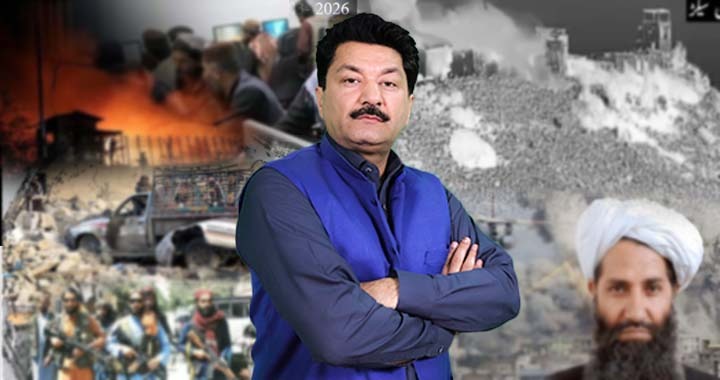
Tensions between Pakistan and Afghanistan are once again on the rise, unfolding in a familiar pattern where military developments and information warfare move side by side. Claims of precision strikes are being countered with accusations of civilian targeting, while misinformation spreads rapidly across digital platforms, blurring the line between fact and narrative.
The recent airstrike in Kabul, reportedly conducted by the Pakistan Air Force, has become the latest flashpoint. Pakistani officials maintain that the strike was based on credible intelligence, targeting locations where militant groups were being facilitated with weapons and logistical support. In contrast, Taliban spokesperson Zabihullah Mujahid claimed that the strike hit a rehabilitation center, alleging significant civilian casualties.
In any conflict, truth is often the first casualty. This pattern is not unique to the Pakistan-Afghanistan context; it has been witnessed in conflicts ranging from Ukraine to the Middle East. Competing narratives, recycled footage, and selective framing of events are standard tools in modern warfare. What we are witnessing today is not just a military confrontation, but a battle of perception.
Pakistan’s operations inside Afghanistan are not unprecedented. Similar strikes have been reported in regions such as Paktika, Paktia, Khost, and Nangarhar, and even in Kabul in previous months. However, what distinguishes the current phase is the level of official acknowledgment and the steady release of operational details. This suggests a shift from ambiguity to a more assertive posture.
Importantly, Pakistan has consistently maintained that it does not target civilians or seek confrontation with the Afghan Taliban as a governing entity. Instead, its stated objective is to dismantle infrastructure used by militant groups, including weapons depots, training centers, and logistical hubs. The locations reportedly targeted, including areas linked to security units and militant facilitation networks, align with this claim.
The controversy surrounding the alleged targeting of rehabilitation centers raises critical questions. Similar claims were made following earlier strikes in Kandahar. The repetition of such narratives invites scrutiny. Is it coincidence, or could these locations have dual-use functions? Without independent verification and transparent access for media, definitive conclusions remain elusive.
Casualty figures further complicate the narrative. Claims of hundreds of deaths contrast sharply with limited on-ground evidence. Historical precedent shows how quickly numbers can be inflated in the absence of verifiable information. Even if the lower estimates are accurate, any civilian loss remains deeply regrettable. Yet, the gap between reported figures and observable evidence raises legitimate concerns about exaggeration and propaganda.
Another notable aspect is the selective focus on Kabul in media narratives, while reports of strikes in Nangarhar and other regions receive comparatively little attention. This selective amplification suggests a strategic effort to shape international perception by centering the story on the Afghan capital.
Statements from Taliban leadership also reflect inconsistencies. While spokespersons issue strong condemnations and circulate high casualty figures, the broader leadership response appears muted. The absence of a clear and unified stance raises questions about internal dynamics and priorities within the Afghan Taliban.
At the core of the Pakistan-Afghanistan tension lies a longstanding issue: the presence of militant groups operating from Afghan territory. Pakistan’s repeated demand has been straightforward — take action against these groups, dismantle their networks, and prevent cross-border attacks. The continuation of these activities has now escalated into direct military responses.
Pakistan’s strategy, however, appears calibrated. Despite possessing the capability, it has avoided targeting top Afghan Taliban leadership or pursuing regime change. Such a move could destabilize Afghanistan further, triggering internal fragmentation and a potential refugee crisis that Pakistan is ill-equipped to handle. Stability in Afghanistan remains a strategic necessity for Pakistan, not just a diplomatic preference.
The role of external actors adds another layer of complexity. Questions have been raised about the origin of advanced drone technology allegedly used by militant groups. While regional and global powers have stakes in Afghanistan, the lack of transparency fuels speculation and deepens mistrust.
Meanwhile, China has attempted to play a mediating role, encouraging dialogue between Islamabad and Kabul. Its interest is clear: regional stability is essential for economic initiatives and long-term strategic investments. However, mediation efforts can only succeed if both sides are willing to address the root causes of conflict.
Ultimately, the situation presents Afghanistan with a critical choice. It must decide whether to prioritize stable relations with neighboring countries or continue tolerating the presence of militant groups that invite external pressure and military action. For Pakistan, the message remains consistent: a peaceful and stable Afghanistan is in its interest, but that stability cannot coexist with unchecked militancy.
As tensions persist, one reality becomes increasingly clear — military action may shape the battlefield, but lasting resolution will only come through accountability, clarity, and dialogue grounded in mutual security concerns.