(Hassam Uddin)
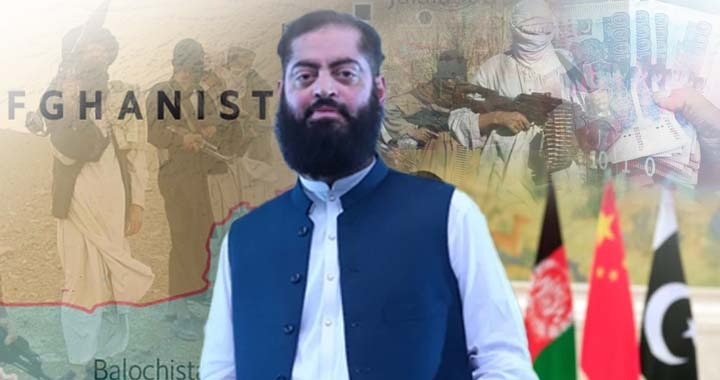
In recent months, a new diplomatic track between Pakistan and Afghanistan has drawn attention not only for its substance but also for its geography. The fact that these engagements are taking place on Chinese soil reportedly in venues such as Urumqi has sparked important questions: Why China? What does Beijing seek to gain? And why do Pakistan and Afghanistan continue to oscillate between engagement and mistrust despite years of negotiations?
At the same time, an equally intense battle is unfolding in the digital sphere. Social media platforms have become an arena where competing narratives about terrorism, state responsibility, regional proxies, and military operations are shaped, amplified, and contested. In this evolving landscape, truth often struggles to keep pace with perception. This article attempts to unpack three interlinked dimensions of the current Pakistan–Afghanistan dynamic: China’s strategic interest in facilitating dialogue, the fragile and conditional trust between Islamabad and Kabul, and the growing influence of hybrid information warfare in shaping public understanding of conflict.
China’s role as a facilitator of Pakistan–Afghanistan dialogue is neither accidental nor purely symbolic. It reflects a deeper strategic calculation rooted in geography, security, and economic expansion. First and foremost, China’s overriding interest in the region is stability. The western frontier of China, particularly Xinjiang, remains a sensitive security zone. Any instability in neighboring Afghanistan or spillover tensions between Afghanistan and Pakistan directly affects Beijing’s internal security environment. For China, conflict in its immediate neighborhood is not a distant geopolitical issue; it is a domestic security concern.
Second, China’s flagship global initiative, the Belt and Road Initiative (BRI), depends heavily on secure corridors connecting Central Asia, South Asia, and the Middle East. Pakistan already plays a critical role through the China Pakistan Economic Corridor (CPEC), and Afghanistan is increasingly viewed as a potential extension of regional connectivity. However, persistent instability in Afghanistan and cross-border militancy undermines this vision.
By hosting or facilitating dialogue between Islamabad and Kabul, China positions itself as a stabilizing power. It is not merely mediating disputes; it is safeguarding long-term economic interests that require predictable regional behavior. Third, China’s diplomatic approach contrasts with Western interventionism. Beijing prefers low-profile, consensus-driven engagement rather than public pressure or ideological alignment. This allows it to maintain working relationships with both Pakistan and Afghanistan while avoiding entanglement in their internal political narratives.
Despite deep cultural, religious, and historical ties, Pakistan–Afghanistan relations remain burdened by mistrust. The central point of contention has consistently been security: Pakistan alleges that militant groups operate from Afghan soil, while Afghan authorities have historically been reluctant to fully acknowledge or act against such groups. From Pakistan’s perspective, cross-border militant activity has caused immense human and economic loss over several decades. Security institutions in Pakistan argue that repeated evidence has been shared with international stakeholders regarding the presence of organized militant networks operating from Afghanistan. They maintain that these groups not only destabilize border regions but also challenge internal security across multiple provinces.
On the Afghan side, particularly under the current Taliban administration, there is a complex internal dynamic. Publicly, Afghan authorities have issued statements and religious rulings discouraging cross-border violence and unauthorized militant activity beyond Afghanistan’s borders. However, enforcement remains inconsistent, and control over non-state armed actors appears fragmented.
This gap between formal declarations and ground realities has become the core obstacle in bilateral trust-building. Even when political leadership signals restraint or issues directives, the operational independence of various armed factions complicates implementation. One of the most frequently asked questions is why repeated rounds of dialogue in Doha, Istanbul, and now China have not yet produced a lasting breakthrough.
The answer lies in the nature of the delegations and the structure of negotiations. Many of these early-stage discussions involve technical or lower-level representatives rather than top decision-makers. Such formats are designed to explore positions rather than finalize binding agreements. Additionally, the issues at stake are not purely diplomatic; they are deeply embedded in security structures, ideological differences, and fragmented command systems. Even if agreements are reached at the political level, enforcement on the ground remains a separate challenge.
Another factor is mutual suspicion regarding intentions. Both sides often enter negotiations with concerns about the other’s strategic depth and regional alignments. This leads to cautious, incremental engagement rather than decisive breakthroughs. A recurring theme in Pakistan–Afghanistan discussions is the issue of non-state militant actors. Afghan authorities have reportedly issued directives discouraging unauthorized cross-border operations, while Pakistan continues to assert that certain groups remain active despite these directives.
This raises a broader structural question: can any central authority fully control decentralized militant networks that have evolved over decades of conflict? The reality is that such groups often operate within complex ecosystems involving local loyalties, ideological motivations, and regional power vacuums. Even when leadership issues orders, enforcement mechanisms may be weak or contested. This fragmentation creates a paradox: formal commitments exist, but operational compliance is uneven. This gap is what sustains mistrust between neighboring states.
Beyond traditional diplomacy and security concerns, a new battleground has emerged: social media and digital information networks. In today’s geopolitical environment, narratives travel faster than facts. Allegations, counter-allegations, and unverified reports can shape public perception long before official confirmations are issued. This phenomenon is often described as hybrid warfare, where information itself becomes a strategic tool.
Within this context, competing narratives about attacks, security incidents, and regional alliances frequently circulate online. Some of these narratives are later proven inaccurate or exaggerated, but by then they have already influenced public sentiment. From Pakistan’s perspective, there are concerns that coordinated online campaigns are being used to amplify instability narratives and undermine state credibility. Officials and analysts often attribute this to organized digital networks operating across borders. However, independent verification of such claims is complex, and the digital ecosystem itself is highly decentralized.
What is clear, however, is that misinformation whether intentional or accidental has become a destabilizing force in its own right. It fuels mistrust, escalates tensions, and makes diplomatic resolution more difficult. Amid geopolitical narratives and digital warfare, the most affected stakeholders are ordinary citizens particularly those living in border regions. For decades, communities in Pakistan and Afghanistan have borne the consequences of instability, displacement, and violence.
Regardless of political disagreements, there remains a shared interest in regional peace. Trade, mobility, and development cannot flourish under conditions of perpetual uncertainty. Both states, despite differences, repeatedly emphasize peace as a stated objective. However, translating this aspiration into reality requires more than dialogue. It demands institutional coordination, effective border management, intelligence sharing, and above all, political will to prioritize long-term stability over short-term strategic advantage.
The current Pakistan–Afghanistan engagement, facilitated on Chinese soil, represents both an opportunity and a limitation. It is an opportunity because it keeps dialogue channels open at a time when mistrust could easily lead to escalation. It is a limitation because dialogue alone cannot resolve deeply entrenched structural issues without enforcement mechanisms and mutual confidence.
China’s involvement reflects a broader regional trend: rising multipolar diplomacy where regional powers increasingly mediate their own security challenges. Yet the success of such efforts ultimately depends on the willingness of the primary actors to address root causes rather than symptoms. At the same time, the rise of social media-driven narratives has added a new layer of complexity. In an era where perception can influence policy, managing information responsibly is no longer optional it is essential for stability.
The path forward is neither simple nor immediate. But history consistently shows that geography enforces coexistence, even when politics resists it. Pakistan and Afghanistan, bound by borders, culture, and shared challenges, may find that sustained engagement however difficult is the only viable option. In that sense, the talks in China are not an endpoint. They are a reminder that in South and Central Asia, diplomacy is no longer just about agreements—it is about managing complexity in an interconnected and increasingly contested world.