The United Nations’ latest assessment declaring 2025 a year of severe security challenges for Pakistan should not come as a surprise to anyone closely observing the country’s internal dynamics over the past several years. What is alarming, however, is not merely the scale of the threat highlighted in the report, but the consistency with which warning signs have been ignored, misread or politically sidelined. The report bluntly underscores a sharp increase in terrorist violence, identifying Khyber Pakhtunkhwa as the most affected region a reality already etched into the daily lives of its people.
From Peshawar to Wana, from Bannu to Mir Ali, Bajaur to Lakki Marwat, violence has become a grim routine. Attacks on security installations such as the FC headquarters in Peshawar and Wana Cadet College have been accompanied by a disturbing rise in assaults on civilians, political workers and community elders. Terrorism, by definition, seeks to instil fear, disrupt normal life and erode confidence in the state. By that measure alone, it is clear that militant networks are succeeding in achieving at least part of their objectives.
Government figures acknowledge more than 1,500 incidents of terrorism in recent years, a statistic that exposes a sobering truth: this is not a problem confined to battlefields or border areas, nor is it limited to confrontations between militants and security forces. Ordinary citizens are increasingly caught in the crossfire, bearing the human cost of a conflict that shows no clear signs of resolution. Intelligence-based operations continue on a daily basis, terrorists are neutralised, investigations are launched yet the cycle repeats itself with disturbing regularity.
This raises the most critical question: if military and intelligence responses are ongoing, why does the threat persist?
The answer lies beyond the battlefield. Pakistan’s struggle against terrorism is no longer just a security issue; it is fundamentally a crisis of governance, trust and political will. The National Action Plan, approved on December 20, 2014, remains one of the most comprehensive counterterrorism frameworks ever devised in the country’s history. Yet more than a decade later, it exists largely as a document rather than a living policy. Selective implementation, bureaucratic inertia and political expediency have rendered many of its provisions ineffective.
Terrorism does not thrive in a vacuum. It feeds on weak administration, political instability, social alienation and the erosion of public trust. In Khyber Pakhtunkhwa particularly in the former tribal districts and southern belt — the sense of abandonment is palpable. The people living in these regions feel increasingly disconnected from decision-makers who appear more invested in political point-scoring than in addressing urgent security and administrative concerns. When governance falters, space opens up for non-state actors to assert influence, often through fear and coercion.
One of the most dangerous trends emerging today is the steady decline in public confidence in state institutions. Trust in the police, civil administration and even security forces has suffered due to collateral damage, delayed justice and a lack of transparency. Communities that once relied on the state for protection now find themselves forced to take matters into their own hands. In several districts, locals have apprehended suspected militants, sometimes killing them, and then handing bodies or detainees over to the authorities often recording videos to justify their actions.
This is a deeply troubling development. While it reflects public frustration and desperation, it also signals the weakening of the state’s monopoly over the use of force. When citizens feel compelled to arm themselves because they do not trust institutions meant to protect them, the long-term implications for law and order are severe. Such vigilantism, however understandable emotionally, ultimately risks plunging society into chaos.
The responsibility for reversing this trend lies squarely with elected governments. Political parties may have ideological agendas, electoral rivalries and power struggles, but once in office, their foremost duty is to safeguard citizens’ lives. Security and administration cannot be treated as secondary concerns or bargaining chips in political disputes. A deteriorating security environment inevitably undermines economic stability, discourages investment and deepens public despair — creating a vicious cycle that further fuels extremism.
The UN report’s emphasis on Khyber Pakhtunkhwa is particularly significant. The province has long been on the frontline of Pakistan’s fight against militancy, absorbing the spillover effects of regional conflicts. Yet today, instead of focused governance and inclusive policymaking, the province is mired in political polarisation. Administrative reforms, police strengthening and community engagement initiatives have taken a back seat to confrontational politics, leaving security gaps that militants are quick to exploit.
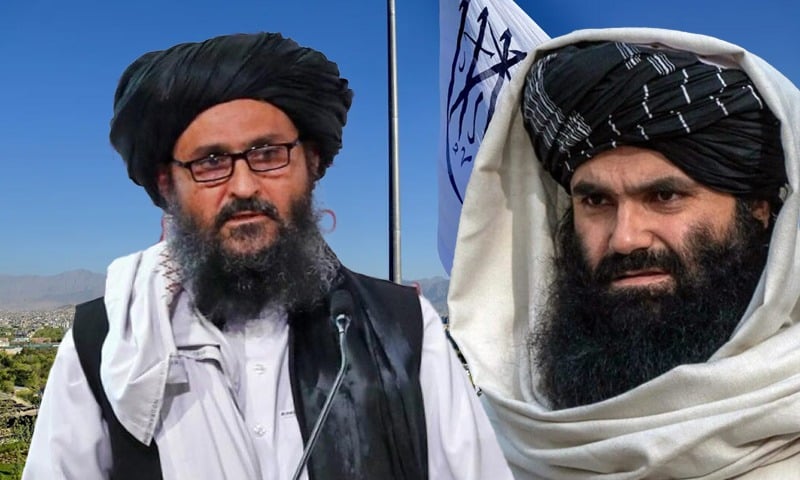
Compounding Pakistan’s internal challenges is the evolving situation in Afghanistan. Recent reports point to growing weaknesses within the Taliban government under the leadership of Mullah Hibatullah Akhundzada. Unlike the Taliban regime of 1996–2001 under Mullah Omar, today’s Taliban are deeply divided. Tensions between key figures such as Interior Minister Sirajuddin Haqqani and Defence Minister Mullah Yaqub reflect competing visions for governance, international engagement and social control.
These internal rifts are not merely theoretical; they have tangible consequences for regional security. Afghanistan’s inability to present a cohesive governing structure creates opportunities for militant groups to regroup, reorganise and operate across porous borders. Statements made recently by Sirajuddin Haqqani emphasising that governments cannot survive through force alone and must earn public trust — reveal an awareness of this problem, even if actions on the ground contradict such rhetoric.
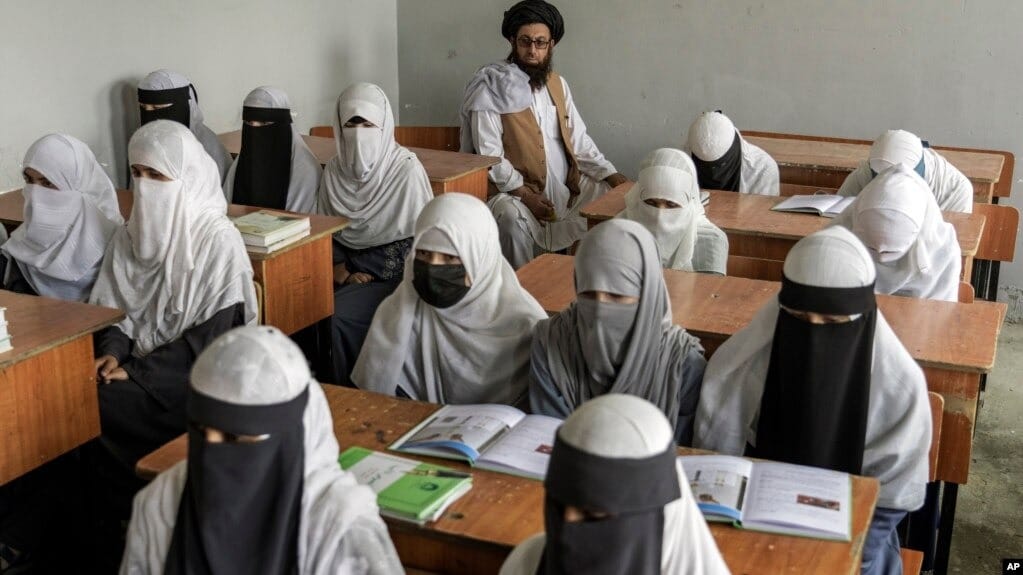
Rigid social controls, restrictions on women’s education and mobility, and intrusive moral policing have alienated large segments of Afghan society. A government that relies primarily on coercion rather than consent inevitably faces resistance, fragmentation and legitimacy crises. For Pakistan, instability in Afghanistan directly translates into heightened security risks along its western frontier.
Adding another layer of complexity is the shifting posture of the United States. Washington’s latest National Security Strategy prioritises competition with China while largely sidelining South Asia. Afghanistan, Pakistan, India and neighbouring countries receive minimal strategic attention, signalling a reduced American footprint in the region. Analysts warn that this disengagement could create a vacuum, encouraging regional and non-state actors to pursue their own agendas with fewer constraints.
American “backdoor diplomacy,” often perceived as opaque and transactional, has further complicated matters. While the US claims credit for facilitating ceasefires and stability efforts, its inconsistent engagement risks deepening mistrust among regional partners. If Washington genuinely seeks regional stability, it must move beyond conspiracy-laden narratives and actively support dialogue between Pakistan and Afghanistan, addressing core security concerns rather than managing crises episodically.
Ultimately, Pakistan stands at a crossroads. The UN report is not merely a warning; it is a mirror reflecting uncomfortable truths. Terrorism cannot be defeated through force alone, nor can it be wished away through political slogans. A credible counterterrorism strategy requires genuine implementation of the National Action Plan, inclusive political consensus, administrative reforms and, above all, the restoration of public trust.
People must feel that the state stands with them, not above them or against them. Security forces must be empowered but also held accountable. Political leadership must rise above partisan battles and recognise that national security is not a zero-sum game. Without these steps, 2025 will not be remembered merely as a year of severe security challenges it will be remembered as a missed opportunity to change course.
The choice, stark and unavoidable, lies with those in power.