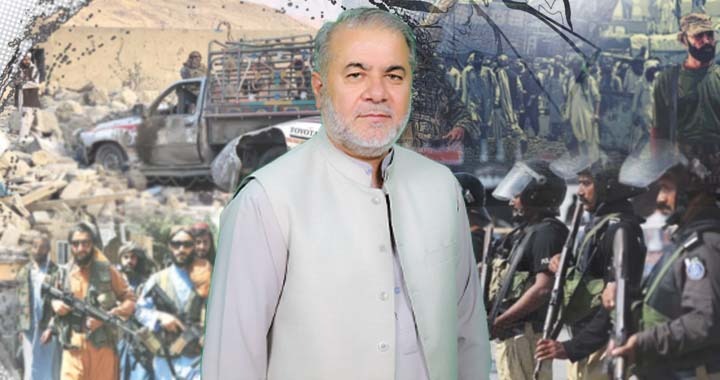
(Mushtaq Yusufzai)
Over the past two decades, Pakistan has endured an unrelenting campaign of militant violence. The country’s armed forces and security apparatus have borne the brunt of this conflict, sacrificing thousands of lives in the name of national security. But there is a disturbing trend that demands deeper analysis: the persistent targeting of the police the very institution that stands as the bridge between the state and its people.
Recent attacks in Lakki Marwat and Bannu, which claimed the lives of multiple police officers, have reignited public debate on why Pakistan’s law enforcement has become a focal point for extremists. These incidents are not isolated; they reflect a broader pattern that speaks to strategic shifts by militant groups, underlying institutional weaknesses, and critical policy failures at provincial and federal levels.
It is now painfully evident that militants see the police not just as law enforcers, but as strategic targets. Police checkpoints are attacked. Patrol vehicles are struck with improvised explosive devices. Close‑range ambushes on officers have become disturbingly common across regions like Khyber Pakhtunkhwa and the tribal districts. This transformation the police evolving from community guardians to frontline combatants did not happen overnight. It is rooted in a long process of militancy in Pakistan that has increasingly blurred the lines between criminality, insurgency, and terrorism.
Security forces such as the army and paramilitary units like the Frontier Corps and Rangers have long been primary targets of militants. But in recent years, militant groups have shifted focus toward institutions that are closer to the public and more visible in everyday life: the police. These attacks are not accidental; they are calculated attempts to undermine the state’s authority at the most fundamental level. Unlike the army, the police are omnipresent on streets, in marketplaces, at traffic points, and near public places like hospitals and banks. They are symbols of everyday civilian security, and when militants succeed in striking this force, the psychological impact is profound. It sends a message not just to the state, but to ordinary citizens: no place is safe.
Behind every headline about a suicide bombing or an IED explosion lies a grim reality an underfunded, overstretched police force that continues to fight despite systemic neglect. In the last 20–25 years, Pakistan’s police have made extraordinary sacrifices. They have stood shoulder to shoulder with the army and other forces in counter‑terrorism operations, even as they work with fewer resources, outdated weapons, limited mobility, and inadequate protection.
Many police units still lack sufficient operational vehicles. Their firearms are often obsolete. Fuel shortages hinder patrols. Training in tactical response and counter‑IED procedures is inconsistent, especially for officers posted in remote border districts like Lakki Marwat, Bannu, and Bettani. This is not a war that police are equipped to fight. Yet they do it. With courage. With resilience. Day after day. The attack that claimed the lives of seven police officers in Lakki Marwat serves as a stark example of both sacrifice and systemic failure.
According to widely reported accounts, an IED detonated against a police vehicle in a secluded area where officers had paused during a routine patrol. The choice of location remote, poorly surveyed, and vulnerable highlights serious gaps in planning and tactical awareness. Officers were left exposed to predictable risks, and the cost was deadly. The aftermath of this tragedy saw further heartbreak when local relatives confronted the DIG Police at the hospital, demanding answers for why uniformed officers continue to be left vulnerable to militant violence. The protest was not merely grief; it expressed growing frustration with a national leadership perceived as distant, inattentive, and politically preoccupied.
Across Pakistan’s political landscape, there is a pervasive perception that terrorism is no longer treated as an urgent national priority. Instead, security concerns have been sidelined by political rivalries and governance disputes. Critics argue that while police officers are risking their lives on the ground, senior leadership seems more consumed by political brinkmanship than by strengthening frontline defenses. When tragic episodes unfold, public statements pour forth but meaningful action often lags.
This disconnect between political priorities and security realities is increasingly untenable. The police do not simply need praise; they need material support better equipment, tactical training, intelligence‑led operations, protective gear, and the logistical capacity to operate in hostile environments. A police force that is under‑resourced is a force that pays with its own lives. Understanding why the police are being targeted requires looking at militant strategy. Terrorist groups do not attack what they cannot damage. They aim for maximum disruption physical, psychological, and political.
The police represent the state in everyday life. Their visibility means an attack on them reverberates through communities, creating fear and undermining confidence in the government’s ability to protect its citizens. Moreover, militants exploit the police’s traditional role as a civilian force a force not primarily trained for heavy combat to their advantage. Unlike specialized military or paramilitary units, most police officers lack advanced tactical training, armored protection, and real‑time intelligence support during operations in high‑risk zones. This vulnerability is not merely a tactical deficiency; it has become a strategic liability in the evolving landscape of insurgent warfare.
Beyond domestic considerations, the ongoing conflict in neighboring Afghanistan has complicated Pakistan’s security calculus. Leaked intelligence documents and regional analysis have renewed focus on how external actors, inclinations of militant groups, and porous borders contribute to insecurity in Pakistan’s frontier regions. One of the key issues is the smuggling of weapons and militants across the Pakistan‑Afghanistan border. When Afghan forces collapsed and the Taliban returned to power, vast quantities of military equipment reportedly worth billions of dollars fell into local markets. These include small arms, vehicles, communication devices, and other combat gear. While not all assets are weaponized in conflict, the sheer volume of war material circulating in border regions has made it easier for non‑state actors to obtain tools of violence.
Even with official border closures and heightened security cooperation, smuggling persists. Militants exploit remote passes, local networks, and economic desperation to move weapons and fighters across boundaries with relative impunity. In such an environment, Pakistani police in border districts are not just fighting local crime; they are confronting a cross‑border insurgent ecosystem that is better armed and increasingly sophisticated. Relations between Pakistan and the Afghan Taliban who now govern Afghanistan remain fraught and complex.
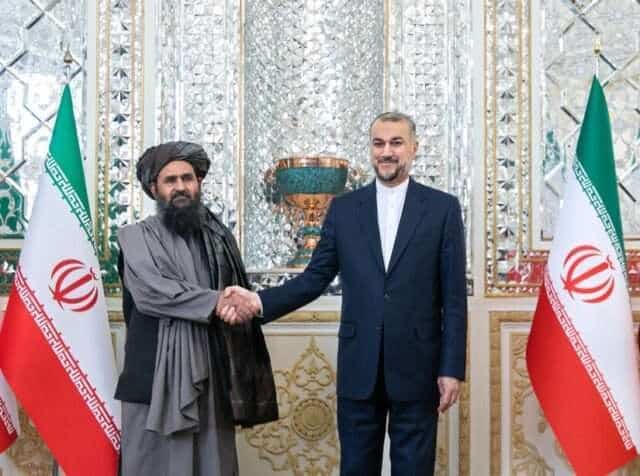
Initially, Pakistan invested heavily in cultivating a working relationship with the Afghan Taliban, hoping that shared interests would translate into border stability and mutual counter‑terrorism cooperation. But this expectation has not fully materialized. Security incidents along the border persist, and there are frequent reports of militant groups operating from Afghan soil to plan attacks inside Pakistan. While the Afghan Taliban government has often denied supporting such activities, the inability or unwillingness to fully rein in extremist elements has strained bilateral ties.
Critics argue that Pakistan’s foreign policy, particularly toward Afghanistan, has lacked focus. Instead of addressing the security vacuum in its border regions, political elites have prioritized diplomatic positioning and regional alignment discussions over ground realities that directly impact ordinary citizens and frontline officers. This diplomatic distancing has real consequences: Pakistan’s police are left to confront a threat that is transnational in nature but local in execution. Another dimension to consider is the perception of external involvement in South Asian security affairs. Allegations of interference by regional intelligence agencies have surfaced sporadically in both Pakistani and Afghan discourse. Whether rooted in fact or fed by political narratives, these allegations contribute to an atmosphere of suspicion and mistrust.
For Pakistan’s public, the recurring narrative that foreign powers are using militancy to destabilize the state reinforces the sense that police and security forces are not only fighting domestic insurgents, but also geopolitical gamesmanship. This perception ultimately deepens public anxiety and further erodes trust in the state’s capacity to secure its own territory. The police in Pakistan have become a frontline force in the war against terrorism. If the government continues to treat this reality as incidental rather than structural, the cycle of violence will persist.
First, there must be significant investment in police capacity. This means modern weapons, protective gear, better vehicles, tactical training, and intelligence‑sharing mechanisms. Police forces cannot be expected to confront improvised explosive devices or ambushes with outdated equipment. Second, intelligence integration must improve. Law enforcement needs real‑time actionable intelligence to preempt attacks, especially in volatile border regions. This requires stronger coordination between police, military, and federal intelligence agencies. Third, Pakistan’s provincial governments must be empowered and supported. Security is more than a federal concern; it is a local imperative. If police leadership lacks the resources or autonomy to secure their districts, the cost will be paid by citizens and officers alike. Fourth, political leadership must publicly and consistently prioritize anti‑terrorism efforts beyond rhetoric. The police need assurance that their sacrifice is recognized not just in commemorative statements but in policy shifts, budget allocations, and operational reforms.
Pakistan is indeed on the frontline in the global war against terrorism. Its geography, history, and strategic context place it at the intersection of regional conflict and international geopolitics. But the war on militancy cannot be fought with half‑measures and political distraction. The tragic targeting of police officers is a wake‑up call not only about the militants’ growing audacity, but also about serious governance gaps that have gone unaddressed for too long. If Pakistan is to honor the memory of its fallen officers, it must act decisively to strengthen the institution that stands between everyday citizens and the threat of violence. The police should not be left on the battlefield alone. Their fight is Pakistan’s fight.
And Pakistan must show that it is ready to stand with them.