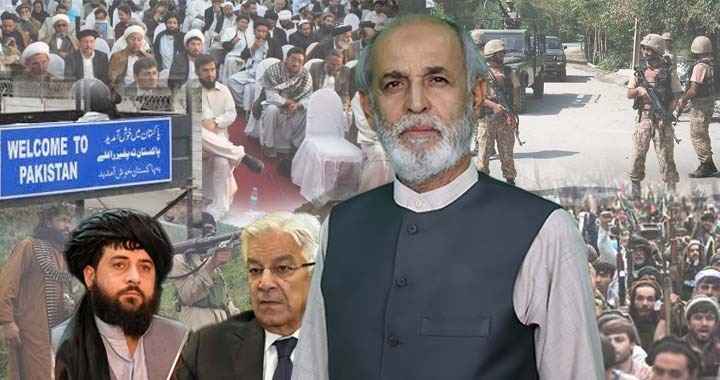
On December 11, 2025, more than one thousand prominent Afghan clerics gathered in Kabul and issued a unanimous religious decree stating that Afghan soil will not be used against any other country, particularly Pakistan. This gathering and its outcome took place on the instructions of the Taliban’s Supreme Leader, Sheikh Hibatullah Akhundzada. Since taking power in 2021, the Afghan Taliban have repeatedly stated that Afghan territory will not be used against Pakistan, although in practice this had remained only a verbal assurance. The newly issued decree is essentially a response to Pakistan’s demand, because during the recent period of tension, Islamabad insisted that the Afghan Taliban openly denounce the TTP and its allied groups, whether Afghan or non Afghan, and issue a religious ruling against them. Now that the decree has been issued, greater responsibility falls on Pakistan’s government because the Afghan Taliban claim that the border is fenced, no one can cross it, and they do not allow anyone to do so.
It is therefore essential that Pakistan strengthen its internal security system and develop a coordinated approach that allows for the prevention of terrorist incidents before they occur. The key question now is what Pakistan should do. Public confidence must be restored, especially in Khyber Pakhtunkhwa, where people lack the trust that should normally exist. In the past, whenever a peace committee was formed, one or two members would be assassinated the same night, which destroyed confidence. Restoring trust is crucial, and the government needs to review its policies.
Communities and peace committee members must receive security and institutional backing. If the state provides consistent support to tribal elders or peace committee members, terrorism can be controlled. Regular channels of communication are also necessary. Border security systems must be improved. During the Pakistan Afghan Taliban talks in October, the Afghan Taliban proposed a neutral border monitoring mechanism under UN supervision, consisting of security and intelligence officials from both countries. If such a system is strengthened, cross border infiltration can be controlled. For this to work, both states must trust each other. At this time the atmosphere is tense and blame shifting continues, which needs to end.
The Afghan Taliban’s decision to label these groups as rebels is a positive step. Pakistan should welcome it and respond constructively. After identification and detention, rebels should be handed over to a legal process. If evidence is proven, they should face punishment. Just as Pakistan follows legal procedure, the Afghan Taliban should do the same. If individuals are innocent, they should be released.
Inside Pakistan, Afghan nationals cannot operate without support networks. Criminal elements, political figures, and individuals within administrative institutions provide backing. Afghan refugees alone cannot carry out such activities. Pakistani institutions can bring them under legal control. Excessive force will raise human rights concerns and global criticism. The response must be legal, judicial, and administrative, applied openly so the public can see the nature of the offences and the legal process.
In Panjshir, a recent incident resulted in seventeen to eighteen Afghan Taliban fighters being killed. Resistance against the Taliban has existed since 2021 and this attack came after four months of relative quiet. Resistance groups look for opportunities and strike whenever they find a moment of weakness. This is a matter of deep concern for the Taliban. They do not have full control inside Afghanistan. In northern Afghanistan, they face serious challenges. The same region hosts Daesh and several Uzbek, Tajik, and other anti Taliban militant groups that are waiting for opportunities.
It is also important to note that in North Afghanistan, Daesh fighters are present who were originally arrested by the Ashraf Ghani government during operations in Kunar, Jalalabad, and other parts of eastern and central Afghanistan. Between three to four thousand Daesh fighters had been arrested and imprisoned, but once the Taliban took power, they released all of them and the fighters dispersed across Afghanistan. They remain scattered but maintain internal communication. Daesh receives support from a shadowy external force and is waiting for the right time. This should be a moment of serious reflection for the Taliban. They need to focus on internal stability instead of pursuing conflict with Pakistan or seeking alliances elsewhere. They must win the trust of their own people, because public dissatisfaction is widespread and if anti Taliban forces return, many Afghans will support them.
The recent fatwa will anger the TTP. The Afghan Taliban may have consulted them beforehand, because Islamabad was exerting significant pressure and this decree may have been issued to temporarily counter that pressure. It is possible that after a few months or a year, if circumstances shift, both sides could reconcile again. I have long argued, and still maintain, that the Afghan and Pakistani Taliban are essentially the same. Whether Afghan or Pakistani, their ideology, theological school, leadership structure, and operational outlook all converge and they both work for the broader Khorasan project.
A political alliance currently opposes the Taliban. It includes Rashid Dostum, Ahmad Massoud, Hanif Atmar, Salahuddin Rabbani, and others. Most are non Pashtuns, predominantly Tajik and Uzbek. They have formed an alliance against the Taliban and have expressed readiness for dialogue, aiming to address human rights concerns and restore peace in Afghanistan. They also maintain communication with Pakistan. However, in my view, this alliance is not effective because real power in Afghanistan rests with the Pashtuns, who form around sixty four percent of the population and have historically governed the country. Hamid Karzai, Gulbuddin Hekmatyar, and Abdul Rasul Sayyaf remain influential. Ashraf Ghani is in the UAE. These leaders still enjoy support. Without Pashtun participation, no political alliance can succeed.
If Pakistan wants to increase pressure and create a decisive moment, it must unify all stakeholders and empower them to take decisions whose outcomes are beneficial for Pakistan’s strategic interests.