(Shamim Shahid)
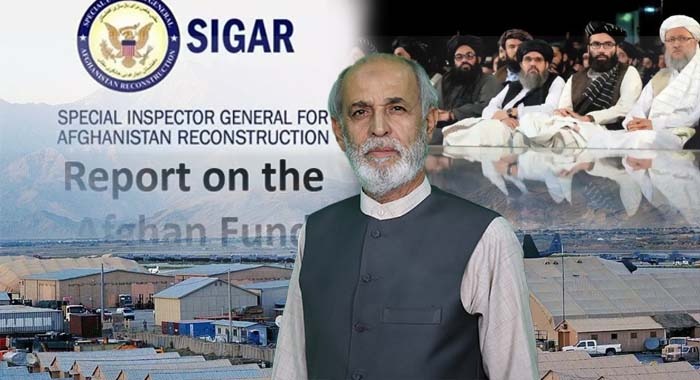
The latest report of the Special Inspector General for Afghanistan Reconstruction (SIGAR) is not merely an audit of dollars spent or projects failed; it is a post-mortem of a state that collapsed under the weight of flawed policies, strategic arrogance, and institutionalized corruption. It exposes, with numbers and facts, how the United States came to Afghanistan with declared objectives of stability and reconstruction, yet left behind a fractured society, a hollowed-out political system, and a resurgent Taliban leadership that today dominates Afghanistan with absolute authority but remains deeply controversial.
For nearly two decades, Afghanistan became the laboratory of international intervention. According to SIGAR, after the events of 9/11, the United States spent $144.7 billion on reconstruction, $763 billion on military operations, $90 billion on Afghan security forces, $7.1 billion on weapons, $7.3 billion on counter-narcotics, $4.7 billion on stabilization, $14.2 billion on refugee resettlement, and billions more on the United Nations, trust funds, and direct and indirect support mechanisms including, paradoxically, funds that ultimately reached the Taliban itself. At certain points, as revealed, $40 million per month was spent in channels linked to Taliban-controlled areas under various arrangements.
The question that naturally arises is this: how did a state collapse after receiving such enormous financial, military, and political support?
The primary reason lies in the nature of the Afghan state established after 2001. Following the US-led intervention, Afghanistan was declared an independent country with an elected government. However, this independence existed largely on paper. What Afghanistan lacked was a coherent political structure, a shared national agenda, and a unified vision of governance.
The political elite that emerged after 9/11 was not the product of an organic national process. Instead, it was a patchwork of jihadi commanders, exile politicians, and foreign-backed powerbrokers, many of whom had spent years in Pakistan, Iran, or Western capitals. Each faction maintained loyalty not to a national framework but to its external sponsors and regional patrons. Commanders answered to different intelligence handlers; institutions were created not on merit but on compromise and appeasement.
Such a system, assembled hastily and sustained artificially, was destined to produce contradictions, rivalries, and paralysis. A state cannot survive when its leaders do not share a common political boundary or ideological commitment.
There is no denying that corruption became the most destructive force in post-2001 Afghanistan. But it is important to understand that this corruption was not culturally inherent to Afghan society. It was introduced, incentivized, and normalized through foreign intervention and unchecked financial flows.
From 2002 onwards, massive sums of money were injected into Afghanistan without effective oversight. Commanders were handed millions of dollars to secure loyalty or fight rival factions. Reconstruction contracts became instruments of personal enrichment. Kickbacks, nepotism, and favoritism dominated every major sector from infrastructure and education to health and security.
Ministries were led largely by political or jihadi figures rather than technocrats. While there were educated and capable individuals in advisory roles, decision-making power remained with those whose legitimacy derived from guns, foreign backing, or factional influence. Planning existed on paper, but implementation was driven by access to money, not public need.
The result was predictable: projects were launched but never completed, roads were built and destroyed repeatedly, and institutions existed without authority. Every year brought new military operations, undoing whatever fragile progress had been made the previous year. Stability, therefore, remained elusive because the system itself was not sustainable.
Another critical factor was persistent foreign interference. After 9/11, Afghanistan became a heavily managed state. American and allied officials exercised direct and indirect control over political appointments, security decisions, and strategic priorities. Afghan leaders were often dictated to rather than consulted, undermining both sovereignty and legitimacy.
Even President Hamid Karzai, despite his efforts to centralize authority and build a functioning administration, faced relentless pressure from external actors and internal jihadi factions. The inclusion of armed groups into the political system without proper demobilization ensured that violence and politics remained inseparable.
Moreover, the US never treated Afghanistan as a final destination. Its strategic focus shifted repeatedly from Afghanistan to Iraq, then Libya, Syria, and beyond. Afghanistan became one theater in a larger geopolitical play, not a nation-building priority. This lack of long-term commitment manifested in inconsistent policies, abrupt shifts, and ultimately, negotiations with the Taliban that undermined the elected Afghan government and altered the balance of power decisively.
The talks between the United States and the Taliban were a turning point. By sidelining Kabul and engaging directly with an insurgent group, Washington unintentionally legitimized the Taliban while delegitimizing the Afghan state. These decisions weakened morale within Afghan institutions and sent a clear signal: power did not flow from elections but from force.
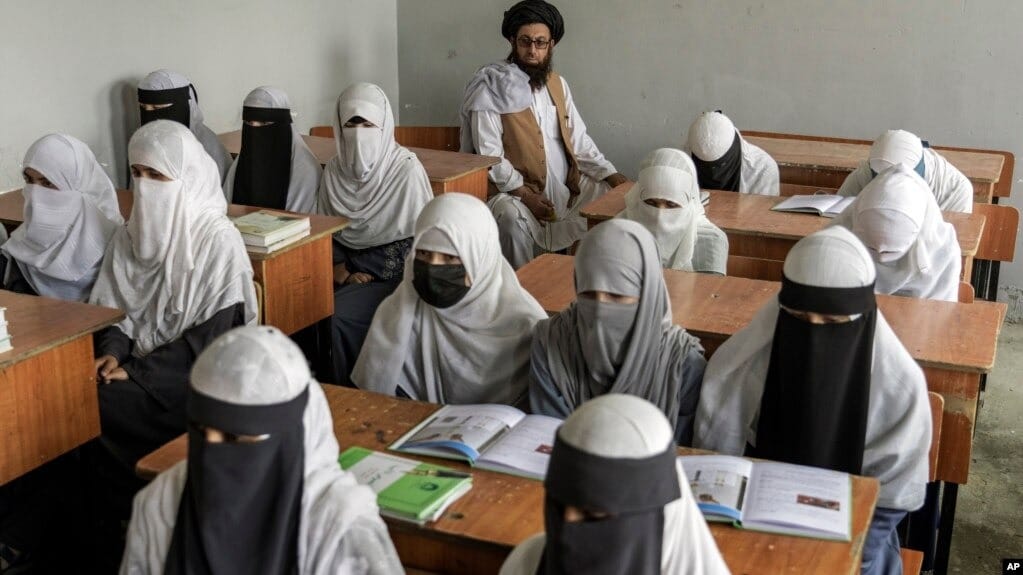
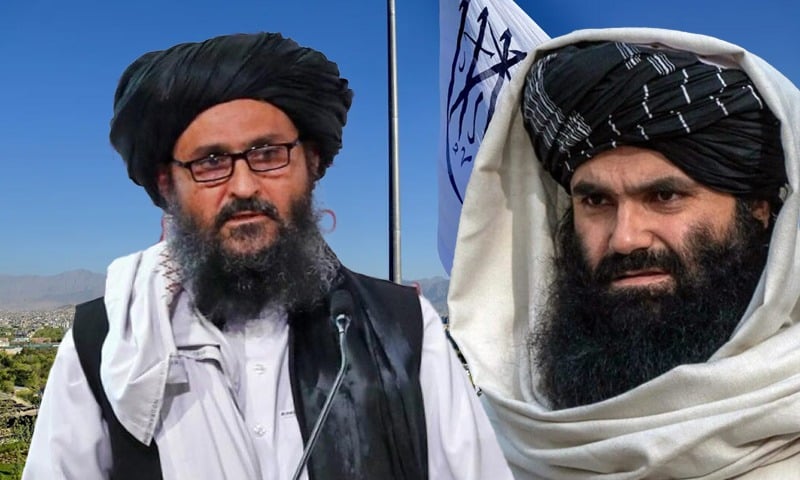
Today, figures such as Mullah Hibatullah Akhundzada stand at the apex of power, commanding an Afghanistan that is politically centralized but socially fractured. While the Taliban have imposed a rigid system of control, they face immense international pressure and internal distrust. Education, healthcare, and employment opportunities have sharply declined. Schools are closed or restricted, professionals are fleeing, and basic freedoms have vanished.
Reports of teachers being dismissed over appearances, women excluded from public life, and doctors in short supply paint a grim picture. Refugees returning under compulsion find themselves in tents amid rain and snow, without shelter or livelihood. Tragedies, including children dying from cold exposure, are no longer isolated incidents but symptoms of systemic collapse.
Ironically, the seeds of this crisis were planted decades earlier. During the anti-Soviet jihad, Afghan commanders once ordinary middle-class citizens were transformed into powerful warlords through foreign funding. Proxy warfare enriched individuals while destroying institutions. After the Geneva Accords, infighting replaced unity, giving rise to militias, “Topak Salari,” and eventually extremist networks.
Arab fighters who entered Afghanistan during the jihad did not leave when the war ended. Instead, they formed the foundations of Al-Qaeda, which established dozens of camps across the country. Afghanistan became a hub for transnational militancy, leading directly to the 9/11 attacks and the subsequent US invasion.Thus, history came full circle. Foreign intervention once again attempted to reshape Afghanistan, repeating many of the same mistakes empowering armed actors, ignoring social realities, and prioritizing short-term stability over long-term governance.
The SIGAR report confirms what many observers have long argued: Afghanistan did not fail due to a lack of money or effort, but due to flawed decisions, poor planning, lack of accountability, and systemic corruption. The Afghan state was weakened not only by insurgency but by policies that hollowed out its institutions from within.
Today’s Afghanistan stands as a warning not just to policymakers in Washington, but to the international community at large. State-building cannot succeed through military might alone. Democracy cannot survive without legitimacy. And no amount of money can compensate for the absence of political vision.
The tragedy of Afghanistan is not merely that it fell but that it was allowed, repeatedly, to be broken.