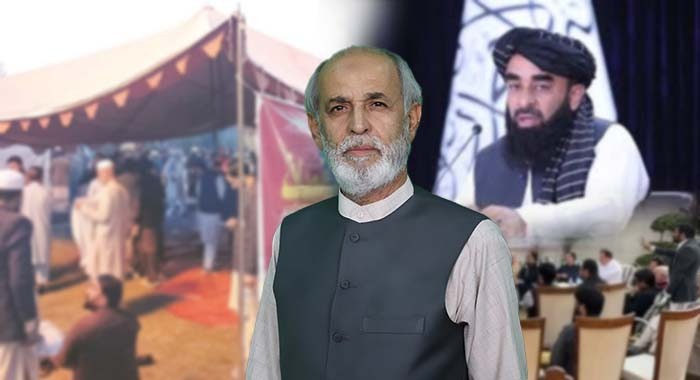
(Shamim Shahid)
Khyber Pakhtunkhwa today stands at a dangerous crossroads where political agitation has morphed into public suffering. For the past several days, the province has remained virtually cut off from the rest of the country as protests by the Pakistan Tehreek-e-Insaf (PTI) have led to the closure of key highways, motorways and arterial routes. The Peshawar–Islamabad Motorway, the Hazara Motorway, the D.I. Khan–Islamabad Motorway, the GT Road, and several inter-district roads including Buner–Mianwali and Karak–Indus Highway have been blocked. Even internal routes such as the Bannu–Mianwali Road and arteries connecting Swabi, Khairabad and Attock have faced disruptions. The result is not merely inconvenience. It is paralysis. And when a province is paralyzed, it is not the state that bleeds first it is the people.
If one observes the situation objectively, it becomes evident that Khyber Pakhtunkhwa is experiencing an unprecedented internal lockdown one not imposed by a natural disaster or a security emergency, but by political strategy. While roads in Punjab, Islamabad and even parts of Balochistan remain open, connectivity from Khyber Pakhtunkhwa outward has been severely restricted. I personally witnessed the human cost of this disruption. On the Attock Bridge, vehicles were stranded for hours. Women and children stepped out of cars and walked in desperation. Families sat helplessly in stalled buses. Transporters, who already operate on thin margins, counted mounting losses with every passing hour. This is not protest in its classical democratic sense. This is economic suffocation.
The tragedy deepens when we examine the consequences. A woman reportedly lost her life in a traffic accident amid the chaos. In another heartbreaking incident, a mine worker from Buner who died in an accident had his body transported home 30 hours later due to road closures what should have been a two-hour journey from Abbottabad turned into a logistical nightmare. When roads close, ambulances slow. When highways block, funerals delay. When supply lines snap, prices soar. The supply of vegetables, poultry, fruits and flour from Punjab has been severely affected. Markets in several districts have already witnessed price hikes. Perishable goods rot in stranded trucks while shopkeepers struggle to restock. The economic ecosystem of a province is delicate; once disrupted, it reverberates across every household. Who pays for this? Not political leaders sitting in assembly halls. Not those making speeches from secure compounds. It is the daily wage laborer, the transporter, the shopkeeper and the ordinary citizen.
The irony is striking. Reports suggest that in many locations, only small groups of party workers were sufficient to block major arteries. In some cases, a handful of individuals parked vehicles across highways and simply sat down, halting movement entirely. Security personnel often remained passive observers. When journalists requested that roads be reopened, it reportedly took significant persuasion. In some districts, frustrated transporters and passengers confronted protesters directly, leading to tense stand-offs. In D.I. Khan, demonstrators on Chashma Road reportedly faced resistance from commuters. In Swabi and Khairabad, local anger appears to be building.
If this trajectory continues, the risk of public-versus-public confrontation becomes very real. Political protests can quickly mutate into social unrest when citizens begin to feel collectively punished.
It is worth recalling that PTI has repeatedly received a strong mandate from the people of Khyber Pakhtunkhwa since 2013. The province has served as the party’s political stronghold and gateway to national influence. Representation in the National Assembly and Senate has, in part, been powered by this base. Yet today, it is this very province that appears to be bearing the brunt of political brinkmanship. Protest is a constitutional right. But rights come tethered to responsibilities. When agitation disrupts essential services, halts food supply chains and endangers lives, it ceases to be symbolic dissent and becomes coercive disruption. No government federal or provincial collapses because trucks stop carrying tomatoes. No institution bends merely because buses are stranded. The state apparatus remains insulated. It is the public that absorbs the shock.
Simultaneously, the security environment in Khyber Pakhtunkhwa remains fragile. Reports of attacks in districts like Tank and Bannu, including incidents resulting in casualties among police personnel, underscore the volatility of the region. Daily security challenges already stretch law enforcement capacities. In such a scenario, diverting administrative focus toward managing political blockades weakens the province further. When governance appears absent and law enforcement seems hesitant, the perception of anarchy takes root. A state cannot afford paralysis on multiple fronts political, economic and security at the same time.
Amid domestic turmoil, another pressing issue looms across the western border. The United Nations has appealed for the reopening of border crossings between Pakistan and Afghanistan on humanitarian grounds. According to the World Food Programme, critical food supplies including rice, lentils, ghee and wheat are awaiting transit to assist vulnerable populations. Thousands of trucks are reportedly stranded. Drivers and cleaners remain stuck for weeks. Pakistani citizens across the border face mounting difficulties, many unable to afford exorbitant airfare between Peshawar and Kabul. The paradox is stark: while land routes remain closed, limited air traffic continues, but at fares unaffordable to ordinary citizens. Humanitarian supply chains require predictable corridors. Border management is a sovereign prerogative, but prolonged closures carry human costs beyond political messaging.
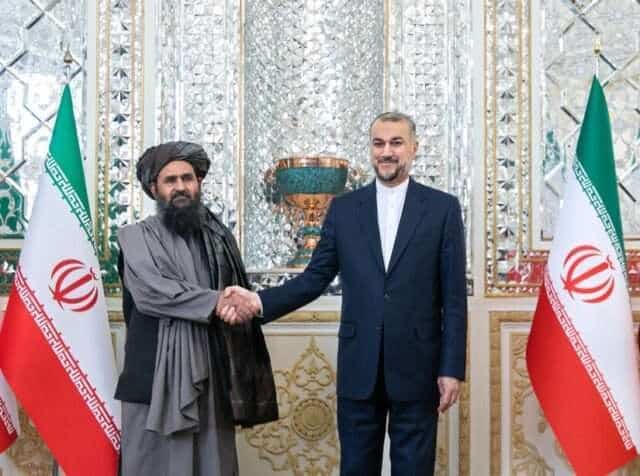
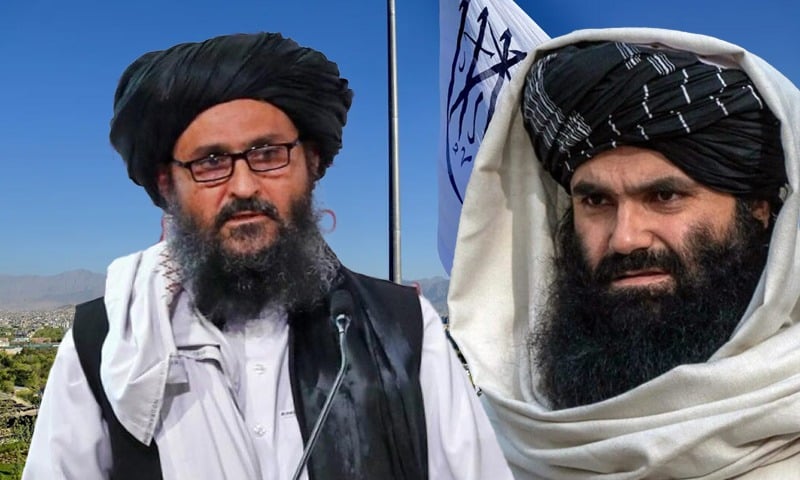
In Kabul, spokesperson Zabihullah Mujahid recently declared that Afghanistan would stand with Iran if the United States or Israel were to launch attacks against it. Such statements are politically symbolic, but strategically limited. The current Afghan administration does not possess a functional air force or advanced missile capability. Any hypothetical confrontation involving Iran and major powers would unfold primarily through air and missile exchanges domains beyond Afghanistan’s present military capacity. Thus, such declarations amount largely to political positioning rather than operational commitment. More significantly, internal dynamics within Afghanistan appear complex. Senior figures, including Defence Minister Mullah Mohammad Yaqoob, have hinted at the need for policy recalibration, both domestically and internationally. Calls for moderation and broader acceptance suggest internal debate about governance direction.
These regional developments intersect with Pakistan’s security calculus. A stable western frontier is essential, particularly when internal cohesion in provinces like Khyber Pakhtunkhwa is already under strain.
Political Objectives Achieved? Supporters of the protest argue that their political objectives particularly regarding legal proceedings involving PTI leadership have been partially achieved. Judicial hearings continue, and political narratives remain active in national discourse. If so, one must ask: what additional leverage is gained by immobilizing one’s own electorate? Democratic politics is ultimately about persuasion, not punishment. When public patience erodes, sympathy diminishes. Even the most loyal constituencies have thresholds of tolerance, especially when livelihoods are at stake.
The most alarming possibility is escalation through spontaneous public backlash. Already, isolated reports suggest tensions between protesters and transporters. If local traders, shopkeepers and daily commuters decide to forcibly reopen roads, confrontations could spiral. History teaches us that once civic order fragments, it becomes difficult to restore without heavy-handed intervention. No responsible political movement should wish to see its own province descend into street-level conflict between citizens. Political disagreement is intrinsic to democracy. Street protests, sit-ins and demonstrations have shaped Pakistan’s history. But the moral legitimacy of any movement depends on proportionality. Block the symbolic, not the essential. March, but do not choke supply lines. Speak loudly, but do not silence ambulances.
Khyber Pakhtunkhwa is not merely a staging ground for national politics. It is home to millions who have already endured decades of militancy, displacement and economic hardship. They deserve stability, not siege conditions.
The provincial leadership must reassess strategy. Law enforcement must act with neutrality and firmness, ensuring peaceful protest while preventing coercive obstruction. Federal authorities must engage politically rather than administratively. And civil society must assert that public welfare cannot become collateral damage in political chess. The present moment is a test not only for PTI, not only for the provincial administration, but for Pakistan’s democratic maturity. When highways close, a province shrinks. When markets empty, anxiety grows. When citizens suffer, politics loses its moral core. Khyber Pakhtunkhwa has given its mandate repeatedly. That mandate was not a license to immobilize its own people. It was a trust to govern responsibly, to protest responsibly, and above all, to protect the public interest. If political actors fail to recalibrate, the greatest casualty will not be any party’s narrative. It will be public faith itself. And once that erodes, rebuilding it becomes far more difficult than reopening any motorway.