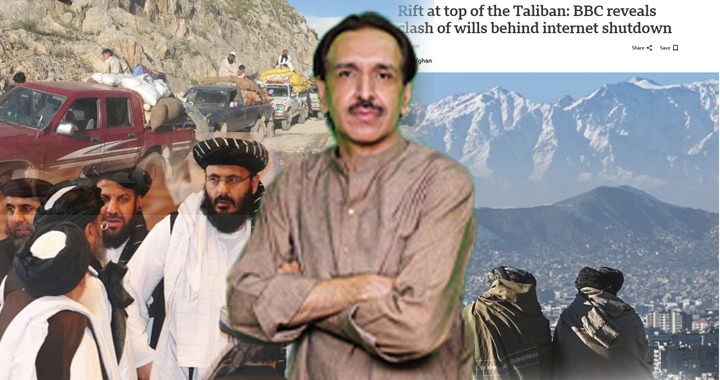
(Aqeel Yousafzai)
The security crisis unfolding across Pakistan’s northwest and Afghanistan cannot be understood through isolated incidents or partisan slogans. It is a deeply interconnected story of militancy, political opportunism, state ambiguity and ideological fractures that now threaten to destabilise both countries simultaneously. Recent developments in Tirah Valley, the sharpening political divide in Khyber Pakhtunkhwa, and a revealing BBC investigation into internal Taliban rifts together point to one uncomfortable conclusion: the region is entering a phase where confusion, not clarity, is shaping policy and confusion is always a gift to militant networks.
For years, Tirah Valley has been treated as a peripheral problem, a rugged and distant geography that can be ignored until it erupts. That neglect has come at a steep price. Unlike other areas of Khyber Pakhtunkhwa, Tirah’s strategic proximity to Tora Bora and Nangarhar has made it a natural corridor for militant movement. Intelligence assessments have long suggested the presence of Al-Qaeda-linked fighters in and around this belt, with credible reports placing senior Al-Qaeda figures, including Saif al-Adel, in eastern Afghanistan. This alone should have been enough to trigger sustained administrative and security attention. Instead, the vacuum widened.
Into that vacuum stepped multiple actors. Ahrar factions regrouped. So-called “Islamic Army” elements reactivated. Cross-border smuggling networks flourished, feeding both militancy and criminal economies. In the absence of a functioning civil administration, authority fragmented. Where the state hesitated, militants imposed parallel systems collecting taxes in the name of Ushr, intimidating locals through drones and targeted attacks, and embedding narcotics mafias that operate with ideological cover. This is not merely a law-and-order issue; it is the gradual construction of an alternative power structure.
Against this backdrop, the decision to clear Tirah was not sudden or arbitrary. It followed prolonged consultations at multiple levels, including core security forums and field commanders. Unlike past operations such as Swat or early Waziristan campaigns, this initiative was deliberately limited in scope and time. The state learned from history. People were not displaced indefinitely. Compensation was released in advance. Agreements were reached with local communities. By all accounts, this was among the first operations in which the social cost was acknowledged before the first boot moved.
Yet even such a calibrated effort became hostage to political point-scoring.
This is where the crisis deepens. While funds were released, while people cooperated, and while security forces moved with restraint, a parallel narrative was unleashed—one that framed the operation as illegitimate, unnecessary, or politically motivated. When sensitive security matters are converted into slogans for public rallies or social media outrage, the consequences are not abstract. They are operational. Bureaucracies freeze. Officers hesitate. Counterterrorism departments remain underfunded and under-equipped.
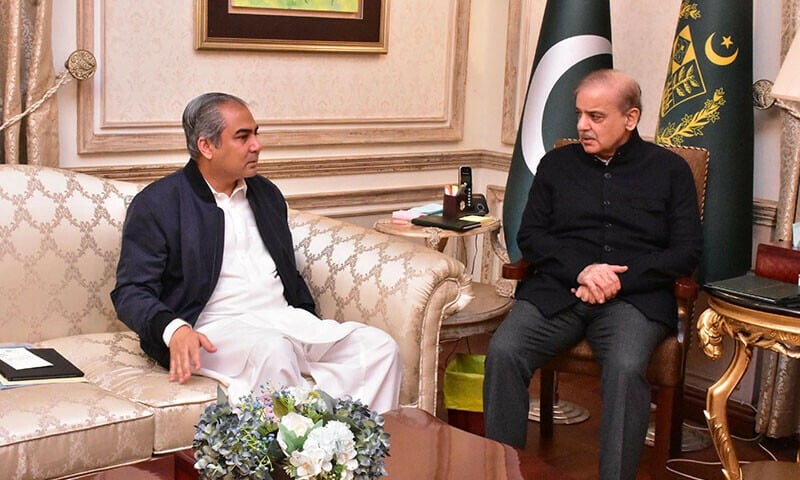
The condition of the Counter Terrorism Department (CTD) in Khyber Pakhtunkhwa is a case in point. Officers tasked with confronting militants complain of having weapons worth millions but no ammunition, no fuel, no vehicles. They are asked to fight a modern insurgency with empty hands. This is not a failure of courage; it is a failure of governance. When provincial leadership uses security crises to pressure federal institutions rather than strengthen its own, it sends a dangerous signal—not just to militants, but to the rank and file meant to confront them.
This ambiguity extends to civil-military relations. Constitutional boundaries are blurred for optics. Assembly speakers talk of summoning corps commanders, as if war and governance are interchangeable domains. Defence ministers are forced to publicly restate basic constitutional principles. In such an environment, seriousness evaporates. Militancy, however, thrives on seriousness on the absence of distraction.
What makes this situation even more alarming is the broader ideological confusion being deliberately cultivated. On one hand, the world from the United Nations to independent investigative media—has documented Afghanistan’s transformation into a hub for multiple militant groups. On the other, influential voices within Pakistan insist on denying or relativising this reality, suggesting that global consensus is a lie and domestic institutions are exaggerating threats. This narrative does not weaken international pressure; it weakens Pakistan’s internal coherence.
The costs are visible. Public and political resistance to counterterrorism operations has increased in Khyber Pakhtunkhwa not because people support militants, but because they are trapped between contradictory messages. When political leaders fail to visit wounded soldiers, martyred officers or police personnel, yet make high-profile visits to governors, corps commanders and power centres for optics, the public notices. When grief is politicised and sacrifice selectively acknowledged, trust erodes.
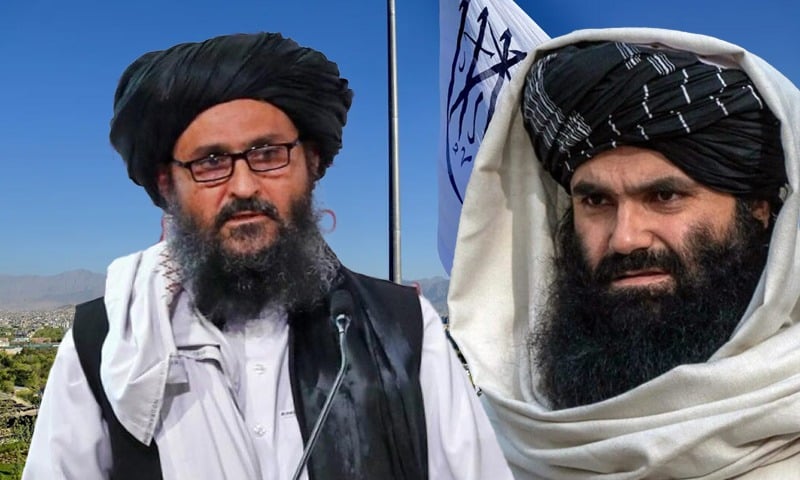
This erosion of trust is mirrored across the border in Afghanistan, where the BBC’s recent investigative report has confirmed what regional journalists have long been saying: the Taliban are not a monolith. Deep fractures are emerging between the Kandahar-based leadership and the Kabul-centric governing apparatus, often described as the Haqqani or “Kabili” group. The dispute is not merely administrative; it is ideological.
Power, according to the BBC, is being systematically centralised in Kandahar, with authority platforms shifted away from Kabul. Ministers and advisers operating in the capital increasingly find themselves sidelined, monitored, or accused of deviating from what Kandahar defines as “true” Islamic governance. A parallel structure of loyalists has reportedly been created to oversee and discipline the Kabul administration. This is not governance; it is internal surveillance.
At the heart of this rift lies a fundamental disagreement over the future of Afghanistan. One camp insists on an uncompromising jihadist worldview, resistant to change, recognition or adaptation. The other—though hardly liberal—appears exhausted by perpetual rigidity and international isolation. This tension is not theoretical. It affects security policy, economic management and relations with militant groups operating beyond Afghanistan’s borders.
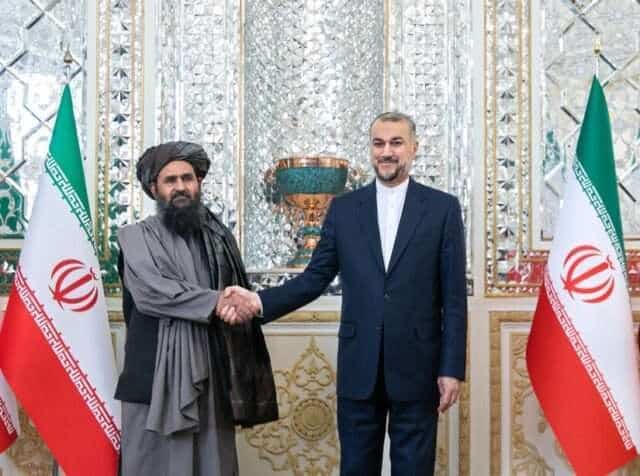
For Pakistan, this matters profoundly. A fragmented Taliban leadership is less capable of controlling transnational militants such as the Tehreek-e-Taliban Pakistan (TTP). It is also more likely to tolerate, or even instrumentalise, such groups as leverage in regional politics. When Kabul is weak and Kandahar is rigid, militant sanctuaries multiply.
It is in this context that recent statements by Maulana Fazl-ur-Rehman acquire significance. His categorical declaration that jihad against Muslims, the Pakistani state, and society is un-Islamic marks a rare and important moment of ideological clarity. For decades, militant groups have relied on religious ambiguity on selective silence or tacit approval from influential clerics. Maulana Fazl-ur-Rehman’s stance directly challenges that ambiguity.
This is particularly notable given the historical links between elements of JUI and early TTP commanders. Several key figures involved in the formation of the TTP in 2007 had ideological or organisational ties with JUI factions. By publicly rejecting the legitimacy of such violence, Maulana Fazl-ur-Rehman has disrupted a narrative that militants have long exploited. In a region starved of moral clarity, this is not a small development.
However, ideological statements alone are not enough. They must be matched by consistent policy, credible governance and institutional coherence. Pakistan cannot afford a situation where one arm of the state fights militancy while another undermines that fight for short-term political gain. Nor can it afford to outsource its Afghan policy to denial and wishful thinking.
The lesson from both Tirah and Kabul is the same: when authority is fragmented, militants fill the gaps. When narratives conflict, violence finds justification. When politics consumes security, insecurity becomes permanent.
Afghanistan’s internal unrest may eventually push its current system toward collapse or forced transformation. Reports of attacks in different regions, largely unreported due to media suppression, suggest a state under strain. International pressure, driven by the presence of terrorist groups, is mounting. A government that continues to follow a pro-militancy or permissive approach will find itself increasingly isolated.
Pakistan stands at a crossroads. It can choose coherence over confusion, seriousness over spectacle, and policy over posturing. Or it can continue down a path where every security challenge becomes a political weapon, and every operation becomes a controversy.
History offers a clear verdict on such choices. Militancy does not defeat states overnight. It defeats them slowly by exploiting their divisions, amplifying their contradictions, and waiting patiently while they argue with themselves.