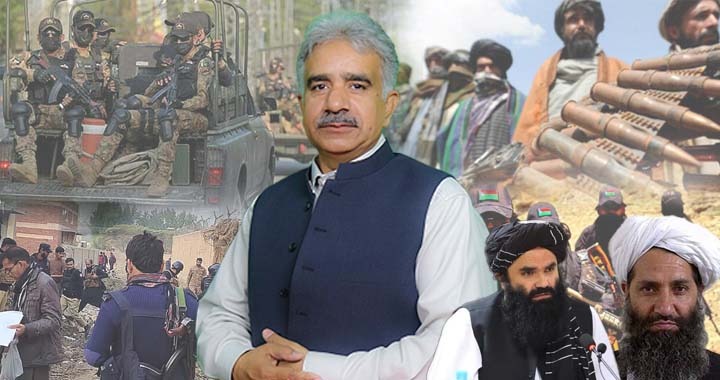
There has been a clear and visible shift in the extremist mindset. In Khyber Pakhtunkhwa and the former tribal areas, a new trend has emerged within terrorist organizations. Previously, these groups mobilized people in the name of Sharia, Islamization, and the implementation of Islamic law. Their core narrative revolved around declaring the state and the army apostate, promoting an anti-army ideology as a religious obligation.
If one looks back, figures such as TNSM’s Sufi Mohammad, Baitullah Mehsud, and Hakeemullah Mehsud were not only militant commanders but also ideologues who openly rejected the political system. Democracy, in their view, was non-Islamic. Their objective was to establish a parallel Islamic system, a state structure that would ultimately lead to Khilafat.
On a broader scale, international terrorist organizations followed similar patterns. Daesh, particularly IS-Khorasan, carried a global agenda of imposing Khilafat worldwide. Al-Qaeda pursued a pan-global Islamic system. The local manifestations of the banned TTP were initially aligned with the Afghan jihad, presenting themselves as part of an international force fighting against Russia. When Russia withdrew from Afghanistan, Al-Qaeda and groups that had been created during the war on terror continued jihad, redirecting it against the United States and its allies.
The critical question arises here: after all this, what narrative remained for these groups?
From their perspective, an Islamic state has already been established in Afghanistan, led by Sheikh Hibatullah Akhundzada, with a cabinet that claims to be running an Islamic system. This is their belief. With this assumption in place, their vision has shifted. The question now becomes what is next.
The answer, according to this evolving strategy, lies in expansion. First into Pakistan, then onward into Central Asia. A new narrative is being constructed to facilitate this ambition.
Within Pakistan, particularly in Khyber Pakhtunkhwa and Balochistan, there has been a total shift toward nationalism. Women are now being targeted through nationalist discourse. Baloch organizations claim that Baloch people are oppressed, deprived of rights, denied ownership over their resources. They argue that minerals are extracted from their lands, oil may be discovered, agricultural produce is generated, yet they receive no rightful share.
This shift did not happen by accident. It occurred because the previous religious narrative failed to engage the new generation. When young people could no longer be mobilized through jihad and Sharia slogans, the narrative was replaced.
Now the discourse revolves around resources, missing persons, identity, Pukhtunwali, language, and ethnic belonging. Organizations such as PTM speak of the same themes: resources, missing persons, identity, and local customs. Yet the irony is evident. The armed forces, the bureaucracy, the police, and even the courts include individuals from the same tribes and linguistic backgrounds. This raises a fundamental question directed at these tribes themselves: has anyone explicitly violated your rights?
There is no denial that poverty, deprivation, lack of development, and governance failures exist. These issues must be addressed at the policy level. However, it is precisely these governance gaps that are being exploited. Extremist organizations, having failed to radicalize the youth through religion, now anchor themselves in civic grievances.
The same pattern is visible in Balochistan. Baloch liberation terrorist organizations engage the youth by repeating claims of resource exploitation and political marginalization. They portray Islamabad, Punjab, and the federation as beneficiaries, while the local population is depicted as dispossessed. This shift is not subtle. It is clear, calculated, and dangerous.
When extremist groups spoke purely in religious terms, their arguments could be challenged through religious scholarship. The question of where jihad is permitted required fatwas from senior ulema. Religious scholars consistently rejected this form of extremist interpretation. That space narrowed the extremists’ legitimacy. Now, by moving into civic rights, identity, and governance issues, they have entered terrain that is harder to counter through theology alone.
This brings the discussion to governance and the role of the Khyber Pakhtunkhwa government. Under the banner of the war on terror, the approach appears directionless. Political resistance to operations and opposition to drone strikes create confusion. Terrorist organizations that openly threaten and attack the province are indirectly reassured when operations are resisted.
If dialogue is to take place, it must have parameters. Will these groups accept the authority of the state? Will they disarm? Will they end rebellion? Without these conditions, dialogue has no meaning. You cannot shape national policy around the demands of ten, twelve, or even fifteen thousand militants while risking the stability of the entire country.
If political representatives believe negotiations are the solution, they must present a workable formula. These representatives sit in provincial assemblies, the National Assembly, and the Senate. Many are themselves from tribal areas. The question must be asked of them directly: what is your viable model to end terrorism?
International dynamics further complicate the situation. Zalmay Khalilzad’s repeated visits to Kabul raise serious questions. He is no longer an official US representative, yet his presence is highly visible. Meetings with Amir Khan Muttaqi, discussions around prisoner releases, and public statements about peace in Afghanistan suggest an informal but influential role.
There is also the matter of American interests. Sources indicate continued US interest in access to Bagram Air Base or Afghan airstrips for operations, particularly those linked to China and Russia. Prisoner releases are another leverage point, often tied to financial exchanges. The Taliban regime under Sheikh Hibatullah benefits from these engagements, as visits by non-official yet influential figures help normalize their international standing.
This exposes a contradiction. On one hand, there is rhetoric about fighting terrorism. On the other, there is indirect support for a regime that denies basic rights and hosts multiple terrorist organizations. This is not diplomacy in the open. This is backdoor diplomacy, clearly visible.
The regional consequences are severe. UN reports confirm the presence of more than twenty terrorist organizations operating from Afghan soil. Pakistan is concerned. Iran is concerned. Russia and Central Asian republics are concerned. Attacks linked to Afghanistan, including those affecting Tajikistan and broader Central Asia, reinforce these fears.
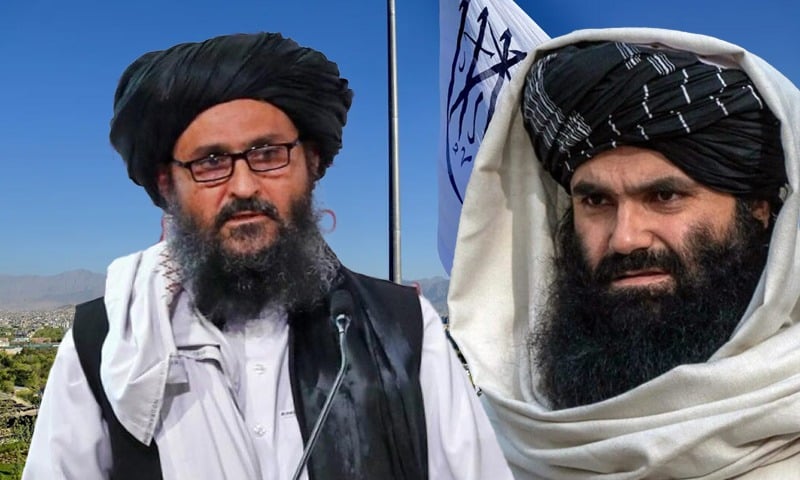
Internal rifts within the Afghan Taliban further complicate matters. Statements and public positioning by Sirajuddin Haqqani, engagements in Kandahar, and visible public support indicate power struggles within the Taliban structure. Signals suggesting that Afghan soil will not be used against other countries have been welcomed by Pakistani religious scholars and officials.
If leadership dynamics shift, particularly if figures like Sirajuddin Haqqani assert greater influence, there may be space for improved Pakistan-Afghanistan relations. However, guarantees are essential.
The human cost of prolonged tension cannot be ignored. Border closures harm trade, livelihoods, and ordinary people. Afghan refugees returning home face rehabilitation challenges, medical shortages, and lack of development. Continued hostility will damage both states.
Negotiation, ultimately, is unavoidable. But negotiation without action against terrorism is meaningless. The central question remains unresolved: will the Afghan Taliban act against terrorism, and will they honor guarantees if given?
Without clear answers, the region remains trapped in a cycle where ideology mutates, narratives shift, but violence persists.