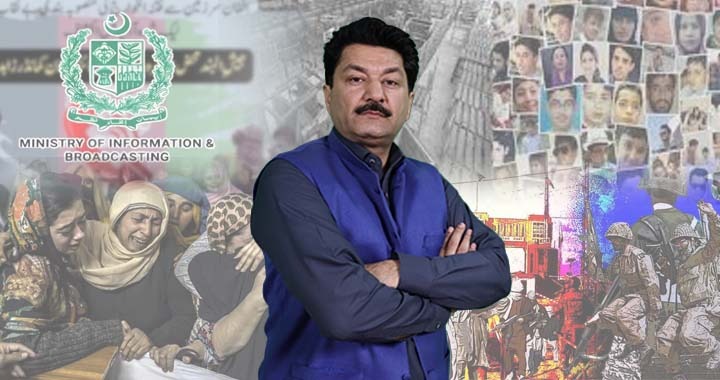
If we look back eleven years, Pakistan was engulfed in an intense wave of terrorism. That phase was followed by a brief and uneasy calm, only for another wave to emerge later. When negotiations were initiated with militant groups under the mediation of the Afghan Taliban, what followed was not peace but the onset of a second wave of terrorism, a wave that continues to this day.
In the earlier phase, public places were the primary targets. Markets, streets, and crowded urban centres bore the brunt. Peshawar, in particular, witnessed near daily explosions, and the violence stretched across Khyber Pakhtunkhwa and into major cities across Pakistan. It was a deeply disturbing period. Later, under the leadership of Noor Wali Mehsud, the militant strategy appeared to shift. Direct attacks on public places declined, and the focus seemed more narrowly directed.
That tactical adjustment, however, has now reversed. Once again, public spaces are being hit alongside security forces. Almost every clash now carries reports of so‑called collateral damage. But the reality cannot be ignored. Video evidence repeatedly shows militants embedding themselves within civilian populations, using homes, streets, and neighbourhoods as cover. When terrorists deliberately shield themselves with civilians, collateral damage becomes an inevitable and tragic consequence.
Local communities have repeatedly urged militants to leave populated areas and retreat to the mountains. Those pleas have gone unanswered. Militants remain embedded within civilian settlements, launch attacks from there, and then retaliation follows from security forces. Once again, the same population is exposed to harm, used as a shield by the very groups that claim to fight in their name.
This reality has grown even more dangerous with the introduction of modern technology into militant hands. Terrorist groups now possess drones and quadcopters, devices they lack the training to operate with precision. As a result, explosive payloads frequently miss intended targets. In many incidents, women and children have been injured or killed. Public anger and protests are therefore understandable and justified.
The uncomfortable truth is that this war is no longer being fought in remote mountains or open fields. It is being fought inside cities, towns, and settlements.
In the tribal districts of Khyber Pakhtunkhwa, particularly in the southern belt, police stations and security installations are located within populated areas. They are not isolated outposts in forests or hills. Civilian neighbourhoods surround them, which means that when these sites are targeted, ordinary people inevitably suffer the consequences.
This brings us to the renewed targeting of educational institutions. Eleven years ago, Pakistan witnessed one of its darkest tragedies. Just weeks ago, an attempt was made to replicate that horror at Wana Cadet College. The plan followed a familiar pattern. First, the gate was targeted using explosives. Then militants attempted to breach the compound. Three attackers managed to enter but were quickly captured inside the administration block. At the time, more than 550 students were present at the college.
Eleven years ago, 143 people were martyred in a similar attack, most of them children. Teachers and school principals were also among the dead. Even today, nearly eleven years later, the nation struggles to fully articulate the magnitude of that tragedy. If we find it difficult to name and process that pain, how must it feel for the parents whose every moment is shaped by the memory of December 16.
We still recall the funerals, rows of coffins draped with flowers. Children who had not gone to war, who had not taken up arms, who left home carrying books, schoolbags, and dreams of a better future. They returned as bodies. Even after eleven years, one is left speechless, still questioning whether the perpetrators could be considered human at all. This is why it is said, repeatedly and without ambiguity, that terrorism has nothing to do with religion or humanity.
Yet today, the same patterns are resurfacing. In South Waziristan, North Waziristan, Bannu, Lakki Marwat, and Tank, school buildings are once again being blown up. What threat does a school building pose. Are there military camps inside schools. Are there trenches or weapons stored there. These schools are often destroyed at night, followed by hollow claims that attacks were timed to avoid harming children. Girls’ schools, in particular, are repeatedly targeted.
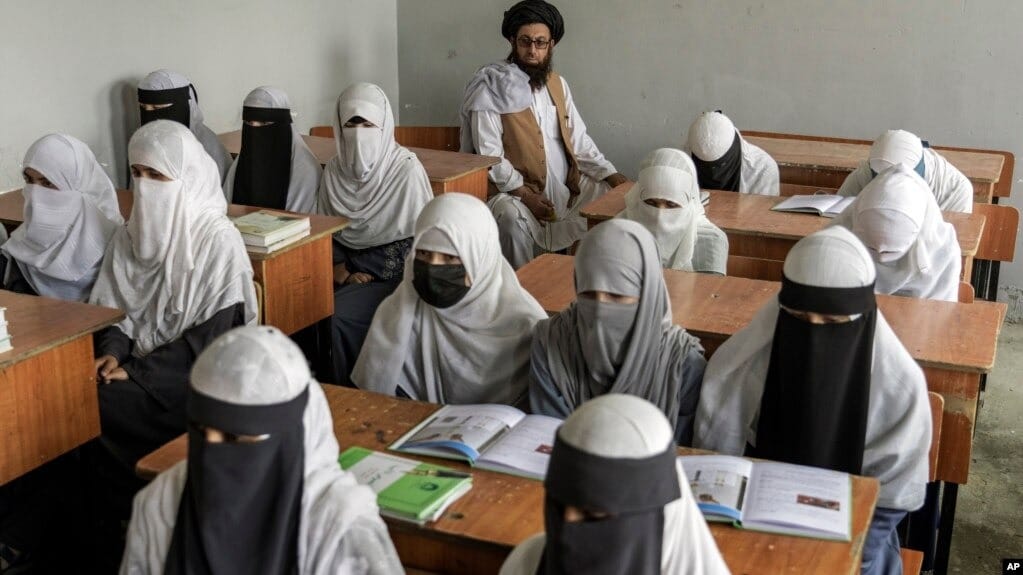
This reflects a continuation of the same mindset witnessed across the border in Afghanistan, where restrictions on girls’ education have become institutionalised. The targeting does not stop at schools. Health facilities, basic service centres, roads, and bridges are also attacked. Bridges, which hold religious and social significance as acts of public service, are destroyed with explosives. Roads essential to daily life are blown apart. This mentality reveals a deep hostility not only to the state but to society itself.
It is not only security forces who face the consequences. Ordinary people suffer daily. Travel becomes dangerous. Search operations disrupt normal life. Targeted killings create an atmosphere of fear. Life in these regions has become profoundly abnormal, and people are exhausted. Communities want peace, stability, and the right to live without constant fear.
Alongside physical violence, there is a war of narratives. Media, especially social media, is being used aggressively, often negatively. Statements are weaponised, misinformation spreads rapidly, and the burden of countering these narratives increasingly falls on educated youth. This educated generation stands in direct opposition to extremism. Terrorism and ignorance may coexist, but terrorism and education do not.
This is why teachers have been kidnapped, why government employees have been harassed, and why institutions are attacked. These are not isolated incidents but part of a broader strategy observed across the southern districts.
The obvious question then is, what is the solution. The answer lies in unity and cooperation. Unfortunately, political forces have failed to unite even on this most critical issue. Debate continues over whether to pursue military operations or dialogue, and if dialogue, then with whom and under what conditions. Meanwhile, people are unwilling to leave their homes, unwilling to uproot their lives, and unwilling to compromise on their children’s education.
Pakistan has repeatedly urged Afghanistan’s interim government to restrain terrorist organisations operating from Afghan soil. Leadership of these groups remains based across the border, and evidence has been presented on multiple international forums. These concerns are not Pakistan’s alone. They are shared by Afghanistan’s other neighbours, including China, Iran, Tajikistan, Turkmenistan, and Uzbekistan.
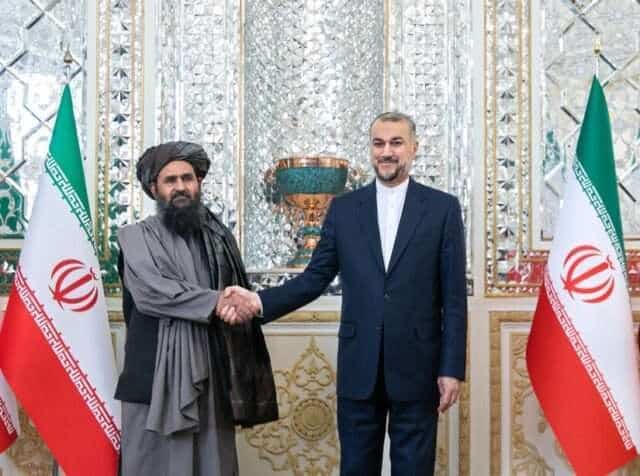
Yet at a recent regional meeting in Tehran focused on Afghanistan, the Taliban declined to participate. It is difficult to describe this as political maturity. Claims that Afghanistan does not need trade with Pakistan, or medicine, or transit access, ultimately harm the Afghan people themselves and further isolate the country regionally and globally.
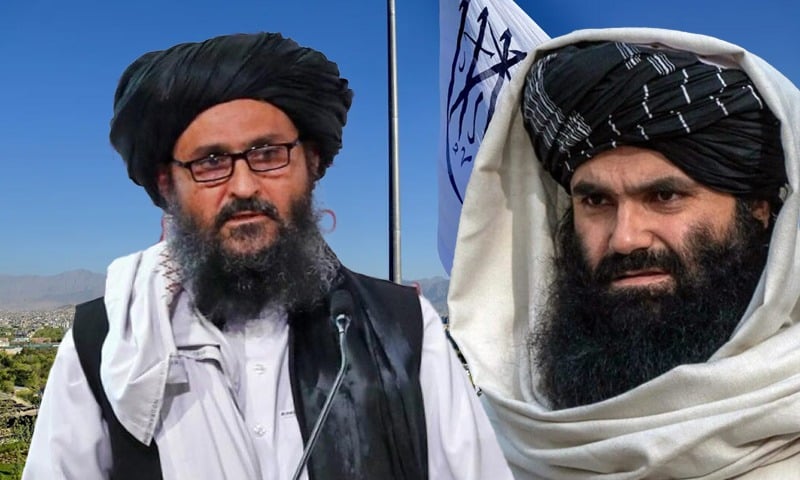
Taliban leaders insist that war has ended. If that is so, they should demonstrate it by addressing militancy, welcoming the return of Afghan refugees, and removing extremist elements that destabilise both Afghanistan and its neighbours.
The issue of modern weaponry left behind after the US withdrawal remains unresolved. Equipment worth billions of dollars is now in the hands of militant groups. Official reports confirm the use of night‑vision devices, thermal weapons, and advanced technology by these groups. This forced Pakistan, particularly Khyber Pakhtunkhwa, to upgrade police capabilities, infrastructure, and equipment.
Despite these steps, weapons alone are not enough. Hatred cannot be defeated by firepower alone. The Durand Line is an internationally recognised border, regardless of rhetoric calling it otherwise. Border closures hurt both Pakistan and Afghanistan economically, especially Afghanistan as a landlocked country dependent on regional transit routes.
Pakistan has repeatedly expressed willingness to include Afghanistan in regional connectivity projects, including CPEC‑2, offering access to Central Asia. Yet continued hostility undermines these opportunities and reinforces Pakistan’s concerns on the global stage.
Finally, the war against terrorism cannot be assigned to any single institution. It is not solely the responsibility of the federal government, nor only the provincial government, nor just the police, the Frontier Corps, or the Pakistan Army. This is a collective struggle that demands unity across political divides and sustained public support.
Without political cohesion, public trust, and shared responsibility, this cycle will continue, and we will keep having the same conversations while lives continue to be disrupted and lost.