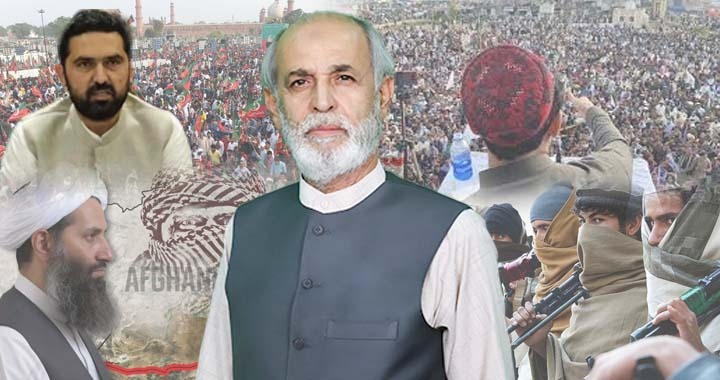
The ongoing attacks, particularly in Khyber Pakhtunkhwa, by India-sponsored terrorists facilitated, enabled, and handled by Kabul, have made the security situation increasingly alarming. At the same time, the recent wave of terrorism in Balochistan shows that terrorist organisations are regrouping and attacking Pakistan from across the border. European countries have also had to make tough decisions in the face of terrorism, while the US is becoming increasingly sensitive to the growing threat of militants, including stricter screening of Afghan citizens.
Within Pakistan, the networks of the TTP and affiliated militants remain active, especially in Khyber Pakhtunkhwa, enabling them to occasionally strike soft targets. Last week, Peshawar witnessed an attack on the Federal Constabulary headquarters. Militants continue targeted killings of political leaders and security personnel in areas such as Bannu and Kurram, taking advantage of any opportunity.
Despite extensive counter-terror operations; estimated at around 13,000 last year, terrorism persists. This highlights the need for political solutions alongside military measures. Trust must be built among political leaders and between the people and state institutions. In many terror-affected areas, people hesitate to cooperate with authorities because they lack confidence in the police and security forces, a sentiment reinforced by past experiences in North Waziristan and the tribal belt, where peace committee members speaking against terrorism were killed. Restoring public trust and providing protection can make anti-terror efforts result-oriented.
Between 2008 and 2013, peace committees in Swat and Peshawar showed that supporting local Jirga members with security and confidence enables effective counter-terrorism strategies.
The threat from Afghanistan is undeniable. Taliban factions—whether Pakistani, Afghan, Uzbek, or others—share the same extremist ideology and maintain safe havens in Afghanistan. Rising tensions between Afghanistan and Pakistan have created a vacuum, which will inevitably be filled by those opposed to peace. Previously, the Taliban had minimal public support, but current tensions have pushed most Afghans to side with them. To avoid repeating past mistakes, Pakistan must navigate this situation carefully.
The US labels Afghanistan a security nightmare, but changing policies limit trust in Washington. Pakistan, deeply involved in Afghanistan for over 40 years, faces similar challenges. Tensions with the Taliban persist, and Pakistan must remove doubts by reaffirming its desire for peace and support for the Afghan people’s will. Only then can Afghans potentially align with Pakistan. Decades of conflict have created widespread mistrust, which must be addressed.
The international community recognises Afghan terrorist groups as a global threat. While Europe and the US cannot act directly, Pakistan can play a stabilising role. The Taliban’s rejection of advice from leaders like Dr. Ashraf Ghani, Abdullah Abdullah, and Ahmed Karzai highlights their isolation. Pressure through a third country, as done in 2001, could encourage an inclusive Afghan governance structure with representation for political, religious, and nationalist groups, alongside technocrats, economists, scientists, and defence experts. Guerrilla warfare alone cannot sustain a state.
Social media propaganda, while influential, cannot replace governance. The Taliban operate networks across Europe, alongside organisations like the PTM and TTP. External manipulation and protests in Toronto and Brussels demonstrate how people unaware of ground realities are used to challenge Pakistan. I call these “Dollar Khel, Euro Khel, Poundzai”—champions of causes they do not fully understand.
Within Pakistan, confrontation between the PTI and the federal government is worsening law and order in Khyber Pakhtunkhwa. Both sides share responsibility. The federal government must consider KP as part of Pakistan, and if Sohail Afridi is unwilling to engage, other political leaders should mediate. Failure to resolve this confrontation threatens not only Khyber Pakhtunkhwa but the entire country.