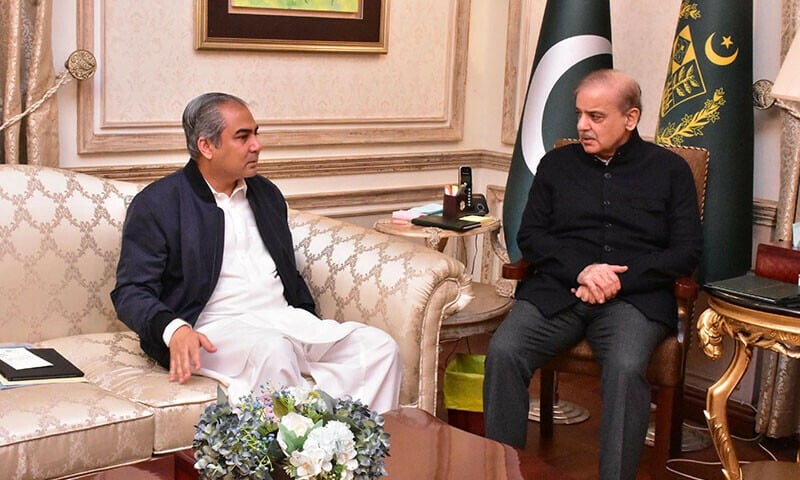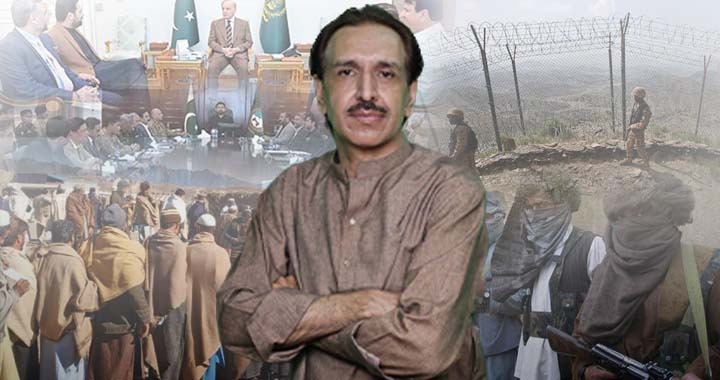
The meeting of the Provincial Apex Committee in Khyber Pakhtunkhwa, chaired by Chief Minister Sohail Afridi, comes at a time when the province stands at a delicate security crossroads. For months, the demand echoed across policy discussions, media platforms, and security circles that the Apex Committee forum must be activated meaningfully. That call has now materialized, though arguably later than it should have.
This forum was never meant to be ceremonial. It exists for intelligence exchange, strategic alignment, and civil-military synchronization in the face of evolving terrorist threats. Given the ongoing militancy landscape, particularly the cross-border dimensions linked to Afghanistan, convening this meeting had become operationally necessary, not politically optional.
In fact, such sessions should not be episodic. They require institutional regularity. Monthly reviews, at minimum, are essential until the threat matrix stabilizes. The reason is simple; intelligence assessments indicate the existence of militant corridors inside Afghanistan with linkages to regional and transnational networks. Any provincial counterterror posture must therefore remain dynamically updated.
Khyber Pakhtunkhwa’s adjustments to this evolving threat environment require close coordination with federal and military stakeholders. The presence of the Corps Commander, a central figure in Pakistan’s counterterror campaign, was therefore indispensable. Likewise, the IG Frontier Corps, whose operational footprint spans the most volatile belts, represents a frontline institutional pillar. Their participation signals seriousness, not symbolism.
The briefings shared in confidence, threat calibrations, operational progress, and agency coordination reflect forward movement. Pakistan’s security institutions continue to demonstrate efficiency through intelligence-based actions and preemptive disruption measures. However, the sustainability of these gains depends on institutional cohesion.
One visible improvement is the narrowing distance between the provincial civil administration and the military establishment. That communication gap, once politically amplified, appears to be shrinking. Political contestation may continue elsewhere, protests, electoral grievances, or democratic mobilization all remain legitimate. But security cannot be politicized.
When it comes to Khyber Pakhtunkhwa’s stability, all stakeholders must remain on the same page.
Previously, contradictory statements from within the provincial leadership created confusion. One minister issued one position, another responded defensively, and a third escalated rhetorically. Such fragmentation only benefits militant propaganda. If grievances exist, fiscal, administrative, or operational, the Apex Committee is the forum to address them collectively.
There is also merit in expanding participation. The Governor of Khyber Pakhtunkhwa, as the federal government’s constitutional representative, should be formally integrated into these deliberations. The communication chain between province and federation cannot rely solely on military conduits reporting upward to GHQ. Civilian federal linkage matters institutionally.
While this meeting marks progress, continuity remains key. Until the security curve bends decisively downward, such engagements must continue with urgency and frequency.
Religious-Political Delegation to Afghanistan
Parallel to this development, a 16-member delegation led by a Pakistani religious and political figure has visited Afghanistan. Such visits are not unprecedented. Religious interlocutors have historically served as informal bridges during diplomatic stagnation.
One recalls the earlier delegation led by Professor Ibrahim, which engaged Taliban authorities in Kabul. Political engagement, in principle, is not objectionable. Dialogue channels, formal or informal, can complement state diplomacy.
However, the effectiveness of such initiatives remains uncertain.
Details of the current visit remain limited. What mandate the delegation carries, what assurances it seeks, and what leverage it holds are questions still unanswered. Without structured outcomes, symbolic visits risk becoming optics rather than instruments.
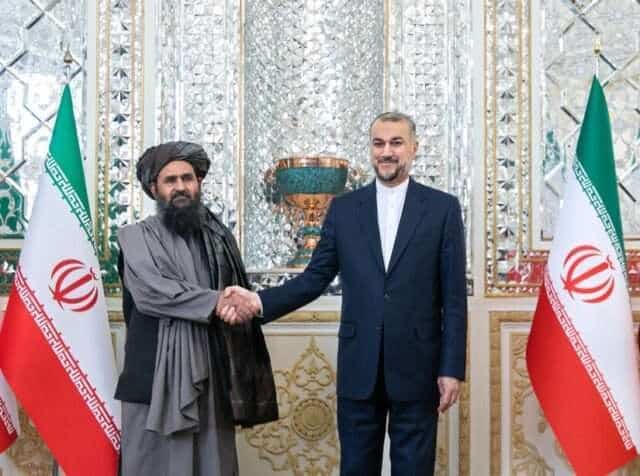
It is widely understood that any engagement with Kabul carries at least tacit institutional blessing, given Pakistan’s hardened posture toward the Taliban administration in recent months. Bilateral relations have experienced visible deadlock. Border tensions, security complaints, and diplomatic friction have stalled progress.
If engagement is to produce results, it must expand beyond clerical diplomacy. Political heavyweights, figures such as Aftab Sherpao, Mahmood Khan Achakzai, or Maulana Fazlur Rehman, could contribute to a broader consultative mechanism. But even that requires a structured policy framework backed by the state.
So far, engagements with the Taliban, across tracks, security, diplomatic, religious, have not yielded measurable positives. Expectations must therefore remain cautious.
Khyber’s Security Flashpoint
Turning to the situation in Khyber district, the threat landscape remains acute.
The region’s instability stems from multiple converging factors. First is the narcotics economy centered around Tirah, intertwined with smuggling corridors, non-custom-paid vehicles, and illicit supply chains. These shadow economies finance militant logistics.
Second is the militant ecosystem itself. Khyber hosts not just the TTP but factions such as Jamaat-ul-Ahrar, Lashkar-e-Islam, and even Al-Qaeda elements. This multi-group presence creates operational complexity.
Third, Khyber’s insecurity directly affects Peshawar. The geographic proximity means militant mobility can translate into urban threat within hours.
The people of Khyber have sacrificed immensely during past operations that cleared the region. Yet governance follow-through, particularly at the provincial level, has often lagged behind military stabilization gains.
Recent attacks, including the martyrdom of a young Pashtun army captain, underscore the persistent terrorist presence. Reports suggesting hundreds of militants concentrated in Tirah further reinforce the scale of the challenge.
There are also indications of transnational linkages and facilitation pipelines. Civilian casualty propaganda circulated by militant sympathizers has been widely disputed by ground assessments.
All this reinforces one conclusion; Khyber cannot become a political scoring arena. Security responses must remain unified, intelligence-driven, and depoliticized.
Policy Signals from National Security Leadership
Recent remarks by Army Chief Field Marshal Syed Asim Munir in Quetta reflect an uncompromising counterterror doctrine. His message was unequivocal; terrorism and its facilitators will not be tolerated under any circumstances.
This signals continuity of kinetic and intelligence operations where required, as seen previously in Tirah. Pakistan’s military leadership has reiterated zero tolerance for militant sanctuaries or enablers.
Even the political protest climate surrounding February 8 has been viewed through a security lens, with warnings directed toward facilitators of unrest, including elements within PTI’s provincial governance structure.
Yet, alongside firmness, there are visible positive shifts.
Chief Minister Sohail Afridi’s evolving posture reflects policy recalibration. A powerful symbolic moment emerged when the Chief Minister and Corps Commander Peshawar jointly attended the Apex Committee session and later shoulder-carried the coffin of the martyred captain together.
That image conveyed more than ceremony. It projected unity.
As communication gaps narrow, both security conditions and political temperature are likely to improve. Compared to previous months, there are visible signs of alignment, coordination, and forward movement in a positive direction.