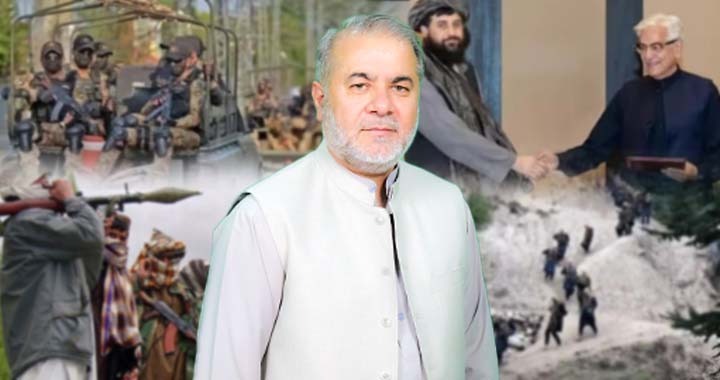
Pakistan has carried out intelligence-based airstrikes in three Afghan provinces, Nangarhar, Paktika and Khost, targeting militants belonging to the banned Tehreek-e-Taliban Pakistan (TTP). According to official claims, more than 100 militants were killed in the strikes. The development has sharply escalated tensions between Islamabad and Kabul.
The strikes come after months of intensified militant violence inside Pakistan. Recent incidents include suicide attacks in Islamabad, one near the district courts and another targeting an Imambargah. A deadly car bombing in Bajaur claimed the lives of Frontier Corps personnel and civilians and damaged a nearby mosque. An attack in Bannu further underscored the deteriorating security situation.
Many in Pakistan had expected that the return of the Afghan Taliban to power in Kabul would reduce cross-border militancy. While Afghanistan has witnessed relative internal stability, Pakistan has seen a reported 45 percent increase in terrorist attacks since the Taliban takeover. Under the 2020 agreement between the Afghan Taliban and the United States, Kabul had assured the international community that Afghan territory would not be used against any country. Islamabad maintains that this commitment is not being fulfilled with respect to anti-Pakistan militant groups.
Pakistan has stated that the recent strikes targeted TTP militants and members of the Hafiz Gul Bahadur group. However, the Afghan Taliban summoned Pakistan’s ambassador in Kabul to protest, alleging civilian casualties, including women and children. These competing narratives have deepened mistrust.
Despite mediation attempts by countries such as Turkey and Saudi Arabia, no breakthrough has been achieved. A ceasefire was discussed previously, yet the process has stalled. Borders have remained closed since October, trade has been suspended, and both economies are suffering. Afghanistan, given its greater economic dependence on Pakistan, is bearing a heavier burden, though Pakistan is also affected.
The geography complicates matters. The two countries share a long and porous border, with communities and families divided across it. Militants do not operate from clearly demarcated camps or fortified compounds. They often live among civilian populations in urban and rural settings. This reality increases the risk of civilian harm during aerial operations and further complicates military responses.
Meanwhile, militant tactics are evolving. Reports indicate the use of quadcopters equipped with explosives, including a recent attack in Karak in which three soldiers were injured after a fort was targeted. Such methods highlight the technological adaptation of militant groups and the persistent threat they pose.
Pakistani officials argue that TTP leadership and key commanders from Swat, Malakand, Bajaur, Mohmand, Khyber, Orakzai, Kurram and North and South Waziristan are now based in Afghanistan. From Islamabad’s perspective, cross-border strikes are framed as a last resort after repeated warnings and continued attacks inside Pakistan.
At the same time, escalation carries risks. Civilian casualties, whether alleged or confirmed, can inflame public opinion and harden positions. The Afghan Taliban lack a functional air force, yet they possess significant weaponry left behind after the US withdrawal. Any broader conflict would likely inflict severe humanitarian and economic costs, particularly on Afghan civilians.
The crisis also unfolds within a wider regional contest. Some analysts argue that external actors may seek to exploit instability to weaken Pakistan. Information warfare, unverified claims and rapid dissemination of narratives on social media further complicate public discourse. In such an environment, responsible political leadership and careful verification of facts are essential.
It is equally important to recognize that many Afghans neither support the TTP nor seek confrontation with Pakistan. Millions of Afghans have lived, studied and worked in Pakistan for decades, forming deep social and economic ties. Pakistan has hosted Afghan refugees through successive conflicts, providing shelter, healthcare and education.
For the Afghan Taliban leadership, the presence of TTP elements on their soil presents a complex dilemma. Many of these fighters fought alongside them during years of insurgency. Taking decisive action against such groups may be politically and ideologically challenging, yet inaction risks further deterioration in relations with Islamabad.
Ultimately, sustained escalation would harm both nations. Military responses may offer immediate tactical outcomes, but a durable solution lies in credible enforcement of commitments, intelligence cooperation and structured dialogue. Without meaningful engagement, the cycle of attack and retaliation may continue, with civilians on both sides bearing the cost.