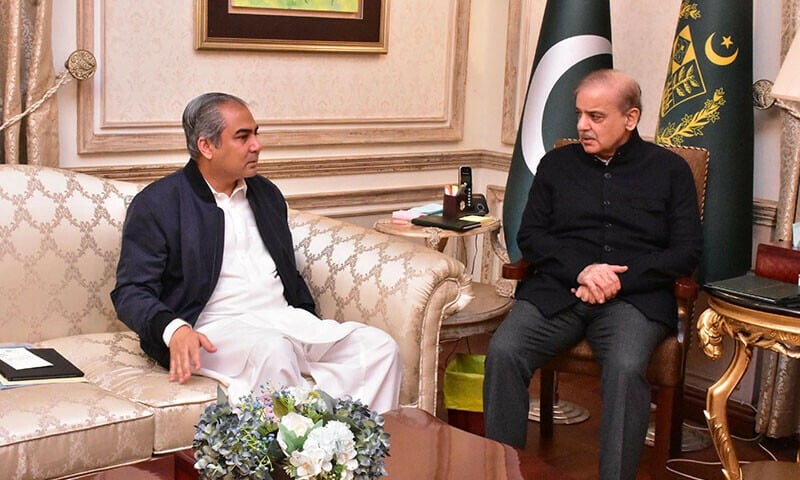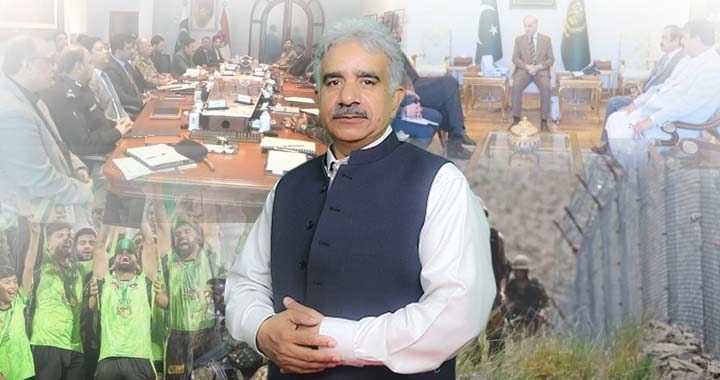
The high-level meeting held in Peshawar, keeping counterterror framework in view, marks one of the most consequential administrative and security consultations in recent weeks. What makes it particularly significant is not merely the range of decisions announced, but the institutional weight present in the room.
The provincial leadership, led by Chief Minister Khyber Pakhtunkhwa Sohail Afridi, sat alongside the Corps Commander Peshawar, senior intelligence officials, IG FC, IG KP, and the chief secretary. Interior Minister Mohsin Naqvi’s participation further elevated the meeting’s federal significance. This convergence of civilian governance and security command represents a rare but necessary synchronization in a province that sits at the frontline of Pakistan’s counter-terrorism theatre.
Such alignment is critical because counterterrorism is never purely kinetic. Operations may clear terrain, but governance must hold it.
The Malakand Model Revisited
The proposed governance model for Malakand Division draws heavily from the region’s own counter-terrorism history.
Malakand, particularly Swat, witnessed one of Pakistan’s most intense insurgencies, triggering mass displacement of nearly two to two and a half million residents. Yet the subsequent military operation not only dismantled militant networks but restored civil life to an extent that the Swat recovery model began featuring in international academic discussions as a case study in counter-insurgency stabilization.
The new model seeks to institutionalize that success.
Its core pillars include strengthening policing structures, expanding the Counter-Terrorism Department, and transitioning law-and-order responsibilities from the military to civilian law enforcement agencies. This is not a withdrawal in the strategic sense but a recalibration, where the army steps back from visible policing roles while retaining rapid response capability.
A joint governance committee, headed by the Chief Minister and including the Corps Commander and senior security officials, will oversee development priorities, law-and-order needs, and administrative gaps. The civil-military fusion embedded in this body reflects an understanding that security and development cannot operate in silos.
Closing the Governance Vacuum
Security forces have long argued that kinetic gains erode when governance lags.
Militant groups historically exploited administrative voids, weak policing, and slow judicial system. The new framework attempts to plug precisely those gaps. By placing responsibility squarely on provincial governance structures, the model also raises the stakes for civilian administrative performance.
If successful in Malakand, replication is planned in Khyber, Kurram, and Orakzai, districts where terrain, militancy legacies, and governance deficits intersect.
Reinforcing Policing Capacity
One of the more consequential proposals under discussion is the potential induction of 70 to 80 brigade-level trained officers into policing systems, particularly in KP and Balochistan.
These officers, trained internationally in counterterrorism and policing frameworks, could inject operational discipline, investigative rigor, and strategic planning capacity into provincial police forces. Pakistan has previously inducted retired military officers into police structures, but this proposal emphasizes specialized counter-terrorism expertise rather than general administrative experience.
If executed effectively, it may reduce long-term reliance on active military deployment in civilian spaces.
Development, Perception, and the Soft Image Battle
Beyond hard security, the meeting carried decisions aimed at reshaping KP’s socio-economic and psychological landscape.
The announcement that PSL matches will be hosted in Peshawar is symbolically potent. For decades, KP’s global image has been filtered through the lens of militancy, often amplified by international media portrayals that reduced the province to a conflict caricature.
International cricket’s return signals confidence in security conditions and projects normalcy. Sporting diplomacy, in this sense, becomes narrative warfare, countering years of reputational damage.
Parallel to this is the employment push in tribal districts. Job creation, vocational training, and economic initiatives target the same recruitment pools militant groups historically exploited.
Decades of proxy warfare, regional conflict spillovers, and forced radicalization hollowed out socio-economic structures in these المناطق. Deradicalization without economic reintegration was always going to be incomplete. Skills programs, women’s vocational initiatives, and youth employment pathways represent attempts to reverse that trajectory.
Civil-Military Development Nexus
The newly proposed committee structure attempts to dissolve the long-standing blame game between federal authorities, provincial governments, and security institutions.
With finance, health, and administrative ministries sitting alongside military leadership, development prioritization may finally align with ground security realities. Resource allocation, infrastructure planning, and rehabilitation schemes can be synchronized rather than sequential.
If functional, this mechanism could accelerate stabilization timelines across merged districts and former FATA regions.
External Threat Matrix and Strategic Patience
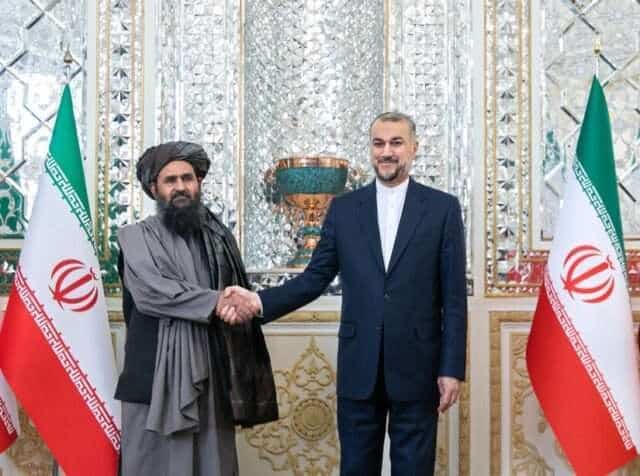
The internal governance reset unfolds alongside persistent external threats, particularly from terrorist sanctuaries across the Afghan border.
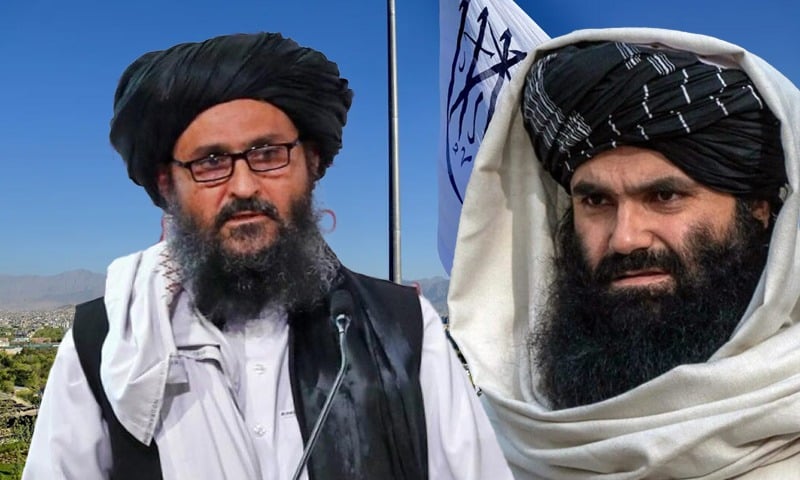
Militant outfits including TTP, ISKP, BLA, and affiliated networks continue to exploit Afghan soil for operational depth and propaganda warfare. The release of TTP’s English magazine portraying Pakistani political actors in sympathetic tones underscores how information warfare complements kinetic terrorism.
Propaganda seeks political fractures.
Groups amplify anti-state rhetoric, diaspora grievances, and partisan polarization to manufacture legitimacy and recruitment space. Modern militancy thrives as much on narrative oxygen as on weapons supply.
Pakistan, according to the discussed position, has extended diplomatic space to the Afghan Taliban regime to act against anti-Pakistan terrorist infrastructure. A deadline framework, coupled with dossier submissions, suggests Islamabad is balancing strategic patience with contingency planning.
Should Kabul fail to deliver, the expectation within security discourse is calibrated but decisive response options.
Religious Narrative and Militant Delegitimization
An important ideological dimension also surfaced.
Militant groups continue weaponizing religious rhetoric to justify violence. However, mainstream religious scholarship within Pakistan, including senior clerical authorities, has increasingly rejected these armed campaigns as illegitimate.
The argument advanced is simple but potent: attacks on mosques, schools, security forces, and civilians cannot be framed as jihad within any recognized Islamic jurisprudential tradition.
This delegitimization erodes militant recruitment narratives, particularly when reinforced by political consensus across party lines.
Convergence Against Terrorism
Despite Pakistan’s polarized political climate, there are emerging indications of convergence on counter-terrorism imperatives.
Public messaging from provincial leadership, including commitments to continue the fight against terrorism, signals recognition that militancy threatens all political actors equally.
The state’s responsibility, as articulated, is citizen protection. Whether through negotiations or force remains a tactical choice, but surrendering writ is not.
The evolving coordination between federal and provincial tiers, backed by security institutions, suggests a renewed attempt to construct a unified national counter-terrorism posture.
If governance delivery matches security intent, the distance between stabilization and success may finally begin to narrow.