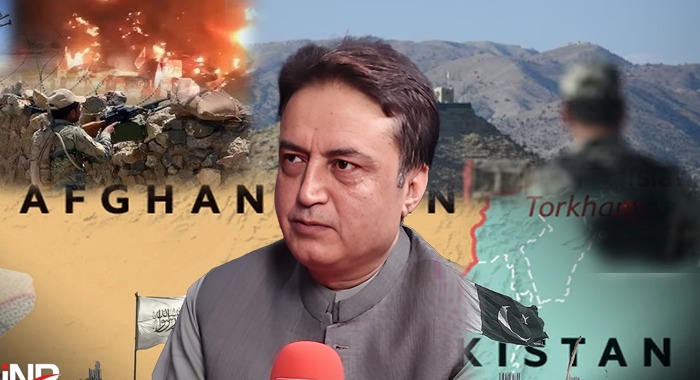
(Arif Yousafzai)
The temporary ceasefire between Pakistan and Afghanistan on the occasion of Eid-ul-Fitr is a significant but fragile development. For years, we have witnessed intermittent border clashes, drone attacks, and bombings that have caused destruction and loss of life on both sides. That two Islamic countries can enter into conflict during the holy month of Ramadan is deeply regrettable. Yet, this ceasefire provides a rare opportunity to step back and evaluate the broader dynamics at play.
The clashes were not spontaneous; they were the result of entrenched mistrust. Pakistan, a country of over 240 million people and an atomic power, has invested in advanced military technology and weapons systems to ensure national security. Our stance has always been clear: unless terrorist hideouts in Afghanistan, from which attacks on Pakistan originate, are dismantled, our defensive and retaliatory measures will continue. Afghanistan, in turn, has a long history of resisting foreign interventions from the British Empire to NATO and cannot be expected to capitulate easily. This standoff has escalated tensions, and harsh words and attacks on the ground made the situation increasingly volatile.
The declaration of a temporary ceasefire by both Islamabad and Kabul, mediated through the leadership of Saudi Arabia, Qatar, and Turkey, is therefore a welcome step. It demonstrates that diplomacy can still prevail over unrestrained conflict. Both countries have issued statements in parallel, emphasizing that hostilities will pause during Eid. Now, the responsibility lies with these regional powers to ensure that this ceasefire evolves into a lasting peace. Turkey, Qatar, and Saudi Arabia must leverage their influence to bring Pakistan and Afghanistan to the negotiating table. Without such intervention, there remains a strong possibility that hostilities will resume after Eid.
I also believe that Russia can play a crucial role. President Vladimir Putin’s readiness to mediate is unprecedented and could help stabilize the situation. If Moscow successfully facilitates dialogue, there is a real chance that temporary calm could develop into enduring peace. But for this to happen, both countries must recognize the mutual futility of continued aggression and be willing to compromise.
At the same time, Pakistan faces scrutiny regarding its strategic capabilities. The recent report by the United States National Intelligence Affairs, highlighting Pakistan’s missile program as a threat to the U.S., must be taken seriously. While some domestic narratives focus on praise from American politicians, the truth is more nuanced. Tulsi Gabbard’s assessment is not just casual commentary; it reflects the longstanding strategic concerns the United States and its allies have regarding our missile and defense programs. Pakistan’s long-range missiles, capable of striking thousands of kilometers away, serve as a deterrent. Yet, their existence also attracts international attention and, in certain narratives, suspicion.
This issue is not unique to Pakistan. The ongoing tensions in the Middle East, especially regarding Iran, offer lessons about perception versus reality. Despite repeated claims about Iran’s nuclear capabilities, much of the narrative is propaganda designed to influence public opinion in America and Israel. Similarly, in our region, Pakistan faces distorted portrayals of its operations and strategic programs. Civilian casualties, such as those reported at the Taza Umeed rehabilitation center in Nangarhar, are politicized, and numbers are often disputed. The truth lies somewhere between competing accounts, and navigating these complexities requires both strategic clarity and careful communication.
From a security perspective, Pakistan must remain vigilant. Our missile and air defense programs are advanced, but there is always the risk that these technologies could be misused if they fall into the wrong hands. Protecting these assets is critical not only for national security but for regional stability. The events in the Middle East, including the rise of Greater Israel and its military campaigns, show that nations standing in opposition to such projects are at risk. If Pakistan is perceived as vulnerable, our position in the region could be compromised.
The ceasefire provides a window for reflection. It is an opportunity for Pakistan and Afghanistan to step away from confrontation and explore a sustainable resolution. But achieving this requires more than words; it demands action. Pakistan must continue to secure its borders and neutralize threats emanating from Afghanistan, while also engaging diplomatically with Kabul and leveraging the support of regional partners.
Our strategic environment is complicated further by global dynamics. America and Israel have shown that they are willing to exert military influence to achieve their objectives, and the instability in Iran demonstrates the consequences of external interventions. Pakistan cannot ignore these realities. Our policies must balance national defense, regional stability, and the preservation of strategic assets. At the same time, we must recognize that propaganda whether from domestic or international sources will continue to shape perceptions. In any conflict, the first casualty is always the truth.
DGISPR Lieutenant General Ahmed Sharif Chaudhry’s recent interview underscored these points. He made clear that Pakistan will continue to target perpetrators who operate from Afghan territory. Our operations are precise, but in conflict zones, civilian casualties can be misrepresented, fueling international narratives against Pakistan. While the media coverage often emphasizes the human impact, it is crucial to understand the operational realities on the ground and the threats Pakistan faces.
We are at a critical juncture. The temporary ceasefire can either become a stepping stone toward lasting peace or a brief pause before renewed hostilities. The role of Saudi Arabia, Qatar, Turkey, and potentially Russia will be decisive. Pakistan must exercise strategic patience, safeguard its assets, and engage in thoughtful diplomacy to prevent a recurrence of border clashes and human casualties.
At the same time, we cannot underestimate the implications of global strategic assessments. Statements about our missile program reflect broader concerns and should inform our planning and security posture. Pakistan’s defense and foreign policy decisions must consider the regional power balance, the potential for misinterpretation by international actors, and the risks posed by non-state actors who may exploit vulnerabilities.
The challenges are immense, but the opportunity for meaningful diplomacy exists. Both Pakistan and Afghanistan have suffered from the consequences of unresolved conflicts, and both stand to benefit from a sustained cessation of hostilities. For Pakistan, the focus must be on strengthening security, maintaining deterrence, and collaborating with regional and global partners to transform temporary peace into lasting stability.
In conclusion, the temporary ceasefire is more than a pause in fighting; it is a test of leadership, strategic foresight, and diplomatic will. Pakistan must protect its national interests, secure its borders, and navigate the complex web of regional and international pressures with precision. Only through a combination of strong defense, proactive diplomacy, and realistic assessment of threats can we hope to convert this fragile truce into a durable peace. The coming weeks will reveal whether the ceasefire was merely symbolic or a turning point in Pakistan-Afghanistan relations a moment when strategy, patience, and regional cooperation can shape the future of South and Central Asia.