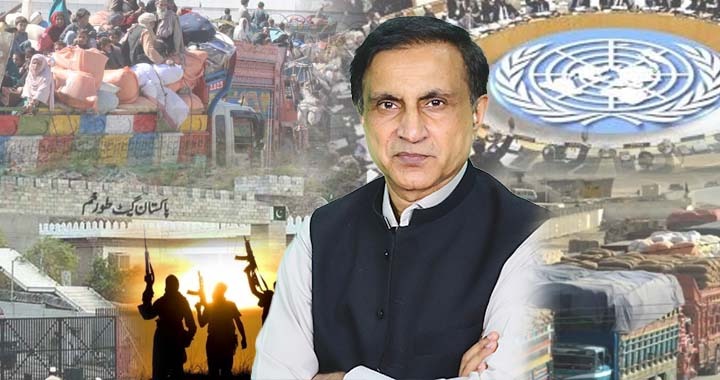
Everyone is aware of the tense situation currently prevailing between Pakistan and Afghanistan. However, since trade has been suspended and the border closed, there has been a noticeable 17 percent reduction in terrorist incidents. This is precisely what we will discuss today, along with the issue of Afghan refugees returning from Pakistan and whether they are receiving any facilities upon their return.
It is evident that both Pakistan and Afghanistan are facing serious difficulties as a result of the trade and border closure. Yet, when we look at the data, incidents of terrorism have declined significantly. The number of individuals entering from Afghanistan and participating in terrorist activities inside Pakistan has reduced to a considerable extent. That said, the border is extremely long, and it is impossible to seal every inch of it.
There are many areas along the border with deep ravines and mountainous terrain, often far below the peaks, making surveillance difficult. In some regions, security check posts are located nearly 25 kilometers apart, which allows infiltrators to cross through the gaps. Even so, according to a recent report, terrorism declined by 17 percent in the past month alone.
The United Nations has also released a report on the situation of Afghan migrants returning to their country. On one hand, the interim Afghan government is the main cause of rising tensions with neighboring countries, while on the other, it continues to patronize militants by supporting and cooperating with terrorist groups. As a result, it is paying little attention to the refugees returning home—in effect, neglecting its own citizens.
The report notes that many of those returning from Pakistan are not well educated, whereas a significant number of Afghans returning from Iran are educated. Consequently, those coming back from Pakistan struggle to find employment because they lack skills, while those returning from Iran are more likely to secure permanent jobs.
Another serious issue highlighted in the report is food insecurity. Returnees from both Pakistan and Iran are facing shortages of food and basic necessities, largely due to the absence of employment opportunities. Families returning to Afghanistan are not being provided jobs, education, healthcare, or other basic facilities by the Afghan government. As a result, poverty among returnees is increasing rapidly.
Many families, unable to find work or housing, are not even returning to their original hometowns. They ask themselves what they will do there when they have no homes left. Education has become another major concern. According to returnees, there are no schools available in many areas.
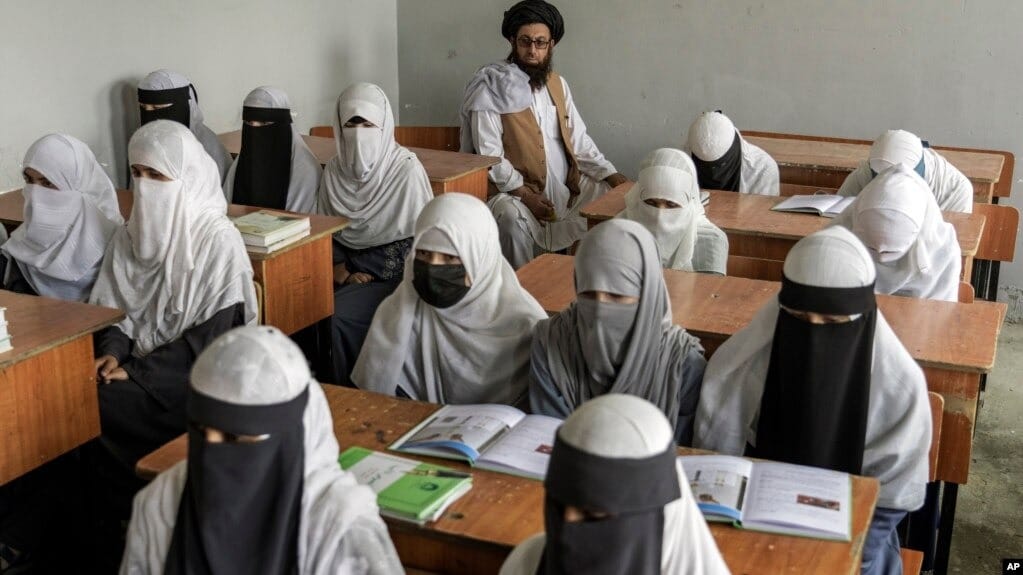
The UN report further states that healthcare facilities are either nonexistent or located far away. Hospitals are often inaccessible, and returnees face severe health-related difficulties, particularly women and pregnant mothers. The report also highlights that women’s education has been severely affected due to restrictions that prevent girls from studying.
As a result, many returnees feel that while living in Pakistan or Iran, they had access to education, healthcare, and shelter—facilities that are now absent in their own country. Another alarming finding in the report is that 88 percent of returnees had to take loans just to make the journey back, as they lacked even basic travel expenses. These loans were often taken from relatives in Pakistan or Afghanistan.
Now, these individuals say they have no means to repay those loans. With no education, employment, or healthcare, they find themselves helpless. Instead of addressing these issues, the Afghan government remains engaged in disputes with its neighbors. Compounding the crisis is the lack of clean drinking water in Afghanistan, which directly contributes to disease, especially in the absence of adequate hospitals.
One particularly troubling aspect highlighted in the report is that many returnees do not possess identification documents. The Afghan government has failed to ensure that returning citizens receive national ID cards. Without documentation, individuals cannot apply for jobs, rent housing, or even function as part of society. The UN has warned that if these conditions persist, Afghanistan’s situation—especially its economy—will deteriorate further.
The report also notes that poverty in Afghanistan is increasing and shows no signs of slowing. Yet, the Afghan government does not appear to be taking the issue seriously. According to available data, approximately one million people have returned from Iran, while about 1.5 million have returned from Pakistan. Despite Afghanistan’s vast territory, the government has proven incapable of managing the return of 2 to 2.5 million people.
Had the authorities anticipated this influx, they should have made proper arrangements—setting up camps, arranging housing, and ensuring basic services. The report also states that children who were receiving education in Pakistan and Iran have had their schooling disrupted. This raises concerns that Afghanistan may soon face a generation lacking education, turning this into a global issue.
The United Nations has urged the international community to take notice and pressure the Afghan Taliban to facilitate returning migrants. These people lived as migrants in Pakistan and Iran for decades. Returning to one’s homeland under such circumstances is not easy, especially when they are not welcomed and lack even basic financial resources. Many reportedly walk for kilometers before reaching any settlement.
In provinces such as Nangarhar, the situation is particularly dire. While the Afghan government claims its land will not be used against other countries, we see reports that it is training over 1,081,000 security personnel. History shows that whenever governments change in Afghanistan, trained forces simply disappear. The same happened when the Taliban took over from the Ashraf Ghani government—the entire army vanished.
Where did those previously trained forces go? There is no continuity or permanence in Afghanistan’s institutional framework. Now, the Taliban claim they will train their own forces, but without long-term planning, this approach remains flawed. This has been a recurring historical issue for Afghanistan.
As far as Pak-Afghan relations are concerned, without resolving the terrorism issue, there can be no lasting relationship. Trade cannot resume, relations cannot improve, and cross-border movement cannot reopen. As noted earlier, border closure has reduced terrorism by 17 percent, and if it remains closed, this decline is likely to continue.
Pakistan’s trade with Afghanistan has been suspended since October 10, and Pakistan’s stance is clear: until Afghanistan guarantees an end to cross-border terrorism, the border will not reopen. While Pakistan does incur losses, Afghanistan suffers far more.
Pakistan’s exports to Afghanistan account for just 0.6 percent of its total exports—roughly 60 paisa out of every 100 rupees. Afghanistan, however, sends about 46 percent of its exports through Pakistan. Over 40 percent of its trade is with India. With the border closed, Afghanistan’s overall trade has dropped by nearly 50 percent.
Afghanistan’s trade with Iran stands at 1.94 percent, with Uzbekistan at 3.14 percent, and Tajikistan at just 0.37 percent. Central Asia accounts for only 4–5 percent of Afghan trade, underscoring its heavy dependence on Pakistan.
Transit trade is another critical factor. Afghanistan relies on Pakistan for around 40 percent of its transit trade. Pakistan uncovered massive misuse of this system, where goods worth billions—such as tires and engines far exceeding domestic demand—were being smuggled back into Pakistan. After tightening controls, Afghanistan’s transit trade fell from nearly $7–8 billion to under $1 billion.
This confirms that smuggling was a major source of Afghan income. With exports and transit trade both curtailed, Afghanistan stands to lose the most. Pakistan’s traders—especially in KP—have been affected, but given Pakistan’s overall trade volume, the loss remains marginal.
Finally, on India’s recent diplomatic gestures, it is clear that India has realized Pakistan’s rising stature. Pakistan has not only prevailed militarily but has also gained significant diplomatic ground. While India once refused even symbolic gestures, today its foreign minister seeks engagement.
Pakistan’s global relations have improved, while India finds itself increasingly isolated. False allegations against Pakistan have been exposed internationally. This represents a major success for Pakistan—on both the battlefield and the diplomatic front. India’s recent outreach signals an acknowledgment of this reality.
At present, Pakistan stands in a stable position. The task ahead is to consolidate and strengthen this position further.