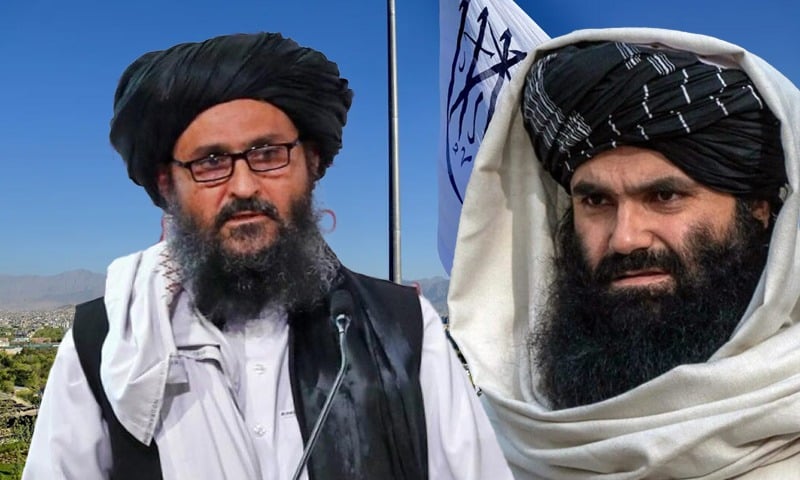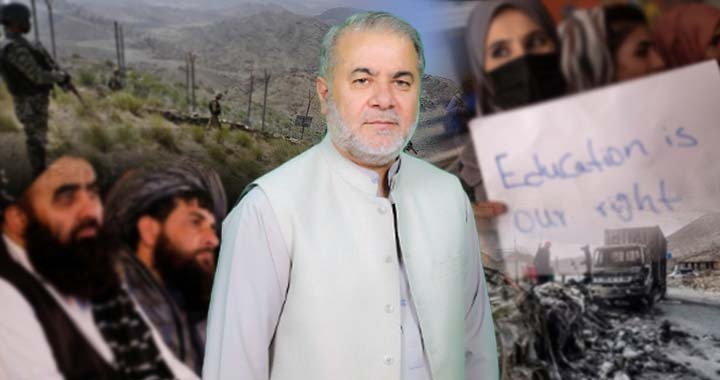
Reports of internal divisions within the Afghan Taliban are not new, but they must be understood in the context of how the group evolved over decades. Different factions, including the Haqqani network, operated with a degree of autonomy while remaining united against foreign forces. That unity, however, is being tested in the post-2021 environment, where governance, international pressure, and internal power dynamics have replaced the battlefield as the main arena of contest. Despite these differences, the idea that key figures like Siraj-ud-Din Haqqani have stepped down does not align with ground realities. Any such move would risk destabilizing the entire Taliban structure, something no faction can afford at this stage.
External pressure on the Afghan Taliban continues to grow, particularly from regional and global actors, but it is internal pressure that is far more significant. Afghanistan’s economic fragility, lack of employment opportunities, and dependence on regional trade routes make stability a necessity rather than a choice. Pakistan remains central to this equation, not just geographically but economically. While Kabul has explored alternatives through Central Asia, the reliance on Pakistan for trade and transit cannot be easily replaced, which explains the Taliban’s repeated emphasis on maintaining workable relations.
The relationship between the Afghan Taliban and the banned Tehreek-e-Taliban Pakistan (TTP) is rooted in history, ideology, and shared experience. These ties were forged long before 2021, when fighters, resources, and support networks moved across borders with relative ease. After the Taliban’s return to power, expectations within TTP circles were high, but the response from Kabul has been cautious. There are elements within the Afghan Taliban who understand that allowing TTP to operate freely risks repeating past mistakes, particularly the consequences that followed the presence of transnational groups during the previous Taliban regime. At the same time, completely severing ties is neither simple nor immediate, given the depth of these relationships.
Ground realities indicate that militant networks have not only persisted but, in some cases, expanded. Various groups continue to operate in and around Afghanistan, with leadership structures, facilitation networks, and training mechanisms that are difficult to dismantle. The presence of multiple factions, some aligning themselves with TTP, complicates the security landscape further. Attacks inside Pakistan, many of which trace their planning or coordination back across the border, reinforce the argument that this is not a contained or isolated threat.
At the same time, the effectiveness of a purely military approach remains limited. Pakistan has been engaged in counter-terrorism operations for over two decades, and while these efforts have achieved tactical successes, they have not fully eliminated the threat. Militancy has demonstrated an ability to adapt, decentralize, and re-emerge in new forms. This suggests that force alone cannot provide a lasting solution. A broader strategy, combining security measures with political engagement, intelligence coordination, and regional diplomacy, is essential.
Ongoing talks, including those facilitated by regional players such as China, reflect an understanding that dialogue remains necessary despite deep mistrust. Pakistan seeks concrete assurances that Afghan territory will not be used against it, while Kabul is equally concerned about economic stability and uninterrupted trade routes. These competing priorities underline the complexity of the situation, where security concerns and economic needs are deeply intertwined.
Another dimension that cannot be ignored is the human factor, particularly in relation to Afghan refugees. Decades of displacement have created communities with deep social and economic ties across the border. The process of repatriation, therefore, is not just an administrative exercise but a sensitive issue that affects millions of lives. Managing this transition with dignity and stability will be critical in preventing further resentment and instability.
The broader reality is that regional politics today is driven less by ideological alignment and more by strategic interests. Alliances shift, priorities evolve, and decisions are often guided by immediate gains rather than long-term commitments. In such an environment, expecting clear-cut divisions or absolute loyalties is unrealistic. The Afghan Taliban, like other actors in the region, are navigating a complex landscape where survival, legitimacy, and control are constant concerns.
What emerges is a picture of a region caught between unresolved conflicts, evolving alliances, and competing pressures. Internal Taliban divisions may exist, but they are only one part of a much larger challenge. The persistence of militant networks, the fragility of state structures, and the limitations of conventional responses all point to the need for a more comprehensive and coordinated approach. Without that, the cycle of violence is unlikely to break, regardless of how many operations are conducted or how many rounds of talks are held.