(Arif Yousafzai)
For the past two decades, I have reported on militancy, counter-militancy, and armed movements across the region. I have interacted with fighters, commanders, intelligence officials, and civilians caught in the crossfire. One thing I have learned over the years is that the reality of militancy is often very different from the narratives constructed in reports, policy papers, and television debates. The recent discussion triggered by a United States think tank report on the Afghan Taliban is a case in point.
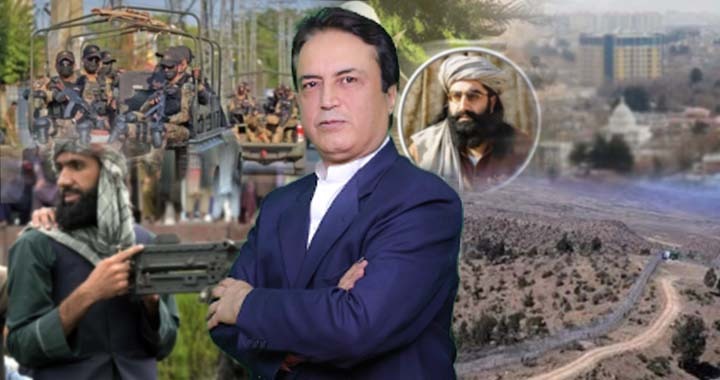
The report claims that the Taliban are not only consolidating their rule in Afghanistan but are also turning the country into a safe haven for militant groups. This has raised alarm, particularly in Pakistan, where concerns about the activities of the Tehreek-e-Taliban Pakistan (TTP) remain high. At the same time, a separate claim has circulated in sections of the media that Noor Wali Mehsud, the head of the TTP, is residing in Kabul’s Green Zone under Taliban protection. These claims demand serious examination, but they must also be approached with caution and grounded understanding.
Let me begin with the question that is being asked repeatedly: where is Noor Wali Mehsud? The honest answer is that no one can say with certainty. Over the years, we have seen numerous reports about militant leaders—claims that they are in one place today, another place tomorrow, and sometimes even reports of their death, only for them to reappear later. I have personally seen such contradictory reporting throughout my career. Sometimes these leaders are said to be in Kabul, sometimes in Kandahar, sometimes in remote mountainous regions, and sometimes even inside heavily guarded compounds.
From my experience, such claims should not be taken at face value. Militant leaders, especially those at the level of Noor Wali Mehsud, do not stay in fixed or high-profile locations. They are constantly on the move. They avoid populated urban centers, and they certainly do not expose themselves to unnecessary risk by staying in places that can be easily identified or targeted. In an environment where drone surveillance and intelligence tracking are persistent, it would be highly unlikely for such a figure to reside in a known, high-security zone like Kabul’s Green Zone.
There is also a basic question of logic. If journalists, analysts, and television hosts are aware of a militant leader’s exact location, then it is reasonable to assume that state intelligence agencies would also have that information. In such a scenario, it is difficult to believe that such a location would remain untouched. This is why I consider many of these reports to be speculative rather than factual.
However, dismissing specific claims does not mean ignoring the broader reality. Militant groups do exist in Afghanistan. This is not something I deny, and it is not something that can be denied by anyone familiar with the region. The Afghan conflict over the past two decades brought together fighters from multiple countries and organizations. Groups such as Al-Qaeda, the Islamic Movement of Uzbekistan, and others fought alongside the Afghan Taliban against United States and NATO forces. These were not temporary alliances; they were built through years of shared struggle and sacrifice.
When people fight together in such circumstances, their relationships are not superficial. They are deep, enduring, and based on trust forged in war. This is not a typical political alliance that can be broken overnight. It is a bond that often survives even after the conflict has ended. That is why it is unrealistic to expect that the Afghan Taliban can simply sever all ties with these groups.
History provides us with a clear example. When Osama bin Laden was in Afghanistan, the United States demanded that he be handed over. The Taliban leadership under Mullah Omar refused, despite the consequences. They lost their government, but they did not break that relationship. This was not a decision taken lightly; it reflected the nature of the bonds within these networks.
At the same time, it is important to differentiate between various militant groups and their objectives. Not all groups operate in the same way, and not all pose the same level of threat to every country. In my assessment, Al-Qaeda, which once dominated global security concerns, is currently in a dormant phase. Even at its peak, it was primarily focused on targeting the United States and its allies rather than Pakistan.
The situation with the TTP is very different. The TTP is an active and immediate threat to Pakistan. Its operations are taking place inside Pakistan on a daily basis. Attacks on security forces, improvised explosive devices, targeted killings, and ambushes are part of an ongoing conflict. Whether elements of the TTP are present in Afghanistan or not, the reality is that their operational theater is largely within Pakistan.
This brings us to the question of Pakistan-Afghanistan relations. Tensions between the two countries have increased due to accusations that the Afghan Taliban are providing space or support to the TTP. These accusations have led to border closures, military tensions, and a decline in diplomatic engagement. However, the situation is not as straightforward as it is often presented.
Pakistan is fully aware of the locations of key Afghan Taliban leaders. Yet, it has not chosen to target them. This is a deliberate policy decision. Any direct action against the Afghan Taliban leadership could escalate into a broader conflict, the consequences of which would be difficult to contain. This is a reality that policymakers understand, even if it is not always openly discussed.
The role of external actors, particularly the United States, also needs to be examined critically. On one hand, American reports and statements describe the Taliban as a global threat. On the other hand, the United States itself negotiated with the Taliban and signed the Doha Agreement, which included assurances that Afghan territory would not be used against other countries.
This raises an important question: if there are concerns that the Taliban are not adhering to these commitments, why is there no clear and consistent policy response? Why are such concerns expressed primarily through reports and statements rather than direct engagement or action? These contradictions suggest that international narratives are often shaped by political considerations rather than purely factual assessments.
Another aspect that deserves attention is the role of religious scholars. Recently, there have been efforts by Pakistani and Afghan clerics to promote peace and encourage both countries to avoid conflict. These initiatives are positive and reflect a desire for stability. Some of these scholars have influence within their societies and, to a certain extent, among militant groups as well.
However, their ability to bring about real change is limited. Without the support of state institutions and political leadership, such initiatives remain symbolic. In the past, we have also seen religious rulings issued in support of state policies, which undermines the credibility of such efforts. For religious mediation to be effective, it must be independent and consistent.
Finally, it is important to consider the impact of these tensions on ordinary people. Border closures, particularly at key crossings, have disrupted trade, restricted access to healthcare, and affected livelihoods on both sides. Thousands of Afghan citizens depend on Pakistan for medical treatment. At the same time, businesses in border regions rely on cross-border trade for survival. When the border is closed, it is not governments that suffer the most—it is the common people.
In my view, practical steps such as reopening border crossings and facilitating legal trade and movement are essential. These measures may not resolve the larger political issues, but they can reduce tensions and provide relief to those who are directly affected.
The debate about how dangerous the Taliban are cannot be reduced to simple conclusions. The situation is complex and requires a nuanced understanding. Militant networks exist, and they have historical ties that cannot be ignored. The TTP poses a real threat to Pakistan, but its dynamics are not limited to Afghanistan. International narratives often reflect political agendas, and local realities are frequently overlooked.
As someone who has spent years observing these developments on the ground, I believe that any serious analysis must move beyond speculation and focus on facts. The region has suffered enough from miscalculations and misunderstandings. What is needed now is clarity, realism, and a willingness to engage with the situation as it is, not as it is portrayed.