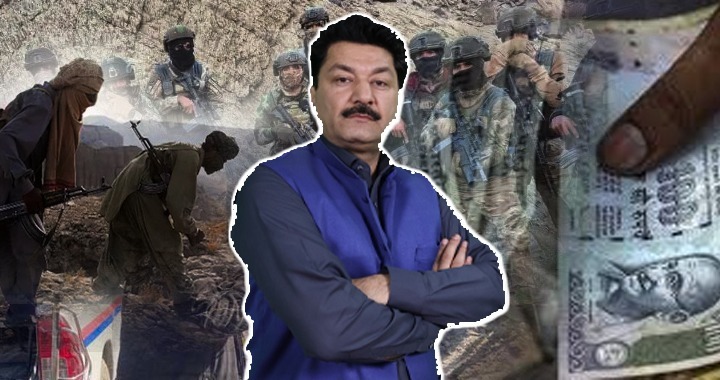
The violence that unfolded across Balochistan on January 31 was not just tragic; it was unprecedented in scale and coordination. In a single day, attacks were reported from multiple locations, eventually spanning at least twelve cities. What initially appeared as isolated incidents quickly revealed themselves as part of a carefully synchronized campaign.
Security assessments indicate that over 200 terrorists were neutralized in the subsequent counteroperations. The cost, however, was heavy. More than 50 people were martyred, including 33 civilians and 17 personnel from security forces. Women and children were not spared. Even female suicide bombers were deployed, a tactic alien to Baloch traditions and historically absent from Baloch resistance narratives.
The geographical spread of the attacks tells its own story. Quetta was targeted, with indications that a high-profile assassination was planned. Other locations included Nushki, Mastung, Dalbandin, Kalat, Kharan city, Gwadar, Pasni, Turbat, Buleda, and Washuk. In Nushki and Washuk alone, operations continued into the following day. This was not spontaneous violence. It was a multi-layered assault designed to overwhelm, distract, and dominate headlines.
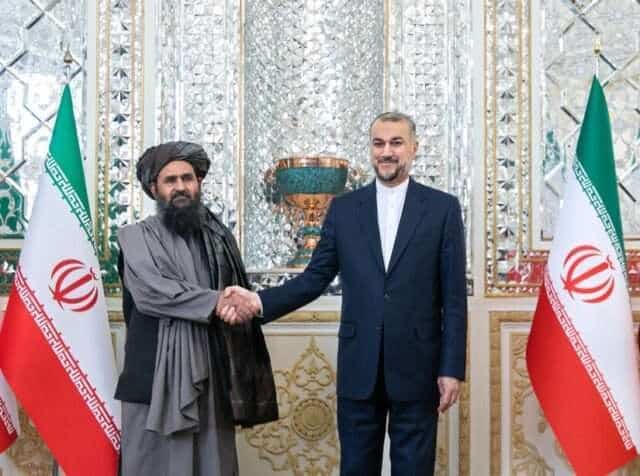
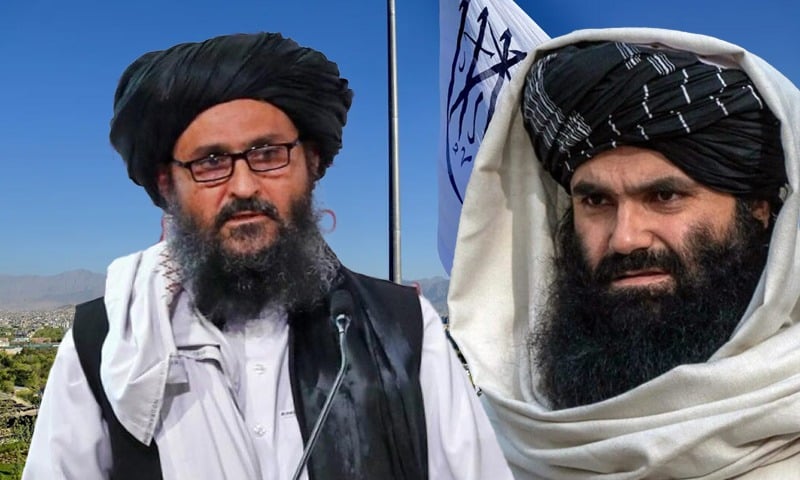
Equally revealing was the nature of the weapons recovered. FN M16A4 rifles, M203 grenade launchers, night vision goggles, sniper rifles, and other advanced equipment were seized. The estimated value of arms carried by a single militant reportedly ran into millions of rupees. This raises an unavoidable question. If these groups claim to fight due to deprivation and poverty, how do such sophisticated and costly weapons find their way into their hands? Many of these arms are of US origin, and reports indicate some have transited via Afghanistan, often facilitated by Afghan Taliban elements and safe havens.
These attacks also marked a decisive rupture with any residual sympathy some segments may once have held for militant outfits. The hijacking of the Jaffar Express, the attack on the Army Public School bus in Khuzdar, assaults on Frontier Corps installations, targeted killings after identity checks, and now mass-casualty operations involving women and children have stripped away any remaining moral cover. The narrative of resistance has collapsed under the weight of brutality.
Captured militants themselves have begun to expose this reality. Recorded confessions show young men and women admitting to manipulation, blackmail, and coercion. Many describe how videos were used to threaten them, how drugs such as crystal meth were administered, and how ideology was replaced by fear and dependency. This is not an ideological war. It is an enterprise built on exploitation.
The sheer number of attacks is telling. In a single day, 52 incidents were recorded, including 14 major attacks. In Gwadar’s labour colony, workers were gunned down. In Kharan city, Mir Shahid Gul Mulazai and his guards were martyred during a siege. Only days earlier, he had successfully repelled an attack in the same region. These were not symbolic targets. They were chosen to inflict maximum psychological impact.
Militant behaviour further exposes the criminal dimension of these groups. Bank robberies, jail breaks, and loot operations sit uneasily with claims of political struggle. The line between separatism and organized crime has long since blurred.
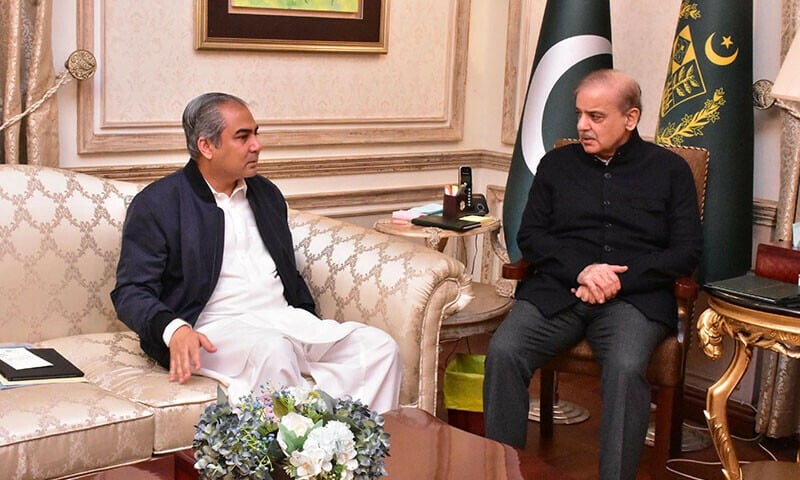
Despite this, the provincial political government and the military establishment were operating in coordination. This alignment is critical because Balochistan’s foremost challenge is security. Development cannot proceed in isolation from stability, and security operations cannot succeed without political ownership.
Claims of deprivation are frequently repeated, often without context. Balochistan is Pakistan’s largest province by area but the smallest by population. Its population is dispersed across vast, mountainous terrain. Delivering gas, electricity, and water to scattered settlements separated by kilometers is not comparable to urban service delivery. This logistical reality is routinely ignored by those who weaponize grievance.
At the same time, progress on the ground is often overlooked. Educational initiatives, including girls’ cadet colleges, exist and are operational. Youth development programs are underway. These efforts directly contradict the narrative that nothing is being done, yet they rarely receive attention.
Information warfare has become a central front. Old or unrelated videos are circulated as current footage. Social media is flooded with disinformation, including staged imagery and recycled content. The objective is not truth, but perception management.
The coordinated nature of the January attacks points to extensive planning. Internet-based communication, synchronized timing, and distributed execution across multiple cities suggest centralized direction. Temporary suspension of internet and transport services, though disruptive, reflected lessons learned from past incidents. States learn, institutions adapt, and countermeasures evolve.
Still, this episode also exposed gaps. If such a wide-ranging operation could be launched simultaneously, intelligence failures must be acknowledged and corrected. Honest assessment is not weakness. It is necessity.
Funding remains the most uncomfortable question. Satellite phone communications, advanced weaponry, drone usage, and sustained logistics do not operate on ideology alone. Evidence indicates structured financial pipelines. Militants are not repeatedly issued weapons; they are equipped once, comprehensively. That requires capital, coordination, and external facilitation, sometimes from foreign actors or via Afghan territory.
Local recruitment is another hard truth. Many attackers were residents of the very areas they struck. Bodies recovered will eventually confirm identities, addresses, and affiliations. This underlines the urgency of community engagement. Military force can suppress violence, but it cannot replace societal buy-in.
Operations in Nushki and Washuk reportedly cleared nearly 90 percent of affected areas, with remaining pockets handled cautiously to avoid civilian harm. This restraint matters. Precision, not spectacle, defines legitimate counterterrorism.
Geopolitically, the pattern is clear. Direct confrontation from the east has become costly for hostile actors. The western frontier, porous and volatile, offers a different avenue. Afghanistan’s territory continues to be exploited as a staging ground. Funding routes are complex, multinational, and indirect, but the end destination is unmistakable. Chinese interest in regional minerals and Indian involvement in proxy networks further complicate the security calculus.
Khyber Pakhtunkhwa also remains a frontline. Militants exploit borders, tribal networks, and Afghan safe havens, creating cross-provincial challenges for Pakistani security forces. Lessons learned there reinforce strategies applied in Balochistan, highlighting the necessity of nationwide coordination.
Winning this war requires more than tactical success. Security forces can win battles, but peace demands inclusion. Communities must be heard. Political parties, whether in government or opposition, must be part of a unified approach. Youth, elders, tribal leaders, and civil society all have roles to play.
Without dialogue, this conflict cannot end. Without public trust, security gains will remain fragile. A joint strategy, built on listening as much as enforcement, is no longer optional. It is the only path forward.