(Shamim Shahid)
The events of recent weeks from the underwhelming protest call linked to February 8 to fresh assessments by American media on militant violence, and renewed reports of factional rifts among terrorist groups operating out of Afghanistan together paint a deeply troubling picture for Pakistan and the wider region. These developments are not isolated. They are interconnected symptoms of political fatigue, security fragility, and a militant ecosystem that thrives not on territorial control, but on fear, instability and opportunity.
The much-publicised shutdown called in connection with the February 8, 2024 developments was projected as a decisive show of street power. For weeks, preparations were advertised, slogans amplified and expectations inflated. Yet when the day arrived, the contrast between the rhetoric and reality was stark. In most parts of Khyber Pakhtunkhwa, including Peshawar, Mardan, Swabi, Dera Ismail Khan, Bannu and Mingora, daily life continued with little disruption. Bazaars remained open, transport moved normally and public response was, at best, indifferent.
Even where attempts were made to enforce closures, resistance emerged from an unexpected quarter: the public itself. In Swabi, a local Pakistan Tehreek-e-Insaf leader openly stated in the presence of a provincial minister that future shutdowns would not be tolerated in Khyber Pakhtunkhwa and that if political pressure was to be applied, it should be directed towards Islamabad and Punjab. In Mingora, party workers questioned the wisdom of punishing local traders for decisions taken far away. In Chand Dara, tensions escalated into a physical confrontation when a shopkeeper was coerced into closing his business, prompting people from different political backgrounds to unite not in support of the strike, but against it. The unprecedented sight of slogans raised against PTI leadership in the presence of a sitting provincial representative should serve as a warning that public patience has limits.
This response did not emerge overnight. For months, political mobilisation had been attempted through rallies, visits, street-level engagement and repeated calls for agitation. Yet the outcome revealed a widening gap between leadership expectations and public sentiment. People in Khyber Pakhtunkhwa are not apathetic; they are exhausted. Economic pressure, insecurity and uncertainty have taken their toll. What the public rejected was not politics itself, but the instrumentalisation of their livelihoods as leverage in power struggles that offer no immediate relief to their daily hardships.
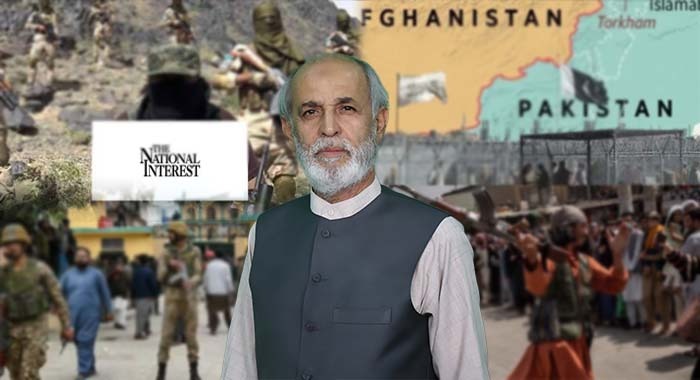
This domestic political fatigue intersects dangerously with a deteriorating security environment. A recent report by the American magazine The National Interest offered a blunt assessment of the Baloch Liberation Army (BLA), arguing that the group lacks the capacity to control territory but compensates through what it termed a “low-cost, high-fear” strategy. This assessment is both accurate and alarming.
The BLA does not resemble a classical insurgent movement capable of administering areas or sustaining parallel governance. It does not command popular mass mobilisation, nor does it possess the logistical depth required for prolonged territorial control. Instead, it relies on sporadic, high-impact attacks designed to maximise psychological damage at minimal operational cost. A single act of violence, carefully timed and symbolically targeted, can generate headlines, disrupt investor confidence and reinforce a perception of chronic insecurity — all without the burden of holding ground.
This model of militancy is particularly dangerous in an era of instantaneous media amplification. Fear travels faster than facts. A small group, with limited manpower and resources, can project an image of omnipresence. The objective is not victory in a conventional sense, but attrition: eroding trust in the state’s ability to protect, govern and attract economic engagement.
It would be a mistake, however, to view the BLA as a threat confined strictly within Pakistan’s borders. The Baloch population spans Pakistan, Iran and Afghanistan. Any serious destabilisation in one segment inevitably sends ripples across the region. While the idea of a unified, independent Baloch state remains impractical, the destabilising potential of militant activity is real. The concern expressed in American analysis that such violence could affect neighbouring states is therefore not unfounded.
History offers a clear lesson here: armed movements that lack political legitimacy and broad-based support rarely achieve their stated objectives. Across continents, enduring change has emerged through sustained political struggle, negotiation and institutional reform not through fear-driven violence. Militancy without a political pathway leads only to cycles of retaliation and repression, leaving ordinary people to bear the costs.
Compounding this challenge is the complex and fractured militant landscape in Afghanistan. A recent United Nations report notes the presence of at least 25 terrorist organisations operating from Afghan soil, representing multiple nationalities and ideological strands. This reality did not emerge in a vacuum. During the 1990s, militant groups, including Al-Qaeda, were granted sanctuary and even citizenship under the Taliban regime. Thousands of foreign fighters were absorbed into Afghan society, creating a legacy that continues to haunt the region.
Today, organisations such as Tehreek-e-Taliban Pakistan (TTP), Jamaat-ul-Ahrar, Daesh (Islamic State), the Islamic Movement of Uzbekistan and others coexist within Afghanistan’s borders. They hold meetings, manage logistics and, crucially, compete with one another. Contrary to simplistic narratives of monolithic jihadist unity, these groups are frequently divided by money, resources, status and external sponsorship.
The reported rifts between TTP factions and Jamaat-ul-Ahrar are neither new nor ideological in the pure sense. Historically, differences have surfaced whenever conditions allowed competition to flourish. When pressure mounted, these groups temporarily set aside disputes in the name of survival. When circumstances improved, rivalries resurfaced.
Funding remains the primary fault line. Control over financial flows, access to foreign sponsors and influence over resource-rich areas are sources of persistent tension. Afghanistan’s mineral wealth, particularly in provinces such as Badakhshan, has become a silent battleground. Mines are not merely economic assets; they are power centres that can finance operations, buy loyalty and sustain networks. Disputes over protocol, leadership status and external backers further deepen mistrust.
Yet these rivalries do not eliminate the threat; they merely reshape it. Groups that fight each other today can, and often do, unite tomorrow when circumstances demand. The fluidity of alliances makes the militant ecosystem unpredictable and resilient.
The growing footprint of Daesh in Pakistan adds another layer of complexity. Present since at least 2014, the organisation has experienced periods of decline and resurgence. Recent claims of responsibility for attacks, including high-profile incidents in Islamabad and targeted killings of political figures, indicate an attempt to reassert relevance. Reports that former TTP commanders from Bajaur and other tribal districts have joined Daesh underscore a grim reality: for many militants, ideology is secondary to survival.
Displaced from their homes, cut off from local support networks and facing relentless pressure, individuals gravitate towards groups that offer protection, resources and continuity. Afghanistan provides the physical space; fragmentation provides opportunity. As fighters shift allegiances, the lines between organisations blur, complicating counterterrorism efforts.
The consequences of this environment extend beyond security. International perceptions matter. Increasingly, foreign governments are issuing travel advisories, investors are reassessing risk and capital is flowing elsewhere. Security instability, political turmoil and institutional paralysis combine to project an image of unpredictability. This, more than any single attack, undermines Pakistan’s economic prospects.
Criticism from international observers that the post-February 8 landscape reflects economic and security failure cannot be dismissed outright. Investment decisions are shaped as much by confidence as by policy. When a country appears trapped in perpetual confrontation between state and opposition, centre and periphery, militants and institutions confidence evaporates.
Responsibility, therefore, rests squarely with political leadership. Endless cycles of protest, counter-protest and blame serve no one. The state cannot rely solely on force, nor can opposition movements substitute strategy with spectacle. Stability requires a minimum consensus on rules of engagement, respect for public livelihoods and a credible roadmap for political participation.
Equally, regional realities must be confronted honestly. As long as militant groups enjoy sanctuary, whether through neglect or tacit tolerance, no border fence or operation will suffice. International engagement, particularly with Kabul, must move beyond slogans to address the structural conditions that allow these organisations to persist.
Pakistan stands at a crossroads. The choice is not merely between protest and order, or security and freedom. It is between learning from hard lessons or repeating them. Low-cost terror thrives where political vision is absent and public trust erodes. Reversing this trajectory demands restraint, realism and responsibility from all sides.
The people have already signalled their fatigue. Ignoring that message would be the gravest miscalculation of all.