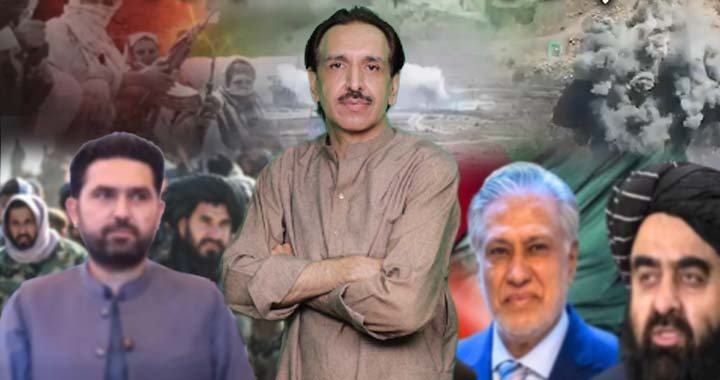
The situation under discussion revolves around three critical and interconnected issues: the alleged diversion of aid in Afghanistan, the evolving dynamics of Pakistan–Afghanistan engagement with China’s involvement, and the ongoing propaganda campaign targeting Pakistan.
Afghanistan today is facing multiple, overlapping crises. Each of these issues is significant enough to warrant detailed discussion on its own, but taken together, they present a broader picture of systemic instability and governance failure.
First, regarding the report that aid meant for the Afghan people is being distributed among terrorist groups, this is not a new development. There has been a consistent pattern in the past indicating that financial resources do not reach the ordinary Afghan citizen. Instead, there are strong indications that these funds are circulated within networks of power.
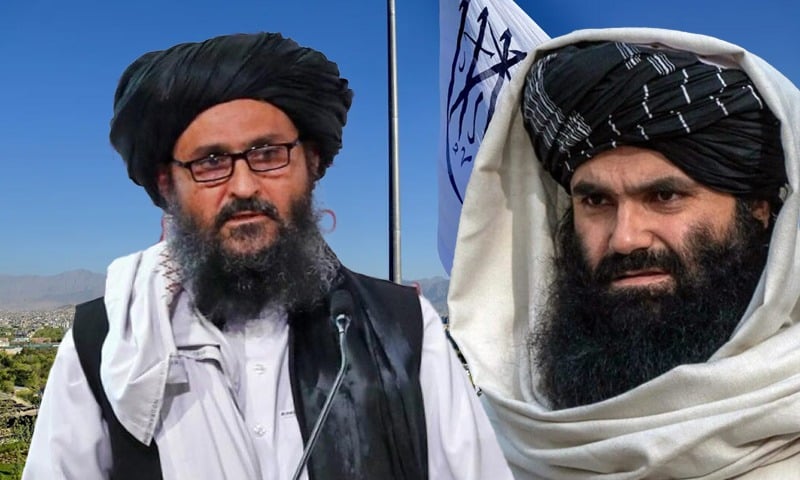
There have been repeated claims that senior figures within the Afghan Taliban structure have access to substantial financial resources. Reports have suggested that figures such as Mullah Yaqoob have been handling large sums of money, while there have also been indications of separate financial arrangements involving neighboring countries. When such practices exist at the top, it becomes unrealistic to expect transparency or accountability at lower levels.
This is essentially a dollar-driven system. The priorities of those in control appear disconnected from the realities faced by the Afghan population. While ordinary Afghans, including women and children, continue to suffer from severe humanitarian challenges, the resources meant for relief are reportedly diverted elsewhere.
A recent development further highlights this contradiction. The Afghan Ministry of Foreign Affairs has approached international organizations, stating that it is unable to manage the influx of migrants returning from Pakistan and Iran and requesting assistance. On one hand, there are repeated claims of victory and self-reliance, narratives about defeating major global powers. On the other hand, there is a continuous appeal for external financial support. This contradiction reflects the absence of a coherent governance structure.
It is important to understand that what is being described as aid does not fit into the conventional framework. Formal aid is typically extended to governments that are recognized within the international system. The current Afghan setup does not enjoy such recognition. What exists instead is a system that operates largely within a war economy. Terrorist groups rely on conflict as a source of income. Ideology serves as a justification, but in practical terms, financial incentives dominate.
In this context, recent diplomatic signals are also worth noting. There are reports that Qatar has conveyed concerns to Afghan authorities regarding their posture towards Pakistan, with implications for continued assistance. Similarly, the United States has urged greater scrutiny of Afghan-related processes, including diplomatic channels, citing a lack of trust.
The reported letter from the governor of Helmand adds another layer to this issue. Helmand is a strategically important province, and a governor, as an administrative authority, is closely connected to ground realities. When such a figure raises concerns about the distribution of financial resources, it points to internal fractures within the system. It suggests that different actors are competing for control over funds, and that even within the structure, there is dissatisfaction over how resources are managed.
This ultimately reinforces the conclusion that there is no effective system of governance in place. What exists is a fragmented arrangement where authority, resources, and decision-making are unevenly distributed.
Turning to Pakistan–Afghanistan relations, there is considerable noise around China’s potential role as a mediator. However, much of this appears exaggerated. The engagements taking place are at an initial and routine level, part of an ongoing trilateral framework involving Pakistan, Afghanistan, and China.
Serious negotiations, when they occur, are conducted at the highest diplomatic levels and typically in major capitals such as Islamabad, Beijing, Kabul, or Tehran. The current interactions do not reflect that level of seriousness. They are procedural rather than transformative.
There is also a tendency, particularly in certain media circles, to inflate expectations and present routine engagements as breakthroughs. In reality, there is no indication that any meaningful or result-oriented dialogue is imminent.
At this stage, Pakistan’s focus remains on its counterterrorism strategy. Operations such as Operation Ghazab Lil Haqq are ongoing and are being executed consistently. Until there is a tangible shift in ground realities, particularly regarding cross-border threats, there is little likelihood of Pakistan moving towards substantive negotiations or concessions.
The third issue is the propaganda campaign being waged against Pakistan. This is not limited to one source. While India plays a central role in shaping these narratives, segments of Afghan media and certain aligned voices also contribute to amplifying them.
A significant portion of this propaganda lacks credibility. There have been instances where false reports about high-profile individuals have been circulated without any verification. In other cases, highly sensitive military details are claimed to be known by sources that clearly lack the capability to access such information. This reflects a broader pattern of misinformation driven by sensationalism rather than facts.
In contrast, statements from international actors often present a different picture. There have been acknowledgments of Pakistan’s role in facilitating communication and engagement in the region. At times, references have been made to Pakistan as part of ongoing diplomatic efforts. These acknowledgments undermine the credibility of propaganda narratives.
The real impact of such propaganda is not on international policymaking, but on public perception, particularly among audiences that rely heavily on unverified information circulating on social media. This creates confusion and distorts understanding of actual developments.
Another aspect that cannot be ignored is the internal political situation in Khyber Pakhtunkhwa. Governance challenges at the provincial level have raised serious questions. Despite significant security developments, including the elimination of a large number of terrorists in recent operations, there has been a noticeable lack of political response and ownership.
The responsibility for maintaining security and achieving operational success rests almost entirely with Pakistan’s security forces. Their role extends beyond internal operations to include targeting terrorist infrastructure across the border. Independent reporting has also indicated that a substantial portion of such infrastructure has been dismantled.
Recent operations have targeted militant networks in areas such as Kunar, Nuristan, and Paktika. These actions have significantly degraded the operational capacity of terrorist groups. They have been deprived of weapons, ammunition, and logistical support, which are essential for carrying out coordinated attacks.
As a result, there has been a noticeable decline in the scale and intensity of terrorist activities. The reduction in incidents is not coincidental, but a direct outcome of sustained and targeted operations.
In such a scenario, the ability of these groups to launch high-impact attacks is severely limited. Without access to resources and infrastructure, their operational reach is constrained.
The broader conclusion is clear. The situation in Afghanistan remains defined by internal contradictions, weak governance, and competing power structures. At the same time, regional dynamics are shaped by a combination of security challenges, limited diplomatic engagement, and persistent propaganda.
Understanding this reality requires separating rhetoric from facts. The ground situation, when examined objectively, presents a very different picture from the one often portrayed through selective narratives.
The trajectory, however, is also evident. Continued pressure on militant networks, combined with strategic clarity, is gradually reshaping the security environment. The results are visible, and if the current approach is sustained, this trend is likely to continue.