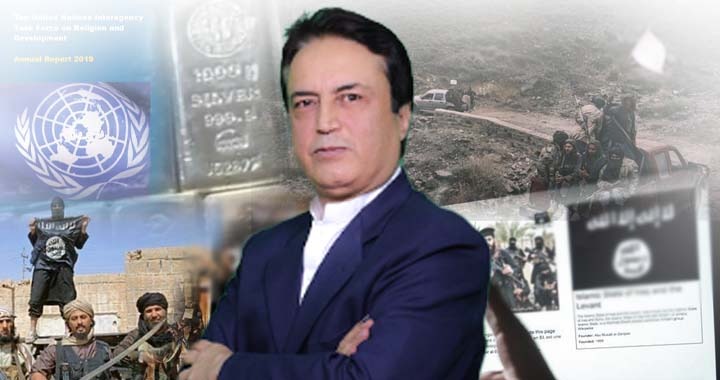
(Arif Yousafzai)
The latest report by the United Nations has once again placed Afghanistan at the centre of the global security debate, warning that multiple militant outfits are not only present but are becoming increasingly organised and technologically adaptive. From Al-Qaeda allegedly gaining facilitation, to the Tehreek-e-Taliban Pakistan intensifying cross-border attacks, and Islamic State Khorasan Province experimenting with AI-generated propaganda, the findings challenge the post-2021 narrative that Afghan soil would not be used against any country. Yet beyond the headlines and diplomatic exchanges lies a more complex and uncomfortable truth one that Pakistan must confront with clarity rather than political noise.
Since the return of the Afghan Taliban to power in August 2021, the international community had extracted assurances that Afghan territory would not serve as a launch pad for transnational militancy. The Taliban, now operating under the banner of the Islamic Emirate, repeatedly denied facilitating foreign groups. However, the UN monitoring team’s assessment suggests that the ecosystem of militancy has neither disappeared nor fundamentally transformed; instead, it has adapted. One may debate the methodology, intelligence sources, or geopolitical motivations behind UN reporting. As journalists who have covered war and terror in this region for over two decades, we understand that international reports often reflect political undercurrents. But dismissing them outright would be intellectually dishonest. The presence of multiple jihadist outfits in Afghanistan is neither a secret nor a revelation. It is a structural reality rooted in four decades of conflict.
The question is not whether such groups exist. The real question is: what does their presence mean for Pakistan? There is an inconvenient continuity that predates both the UN’s latest report and the Taliban’s return to Kabul. Militancy in Pakistan did not begin in 2021, nor did it originate solely from one organisation. Attacks inside Pakistan were occurring as early as 2002–03, even before the formal creation of the TTP in 2007. The militant infrastructure in the region evolved in layers from Afghan jihad networks of the 1980s to post-9/11 insurgent formations.
The TTP and the Afghan Taliban have historically shared ideological affinity, operational linkages and tribal overlap. For years, analysts who highlighted this convergence were dismissed as alarmist. Yet the surge in attacks in Pakistan after 2021 has forced a re-evaluation. While Islamabad and Kabul maintain a fragile diplomatic engagement, ground realities tell a different story.
It is important to differentiate between three levels:
The presence of militant factions in Afghanistan. The ideological sympathy some elements may have toward them. Direct, institutional state facilitation. The UN report touches upon the first and hints at the second. The third remains the most contentious and politically explosive.
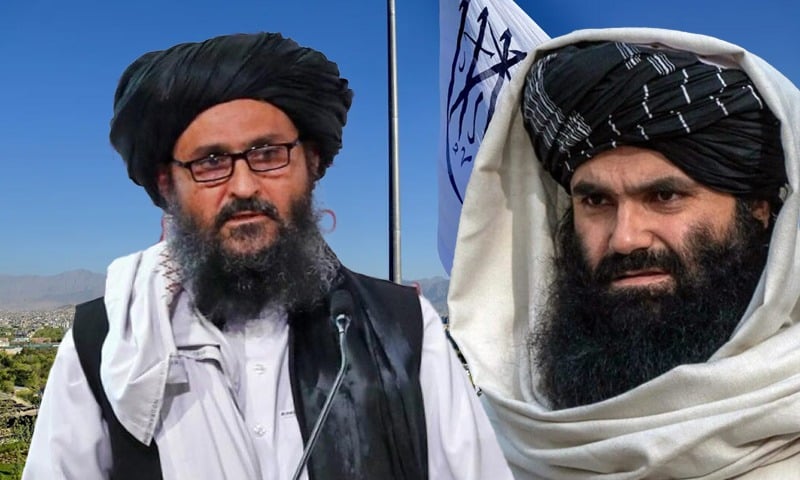
The network associated with Afghan Interior Minister Sirajuddin Haqqani has long been scrutinised internationally. Allegations of facilitation are not new. However, conflating intra-Afghan power dynamics with official state policy requires caution. Afghanistan today is not a monolith; it is a complex web of factions, rivalries and competing priorities. The evolution of ISKP deserves particular attention. Unlike traditional insurgent groups that relied primarily on physical recruitment networks and battlefield visibility, ISKP has aggressively moved into the digital domain. The use of AI-generated content, synthetic voices and sophisticated online propaganda reflects a strategic recalibration. This shift has two implications. First, the battlefield is no longer confined to mountains and borderlands; it extends into smartphones and encrypted platforms. Second, the narrative war is intensifying. AI-generated visuals and messaging allow militant groups to amplify perceived strength even when their physical footprint may be limited.
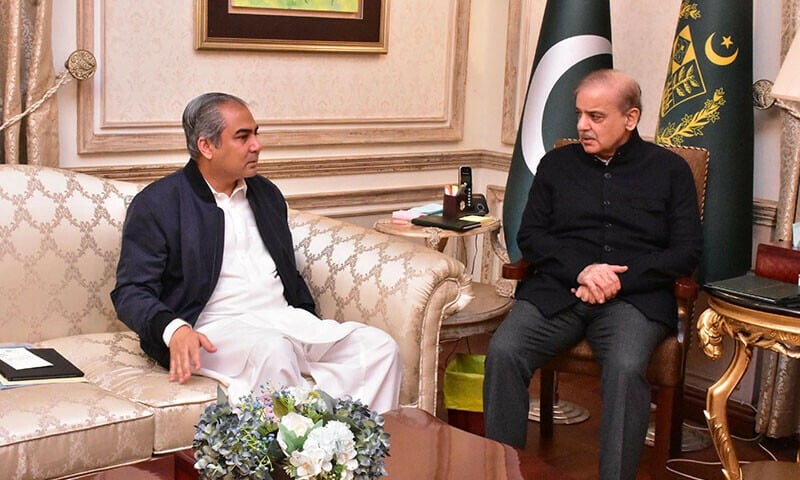
However, one must also recognise a paradox: the Afghan Taliban and ISKP are bitter adversaries. ISKP has repeatedly targeted Taliban figures, including individuals within the Haqqani network. Their hostility is ideological as well as operational. Therefore, the existence of ISKP cells in Afghanistan does not automatically translate into Taliban sponsorship. Rivalry and presence can coexist. For Pakistan, the issue is not academic. Cross-border attacks attributed to the TTP have increased. Senior Pakistani officials, including Interior Minister Mohsin Naqvi, have publicly linked certain incidents to elements operating from Afghan territory. Islamabad faces a dual challenge: safeguarding internal security while avoiding a full-scale rupture with Kabul. Military options are limited by geography, refugee dynamics and regional politics. Diplomatic leverage is constrained by Afghanistan’s economic fragility and international isolation. Coercion risks escalation; passivity risks emboldening militants.
Therefore, Pakistan’s strategy must be multi-layered: Strengthening border management through technological surveillance. Intensifying intelligence-based operations within its own territory. Engaging Kabul through structured, documented channels rather than rhetorical exchanges. Building regional consensus with China, Iran and Central Asian states, who also have stakes in Afghan stability. Above all, internal coherence is essential. A divided political landscape weakens national response.
Unfortunately, Pakistan’s domestic politics often undermine strategic focus. While the region grapples with transnational militancy and technological radicalisation, much of our political discourse is consumed by theatrical confrontations and intra-party chaos. Within Pakistan Tehreek-e-Insaf, recent developments illustrate a pattern of inconsistency. Protests are announced and withdrawn without clarity. Leaders contradict one another on strategy. Narratives oscillate between confrontation and reconciliation. Former prime minister Imran Khan remains a central figure in national politics, even from incarceration. His health, legal battles and political messaging continue to mobilise supporters. Yet mobilisation without organisational discipline risks fatigue and fragmentation. Statements attributed to provincial leaders about forming “forces” or preparing for “war” against the state reflect rhetorical escalation rather than strategic planning. In a country already facing insurgent violence, such language is irresponsible. The state cannot tolerate parallel militant posturing from any quarter — ideological or political.
The irony is stark: while Pakistan confronts non-state armed groups along its western frontier, sections of the political class flirt with militarised metaphors in the name of protest. This blurs lines between democratic dissent and destabilising adventurism. Another dimension of the UN report debate concerns credibility. Critics argue that global institutions often fail to apply uniform standards, citing selective outrage in international conflicts. Such grievances resonate emotionally with many in the region. However, conflating global power politics with the empirical question of militant presence in Afghanistan does not strengthen Pakistan’s case. A seasoned journalist does not accept every international report uncritically. Nor does he dismiss it reflexively. The task is to extract verifiable patterns, compare them with field reporting, and contextualise them within regional history. From years of engagement with conflict zones, one reality stands out: militant networks are rarely dismantled by denial. They are weakened through sustained intelligence work, financial disruption and ideological delegitimisation.
The UN can document, warn and recommend. It cannot enforce. It cannot substitute for regional political will. If militant groups are indeed reorganising in Afghanistan, the burden of response lies primarily with states directly affected Pakistan foremost among them.
Islamabad must avoid two extremes: Over-reliance on international narratives that may serve broader geopolitical agendas. Complete rejection of multilateral assessments that may contain actionable insights.
Strategic maturity lies in selective engagement accepting useful data, challenging inaccuracies diplomatically, and strengthening indigenous capacity.
Afghanistan today is a post-war state grappling with economic collapse, diplomatic isolation and internal factionalism. In such an environment, militant actors inevitably attempt to exploit space. The Taliban leadership faces its own dilemma: international legitimacy versus ideological rigidity. Whether it can, or will, decisively curb all transnational actors remains uncertain. For Pakistan, the lesson of the past two decades is clear. Security cannot be outsourced. Narratives cannot substitute for policy. Celebratory slogans about “strategic depth” or ideological affinity have proven costly. The resurgence of attacks within Pakistan demands sober introspection. Were warning signs ignored? Were assumptions about alignment misplaced? These are not questions of blame alone; they are questions of strategic recalibration. Meanwhile, domestic political forces must recognise that national security crises are not opportunities for partisan point-scoring. Stability requires coherence. Rhetorical militancy, whether from insurgents or politicians, only deepens fragility.
The UN report may be imperfect. It may reflect geopolitical currents. But it underscores a reality that seasoned observers have long understood: Afghanistan remains a hub where multiple militant strands intersect, compete and sometimes collaborate. Ignoring this reality serves no one. Pakistan stands at a crossroads. It can respond with emotional denunciations and internal political theatrics, or it can adopt a disciplined, evidence-based security doctrine grounded in regional cooperation and internal unity. History has shown that militancy thrives in vacuums political vacuums, governance vacuums, and narrative vacuums. Filling those spaces requires seriousness, not slogans.
The time for rhetorical battles is over. The time for strategic clarity has begun.