
(Mushtaq Yusufzai)
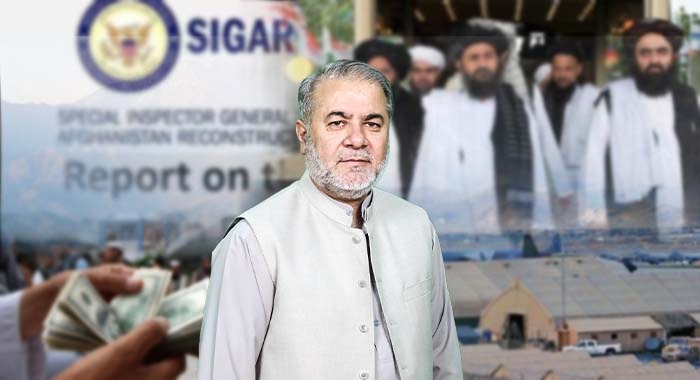
Afghanistan’s story over the past two decades is one of unparalleled investment, international involvement, and yet, devastating failure. The country, which became the focal point of a global war following the September 11 attacks, has seen trillions of dollars spent on military operations and reconstruction, but the outcomes reveal an extraordinary paradox: despite immense resources, Afghanistan remains fragile, destabilized, and a breeding ground for militancy. The United States’ Special Inspector General for Afghanistan Reconstruction (SIGAR) recently released a comprehensive report that sheds light on this complex reality, providing both financial clarity and troubling revelations about governance, corruption, and institutional fragility in Afghanistan.
According to SIGAR, the United States invested approximately $144 billion in reconstruction efforts between 2001 and 2021, aiming to rebuild Afghanistan’s infrastructure, healthcare system, educational institutions, and governance frameworks. Separately, military operations accounted for $763 billion, while another $90 billion went into establishing and supporting Afghan security forces. These numbers, staggering in their scale, highlight the enormous commitment the U.S. and its allies made over two decades. In addition to financial aid, the Afghan security forces received 147,000 vehicles and 427,300 firearms, along with other military equipment worth billions of dollars. Yet, despite this unprecedented investment, the Afghan government and its institutions collapsed almost immediately after foreign forces withdrew, raising questions about the effectiveness of the entire enterprise.
The presence of militant groups, including the Taliban, Al-Qaeda, and, more recently, Daesh, underscores the failure of these efforts. Even after billions were invested in reconstruction and security, Afghanistan continues to serve as a hub for extremist activities. The paradox is evident: despite being armed, trained, and financially supported, Afghan security forces were unable to withstand the Taliban’s advance, with many units surrendering within days of the U.S. withdrawal. This exposes the limits of external investment in state-building when local ownership, governance, and political will are weak or absent.
One of the central reasons for the collapse, the entrenched corruption within Afghan institutions. SIGAR’s report highlights widespread graft, ghost employees in security forces, and lack of accountability among officials. Many positions within the Afghan army and police existed only on paper, with salaries being drawn for personnel who were not present or actively engaged. This systemic corruption eroded the effectiveness of security forces and undermined public trust. Even with billions of dollars in equipment and funds, the institutions could not function without genuine administrative and operational integrity.
Furthermore, the U.S. and NATO forces built hospitals, universities, and other infrastructure, the long-term sustainability of these institutions was compromised by dependence on foreign presence. Afghanistan’s newly established institutions, including the Air Force, police, and army, were never fully autonomous. Once foreign troops departed, these systems collapsed, illustrating that material resources alone cannot create resilient institutions. True nation-building requires not just investment but the development of local capacity, leadership, and governance structures capable of withstanding shocks and managing internal challenges.
Interestingly, the Afghan Taliban, despite being adversaries of the U.S.-backed government, were strategic in consolidating power and developing their capabilities. During the conflict, the Taliban absorbed lessons, technologies, and skills from various militant groups, including Arab, Chinese, and Pakistani fighters, without exposing these networks publicly. By the time the Doha Agreement was signed, the Taliban had matured into a political and military force capable of negotiating and eventually taking control. Meanwhile, Al-Qaeda’s operations were weakened more by the Taliban’s internal regulation than by U.S. military campaigns. This underscores a critical failure of the U.S. strategy, which underestimated the Taliban’s organizational acumen and overestimated the effectiveness of financial and military support to the Afghan government.
The human cost of these two decades of war has been staggering, approximately 2,400 U.S. personnel were killed, over 20,000 injured, and hundreds of thousands of Afghan civilians perished. In Pakistan, the spillover effects of the war resulted in an estimated 85,000–90,000 casualties, including security personnel and civilians. Beyond fatalities, the war left deep scars on social, economic, and political structures across the region, highlighting the far-reaching consequences of prolonged conflict.
The Afghan leadership’s failure to prioritize national interests over personal gain exacerbated these problems, the Doha peace negotiations, where Afghan government officials displayed little trust in U.S. plans or willingness to engage sincerely with the Taliban. Their focus, was often on financial gain rather than governance or public welfare. This lack of political will and integrity, coupled with an undereducated population and weak media institutions, allowed misinformation and opportunism to flourish, further undermining national development and cohesion.
While U.S. reconstruction efforts did leave some positive legacies such as hospitals, universities, and trained professionals the inability to translate these achievements into sustainable governance highlights the limits of external aid. Afghan citizens returning from Pakistan, for example, encounter severe difficulties, as the infrastructure, services, and opportunities promised by reconstruction remain inadequate. Even initiatives such as the relocation of Afghan collaborators, funded at $14 billion, reveal a skewed prioritization of resources that did not necessarily translate into long-term national stability.
An important lesson: external investment and military might cannot substitute for internal commitment, accountability, and governance. Institutions require more than money and equipment; they need leadership, education, and civic responsibility to survive and thrive. Without these elements, even the most lavishly funded reconstruction projects risk collapse once external actors withdraw.
The U.S. experience in Afghanistan also raises questions for neighboring countries, particularly Pakistan, regarding regional security and the management of refugee populations. Pakistan’s strict measures in repatriating Afghan refugees were necessary due to resource constraints and governance challenges. Yet, despite these efforts, the situation remains complex, with millions of Afghans still relying on Pakistan for education, healthcare, and livelihoods. The lessons from Afghanistan thus have direct relevance for Pakistan’s domestic and foreign policy, especially in relation to border management, refugee integration, and counterterrorism strategy.
Governance issues closer to home, highlighting the government of Khyber Pakhtunkhwa as an example of leadership distractions undermining public administration. He notes that the chief minister has prioritized political rallies and party mobilization over consolidating his cabinet and addressing urgent provincial issues. This neglect results in administrative inefficiency, public dissatisfaction, and missed opportunities for governance reform. The comparison is stark: while billions were spent in Afghanistan without creating durable governance, similar patterns of mismanagement at a provincial level can lead to avoidable crises in Pakistan.
In Khyber Pakhtunkhwa, the focus on political events rather than governance, noting that critical ministries remain unfilled and party workers are mobilized for rallies rather than public service. The provincial leadership’s preoccupation with image management and political theatrics, he argues, undermines the province’s development and risks repeating the mistakes observed in Afghanistan. Without a committed, competent, and accountable administration, even significant resources can fail to translate into meaningful outcomes.
The lessons from Afghanistan are manifold. First, investment alone cannot compensate for weak governance, corruption, or lack of political will. Second, sustainable institutions require local ownership, accountability, and leadership capable of managing both internal and external challenges. Third, the human cost of failure measured in lives lost, infrastructure destroyed, and regional instability is immense and often irreversible. Khyber Pakhtunkhwa suggest that vigilance, focus, and responsible governance are essential, even at a provincial level, to avoid replicating Afghanistan’s tragic trajectory.
The U.S. exit from Afghanistan, accompanied by the rapid collapse of the Afghan government, offers a sobering reminder of the limitations of foreign intervention without indigenous commitment. Despite decades of military, financial, and technological input, Afghanistan’s institutions could not endure once external forces withdrew. The Afghan Taliban’s resilience, strategic intelligence, and ability to navigate internal and external politics further underscore the importance of local agency in determining outcomes. For policymakers, journalists, and scholars, Afghanistan is not merely a case study of war but a cautionary tale about the complex interplay of money, power, culture, and governance.
As the region continues to grapple with the fallout of Afghanistan’s war, the need for a nuanced, well-informed approach to governance, security, and development is evident. Success in state-building is measured not by expenditures or infrastructure alone, but by the capacity of institutions and leaders to serve their people, sustain themselves, and resist internal and external pressures. Afghanistan, with its wealth of human and natural resources, could have been a success story. Instead, it stands as a warning: without integrity, vision, and local commitment, even a trillion dollars cannot buy stability or peace.
In conclusion, Afghanistan’s two-decade experience is an indelible lesson for the international community, neighboring states, and domestic governance alike. From the failure of massive reconstruction efforts and the rise of enduring militancy to the mismanagement of resources and corruption, the story of Afghanistan underscores a fundamental truth: no amount of money, military might, or technology can substitute for good governance, accountability, and national ownership, the responsibility lies not only with foreign actors but with Afghan leadership itself and, by extension, with all governments seeking to balance external aid with sustainable domestic governance. For Pakistan and Khyber Pakhtunkhwa, the lessons are immediate and pressing: attention to governance, prioritization of institutional integrity, and the sincere fulfillment of public responsibilities are not optional they are essential to prevent repeating Afghanistan’s costly mistakes.



