The Afghan Taliban have faced criticism over their policies since returning to power in August 2021. However, the criticism has become increasingly significant, particularly over restrictions imposed on women, as international organizations and several countries have begun speaking more openly against the Taliban government’s policies.
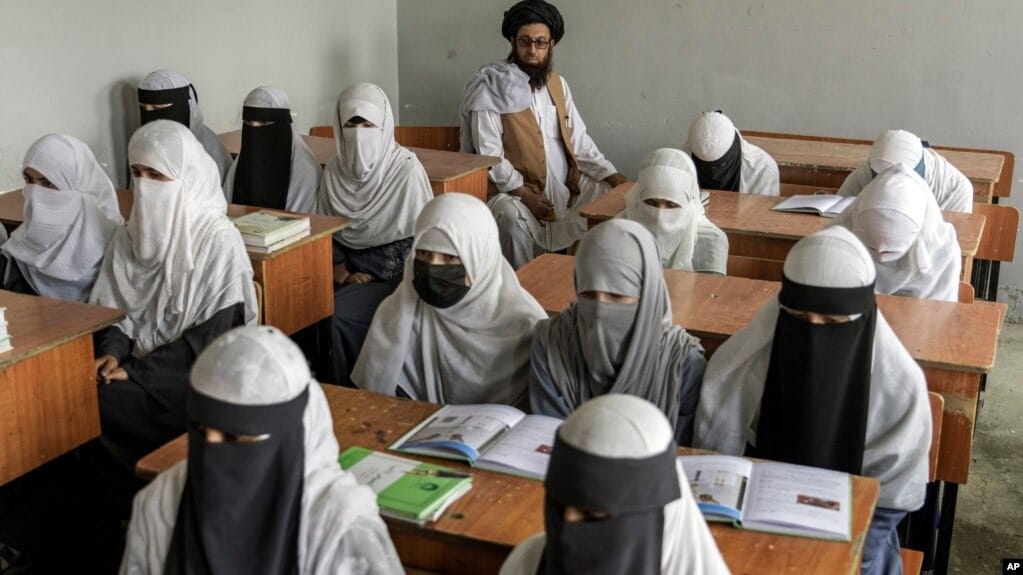
One of the most notable developments is the Organization of Islamic Cooperation (OIC) breaking its silence over restrictions on Afghan women. The organisation has criticised the Taliban government’s policies barring women from education, employment and other opportunities. These restrictions have drawn particular condemnation because they affect not only women’s fundamental rights but also Afghanistan’s social and economic future.
The OIC’s position is significant because Muslim-majority countries have generally maintained a cautious approach towards the Afghan Taliban. Its criticism represents an important development in the international response to the restrictions imposed by the Taliban government.
The OIC has maintained that such measures are inconsistent with Afghanistan’s international commitments and Islamic values. It has called on the Taliban authorities to lift the restrictions, reopen educational institutions for women and allow them to work and participate in public life.
France has also joined the growing international criticism. French Foreign Minister Jean-Noël Barrot has expressed strong reservations about the Taliban’s treatment of women and called for the removal of restrictions on their education and employment. These positions indicate that concerns about the Taliban government’s policies are no longer limited to Western governments and human rights organizations.
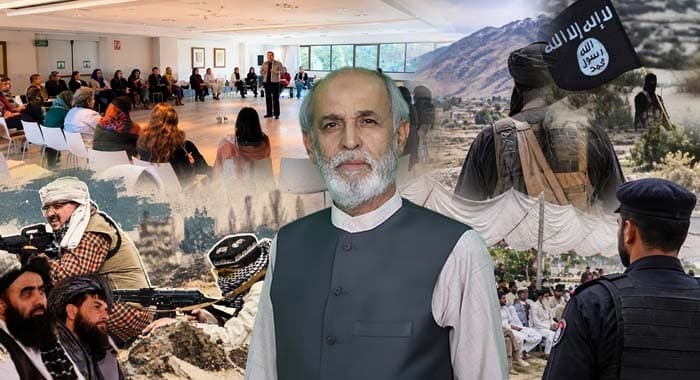
Another important development is the gathering of Afghan women and political opposition figures in Madrid, Spain, under the Women for Afghanistan initiative. The meeting, chaired by former Afghan parliamentarian Fawzia Koofi, has brought together representatives and figures opposed to the Taliban government to discuss the country’s political and human rights situation.
Among the political figures associated with the opposition gathering are Abdul Rashid Dostum and Mohammad Mohaqiq, alongside other Afghan personalities. The discussions are expected to focus on restrictions imposed on women, the broader human rights situation and the country’s political future.
Although such gatherings cannot directly change the situation inside Afghanistan, they provide an opportunity to formulate resolutions and present a collective position before international organizations and forums, including the United Nations and the European Union. The objective is to draw international attention to Afghanistan’s worsening situation and encourage meaningful action.
The changing ISKP threat
Another important development concerns the Islamic State Khorasan Province (ISKP). A United Nations monitoring report dated August 10, 2026, has highlighted a changing pattern in the group’s activities, indicating a decline in its attacks inside Afghanistan while its terrorist activity in Pakistan has increased.
This development raises serious questions about the group’s operational presence and the environment in which it continues to function. Several countries, including Russia, China, Iran, Türkiye and the United States, have expressed concerns about ISKP’s presence and activities in the region.
The Afghan Taliban, however, have continued to deny that the group maintains a significant presence inside Afghanistan, arguing that its presence is more concentrated in Pakistan’s Balochistan province. Regardless of where its fighters are based, the organization remains an active threat, and its activities cannot be ignored.
ISKP is an extremely hardline extremist organization. Its ideological orientation and activities have also placed it at odds with several religious and political forces across the region. Countries such as Iran and Türkiye have expressed opposition to its extremist ideology and activities.
The growing activity of ISKP in Pakistan, particularly against the backdrop of reports about its reduced operational activity in Afghanistan, deserves close attention. The regional threat requires a serious assessment of the group’s networks, its ability to operate across borders and the extremist environment that facilitates its recruitment and activities.
Questions surrounding Al-Qaeda’s leadership
Alongside ISKP, developments concerning Al-Qaeda also deserve attention. Recent reports have suggested that Hamza bin Laden, son of the organization’s founder Osama bin Laden, has assumed its leadership.
Following Osama bin Laden’s death on May 2, 2011, Ayman al-Zawahiri became Al-Qaeda’s leader. However, his reported death in a US strike in Kabul’s Wazir Akbar Khan area in July 2022 raised questions about the organization’s subsequent leadership.
The strike had targeted Zawahiri, who was reportedly staying in Kabul. The Afghan Taliban initially denied having information about his presence and said an investigation would be conducted. However, the findings of that investigation were never made public.
There had been speculation about Zawahiri’s death and the future leadership of Al-Qaeda. Reports now suggesting that Hamza bin Laden has taken over the organisation’s responsibilities and leadership have added another dimension to concerns about Al-Qaeda’s future.
The possibility of a leadership transition within the organization is significant because Al-Qaeda remains an established terrorist network, and developments concerning its command structure could have implications for regional security.
Afghanistan’s internal crisis and deteriorating conditions
The situation inside Afghanistan is also facing serious challenges. The Taliban government recently claimed that six criminals had been shot dead during an encounter with its security forces. However, the authorities did not provide sufficient details about the identities of those killed.
There are also concerns that political opponents in Afghanistan are being labelled criminals or members of terrorist organizations before being detained or eliminated. Allegations of enforced disappearances and extrajudicial killings have continued to raise questions about the treatment of people perceived as opponents of the Taliban government.
The authorities need to provide transparency about such incidents, particularly when they involve people who may have previously been detained. Labelling individuals as criminals or terrorists without making evidence public does little to address concerns about human rights and the rule of law.
Afghanistan is also experiencing shortages of essential commodities, particularly medicines. The Taliban authorities recently announced that they had confiscated smuggled goods, including a substantial quantity of medicines originating from Pakistan.
However, the issue needs to be examined from a humanitarian perspective. Afghanistan depends on medicines imported from Pakistan, Iran and other countries. Medicines are essential for saving human lives, and preventing their availability through restrictive measures can worsen the difficulties faced by ordinary Afghans.
While authorities have a responsibility to regulate smuggling and illegal trade, they must also ensure that essential medical supplies reach the people who need them.
Peace committees and police resistance in Khyber Pakhtunkhwa
In Khyber Pakhtunkhwa, the emergence of peace committees in Bannu and Lakki Marwat has also become an important development. These committees were formed by police personnel to support efforts against terrorism, particularly targeting former Taliban fighters who had surrendered and were subsequently involved in terrorist activities.
The situation has now expanded to Kohat, where police personnel have also announced the formation of committees to support counterterrorism efforts.
The immediate background to the developments in Kohat includes incidents involving criminal activity around the Kohat Tunnel and subsequent action against police personnel. Following these incidents, several police officials were suspended or transferred, prompting resistance from members of the Kohat Police.
Police personnel from Bannu also joined the protest. The demonstration eventually ended after the provincial government withdrew its earlier orders against the affected officials.
The police have also expressed their determination to establish committees in Kohat to support operations against terrorists.
On the one hand, the formation of such committees is a positive development because it reflects the willingness of police personnel to resist terrorism and strengthen local security. On the other hand, there is a danger that these developments could create another form of Talibanisation or provide space for extremist tendencies to re-emerge under a different name.
The provincial government must take this issue seriously. It should examine the reasons behind the resistance within the police force and understand why police personnel have taken such positions against certain policies and decisions.
If the police have credible evidence against individuals involved in terrorism, appropriate action should be taken against them. At the same time, the concerns and professional assessments of police personnel must not be ignored. The government should take police officers into confidence and move forward through consultation rather than allowing mistrust to deepen within the security apparatus.
The overall security situation in Khyber Pakhtunkhwa has improved compared with previous periods, and counterterrorism operations are continuing. However, it would be premature to suggest that the threat of terrorism has disappeared. Terrorist networks remain capable of reorganising and carrying out attacks whenever opportunities arise.
The continued presence of these threats means that security operations, effective policing and coordinated government action remain essential to maintaining peace in the province.