(Shamim Shahid)
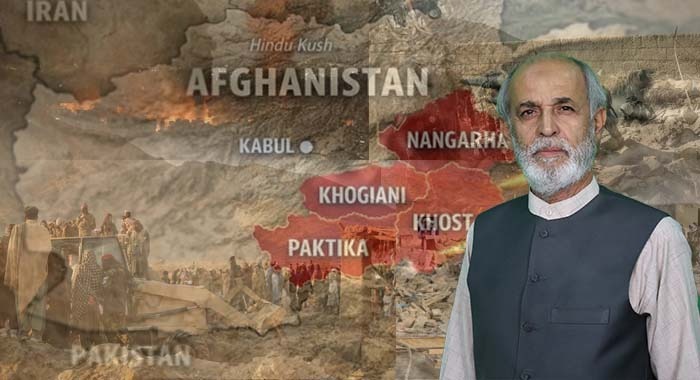
The latest cross-border strikes carried out by Pakistan in Afghanistan’s eastern provinces have once again brought the fragile equilibrium along the Durand Line into sharp focus. According to official claims, seven militant hideouts were targeted in the provinces of Nangarhar, Khost and Paktia, resulting in the killing of more than 70 militants. Islamabad has described the strikes as intelligence-based and result-oriented, aimed primarily at dismantling operational infrastructure of the Tehreek-e-Taliban Pakistan (TTP) and affiliated factions operating from Afghan soil. Kabul, while condemning the strikes and acknowledging civilian casualties in at least one location, has vowed to respond “at an appropriate time.”
The episode is not merely a military development. It is a political signal, a diplomatic gamble, and a test of the Afghan Taliban’s internal coherence. It also raises urgent questions about the sustainability of cross-border militancy, the credibility of intelligence-based operations, and the accelerating information war that now accompanies every kinetic strike. The strikes reportedly focused on specific locations in eastern Afghanistan, particularly in Nangarhar’s Ghani Khil area, as well as in parts of Khost and Paktia. These regions have historically served as transit corridors and sanctuary spaces for various militant networks due to their rugged terrain and tribal linkages with Pakistan’s former Federally Administered Tribal Areas (FATA), now merged into Khyber Pakhtunkhwa.
Pakistan’s security establishment has long argued that these areas provide operational depth to the TTP. Following a surge in suicide bombings and targeted attacks inside Pakistan, especially in Khyber Pakhtunkhwa and parts of Balochistan, Islamabad appears to have decided that defensive posturing was no longer sufficient. The logic behind the strikes is clear: degrade leadership structures, disrupt training and logistics networks, and send an unmistakable message to both the militants and their hosts. The reported death of key commanders, including figures linked to the so-called Shura-e-Mujahideen of North Waziristan under Hafiz Gul Bahadur’s faction, suggests that the operation was designed to target high-value nodes rather than conduct symbolic retaliation. Whether the claim of “over 70 militants killed” withstands independent verification remains to be seen. However, the scale of the claim indicates that this was not a limited tactical strike, but a deliberate escalation.
The TTP is not a monolithic organization. It is an umbrella movement composed of multiple factions, some of which retain operational autonomy. Among them, the Hafiz Gul Bahadur group has historically maintained a distinct identity while cooperating tactically with the broader TTP framework. Since Pakistan’s military operations in North Waziristan in 2014, particularly Zarb-e-Azb, many militants relocated across the border into Afghanistan. The resurgence of TTP attacks since 2021—after the Afghan Taliban’s return to power has been a persistent irritant in Pakistan-Afghanistan relations. Islamabad maintains that the TTP leadership and fighters have found refuge inside Afghanistan, where they regroup, train, and launch cross-border operations. Kabul, in turn, insists that it does not permit its territory to be used against any country.
The contradiction between these two positions has become the central fault line in bilateral relations. Pakistan views its strikes as an exercise of self-defense under international law, arguing that repeated diplomatic engagements yielded insufficient results. The Afghan Taliban, however, interpret cross-border strikes as violations of sovereignty. The deeper issue is this: the Afghan Taliban’s ideological proximity to the TTP complicates their ability to act decisively against it. While the Afghan Taliban seek international recognition and economic stabilization, many within their rank and file retain historical ties with TTP cadres forged during two decades of insurgency. Any decisive crackdown on the TTP risks internal fissures within the Islamic Emirate. One of the most contentious aspects of the strikes concerns allegations of civilian casualties. Reports from Nangarhar’s Ghani Khil suggest that a residential compound was struck, resulting in the deaths of women and children. Afghan social media platforms circulated images and videos claiming collateral damage. Kabul’s spokesperson, Zabihullah Mujahid, condemned the strikes and referred to civilian harm, while also promising retaliation at a time of its choosing.
Pakistan, on the other hand, maintains that the strikes were precise and intelligence-driven. Officials have emphasized that militant compounds not civilian neighborhoods were the targets. The divergence between official narratives and local accounts underscores the centrality of the information domain in modern conflict. In an age of artificial intelligence-generated imagery and instantaneous social media amplification, propaganda spreads faster than facts. Old videos are recycled, unrelated images are repurposed, and emotionally charged narratives gain traction before verification can occur. In a state of quasi-war, misinformation becomes both weapon and shield.
That said, the possibility of collateral damage cannot be dismissed outright. No cross-border strike however precise is immune from unintended consequences. The moral and strategic costs of civilian casualties are significant. They fuel anti-Pakistan sentiment within Afghanistan, strengthen hardline factions within the Taliban, and provide recruitment propaganda for militant groups.
If Islamabad is to sustain the legitimacy of such operations, transparency and credible evidence will be crucial. Authenticating intelligence assessments and communicating verified outcomes are essential to counter misinformation and preserve international credibility. The Afghan Taliban’s response to the strikes reveals a delicate balancing act. On one hand, the Taliban leadership has publicly condemned the strikes as violations of sovereignty. On the other, there are indications that some within the leadership prefer to avoid an outright rupture with Pakistan. Afghanistan’s current rulers face severe economic constraints, diplomatic isolation, and internal governance challenges. They lack advanced air defense capabilities and possess limited conventional military options against Pakistan. Escalatory retaliation would not only risk military imbalance but could further isolate Kabul diplomatically.
Reports suggest that senior Taliban figures, including those more pragmatic in outlook, are wary of deteriorating relations with Pakistan. While hardliners advocate a strong response to assert sovereignty, pragmatists recognize that confrontation with a nuclear-armed neighbor would be strategically unwise. The Taliban’s internal dynamics are thus central to understanding what comes next. A token rhetorical condemnation combined with behind-the-scenes negotiations may be the most likely outcome. Alternatively, if internal pressures mount, Kabul may permit indirect retaliation through proxies, leading to another cycle of violence. Historical Echoes and Contemporary Realities Cross-border tensions are not new. Since 2003, Pakistan has endured sustained militant violence, much of it linked to sanctuaries across the border. Civilian casualties inside Pakistan have often outnumbered security force losses, underscoring the indiscriminate nature of militant attacks.
The recurring pattern has been familiar: an attack in Pakistan, followed by diplomatic protests, followed by either restraint or limited cross-border action. What distinguishes the current moment is the changed political landscape in Kabul. The Afghan Taliban are no longer insurgents; they are the de facto government. This shift imposes responsibilities that go beyond ideological solidarity. If the Taliban aspire to international recognition, they must demonstrate the capacity and willingness to prevent transnational militancy. Failure to do so invites unilateral action from neighbors. Pakistan’s strikes can thus be seen as a message not only to the TTP but to Kabul: sovereignty entails responsibility. If Afghan territory is used to orchestrate violence against Pakistan, Islamabad reserves the right to act.
One of the key takeaways from this episode is the importance of intelligence credibility. Targeted strikes hinge on accurate, real-time information. Miscalculations—whether in identifying targets or assessing collateral risk—carry profound consequences. Pakistan’s leadership must ensure that its intelligence inputs are rigorously vetted and independently cross-checked. The strategic objective should not merely be kinetic success but political sustainability. Every strike must withstand scrutiny, both domestic and international. At the same time, the Afghan Taliban must confront the uncomfortable reality that militant groups operate within their territory. Denial may offer short-term political insulation but undermines long-term stability.
The current trajectory is unsustainable. A cycle of attack, retaliation, condemnation, and counter-strike benefits no one except extremist actors. What is needed is a structured security dialogue one that addresses intelligence sharing, border management, and verifiable commitments against cross-border militancy. Confidence-building measures could include joint mechanisms for monitoring militant movement, third-party facilitation for dispute resolution, and transparent investigation of alleged civilian harm. Without institutionalized cooperation, ad hoc military actions will continue to define the relationship.
For Pakistan, strategic patience must complement tactical decisiveness. For Afghanistan’s Taliban leadership, ideological affinities must yield to statecraft.
The eastern provinces of Nangarhar, Khost and Paktia have once again become the epicenter of a conflict that neither side can afford to escalate indefinitely. Precision strikes may yield short-term tactical gains, but without a broader political framework, they risk entrenching a cycle of instability. In the end, the real battle is not only against militants in remote compounds. It is against mistrust, misinformation, and the enduring legacy of a war that never fully ended only shifted its terrain.