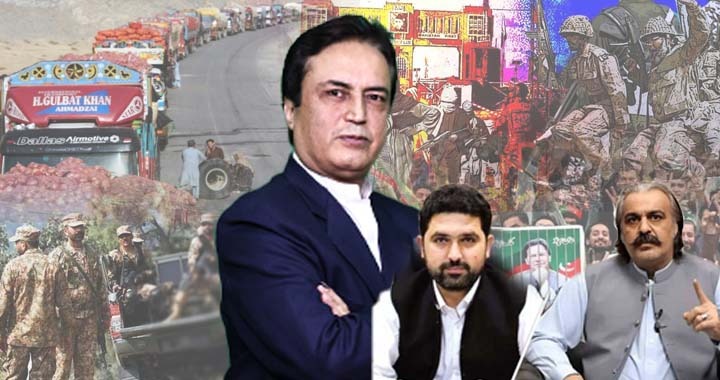
Today, we are discussing the current political situation in Khyber Pakhtunkhwa (KP), where Pakistan Tehreek-e-Insaf’s Chief Minister, Sohail Afridi, has announced a street movement scheduled for January 9 with a single stated objective: the release of the party’s jailed founder. Alongside this, we will also examine Pakistan–Afghanistan relations, particularly the evolving situation along the border.
Recently, the United Nations dispatched containers carrying humanitarian goods intended for Afghanistan. However, despite these supplies being ready for transit, Afghan authorities did not allow the containers to cross the border. We will examine the reasons behind this refusal and its broader implications.
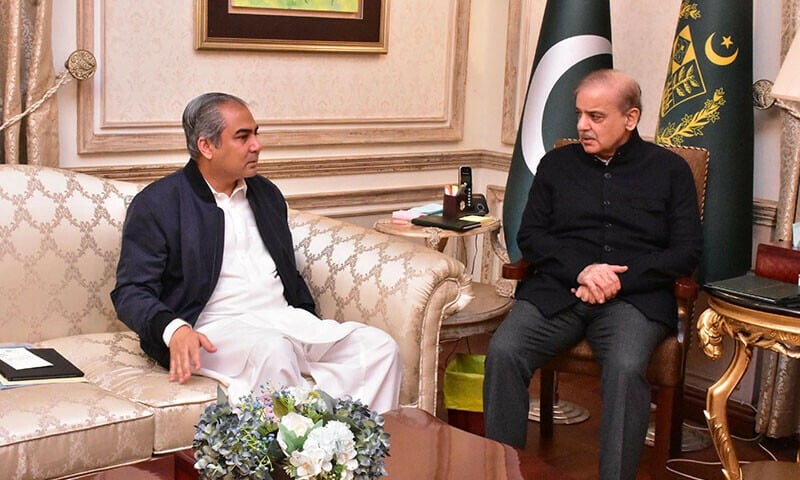
Turning back to our first topic, the political impact of Sohail Afridi’s outreach will become clearer as he continues his visits across the country. His recent trip to Lahore proved controversial and ended with the KP chief minister being compelled to issue an apology. He is now planning a visit to Karachi on January 8 or 9.
There are specific objectives that the KP government and PTI appear to be pursuing. The reality, however, is that Tehreek-e-Insaf has effectively become a dormant party. Its founding leader is behind bars, while many party figures outside prison are focused on enjoying power within the province.
PTI has ruled KP for the past 12 years. During this period, three provincial governments have come and gone, and within just one year, two chief ministers were replaced. Meanwhile, many party figures continue to enjoy privileges as MNAs, MPAs, senators, advisers, and special assistants.
The organizational structure of PTI has collapsed entirely. In practical terms, the party no longer exists as an organization. This is not a recent phenomenon; even when the party founder served as prime minister, the organizational backbone of PTI had already disintegrated. There was no functioning party—only a leader in office, with governments in KP and Punjab.
Since the founder’s removal from power, no protest or movement has gained real momentum. There was extensive criticism of Ali Amin Gandapur, with allegations that he was betraying the party and playing both sides. Yet what we witnessed was a series of dramatic, scripted moves—journeys to Islamabad followed by mysterious disappearances and returns to Peshawar through multiple districts.
Ali Amin attempted to keep party workers motivated, occasionally organizing rallies in Swabi or even at motorway service areas. Now that Sohail Afridi has assumed office, the responsibility of sustaining PTI’s protest politics has fallen squarely on his shoulders. He is expected to play a role in securing the founder’s release.
The obvious question is why this responsibility lies with the chief minister rather than the party organization. The answer is straightforward: Sohail Afridi is in government. Being in power gives him access to resources, and protests require resources—most importantly, money.
Ali Amin himself used to justify corruption allegations by claiming he spent millions annually on party activities, legal cases for PTI workers, logistical support, and even bribery expenses to keep protests running. Whether true or not, this highlights the reality that protest politics demand financing.
Sohail Afridi is now tasked with managing everything—from public mobilization to energizing party workers—while serving as chief minister. We have seen him hold rallies across KP, including Charsadda, Khyber, Dir, Swabi, and Abbottabad. This created some momentum, but his visit to Lahore marked a turning point.
The primary reason for going to Lahore was the political vacuum within PTI Punjab, which is effectively inactive. Past protests following the founder’s imprisonment saw virtually no participation from Punjab—neither workers nor leaders. That is why Sohail Afridi attempted to revive the party there.
At present, everything he is doing appears aimed at preparing for an Islamabad march. However, his Lahore visit failed to deliver results. Now he intends to visit Sindh, particularly Karachi, Pakistan’s economic hub.
While a chief minister is free to meet party workers nationwide, the key question remains: when the call for Islamabad is finally given, will people from Lahore or Karachi respond? In my assessment, they will not. Neither workers nor leaders from these regions are likely to mobilize.
PTI has steadily shrunk from a national party into a regional one, effectively confined to KP. Its power base, workers, and political strength are now limited to this single province. Even if an Islamabad call is made, only a few thousand supporters—primarily from KP—may participate.
Sohail Afridi’s aim appears to be reviving morale among party workers and preparing them for a potential march. But he is well aware of the consequences of such a call. Without nationwide support, the risks far outweigh the gains.
The internal situation within PTI is equally troubling. Party leaders are widely viewed as compromised. Sohail Afridi’s media engagements and outreach in Lahore and Karachi have fueled speculation that he too has struck understandings behind the scenes.
Statements by senior party figures distancing the jailed founder from Afridi’s decisions have exposed deep internal rifts. These remarks highlight a lack of organizational coherence and trust within PTI.
When a chief minister’s provincial visits become a subject of internal controversy, it signals that the party has fractured from within. Despite earlier claims that Afridi’s appointment would unite PTI, the opposite appears true—differences are deepening.
History offers a cautionary tale. Ali Amin Gandapur was removed not by the founder directly, but through persistent internal lobbying and allegations of betrayal. If similar narratives begin circulating about Sohail Afridi, the outcome could be the same.
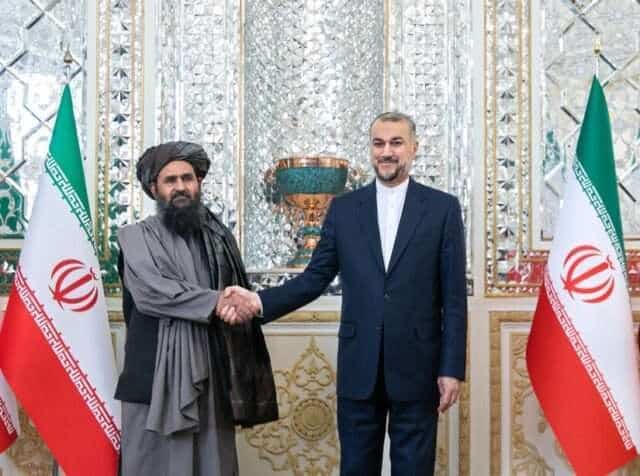
Now turning to Pakistan–Afghanistan relations, particularly the border situation. Despite earlier optimism, the border remains closed—nearly three months now. Trade between Pakistan and Afghanistan, as well as transit trade to Central Asia, has come to a halt.
Both countries are suffering economically. Pakistan’s losses are estimated at around $7 million, while Afghanistan’s losses range between $3–4 million, bringing the total close to $10 million.
This closure has disrupted major export sectors, including pharmaceuticals, food products, and manufactured goods, while imports from Afghanistan—such as fruits, coal, and minerals—are also affected.
Humanitarian supplies sent under the UN World Food Programme remain stranded. Afghan authorities have refused transit unless Pakistan guarantees that borders will never be closed in the future—a demand that places negotiations in limbo.
Pakistan and Afghanistan, both Islamic countries, depend on cooperation for stability. But cooperation requires trust, and trust is currently absent. In Afghan political culture, mistrust halts decision-making entirely.
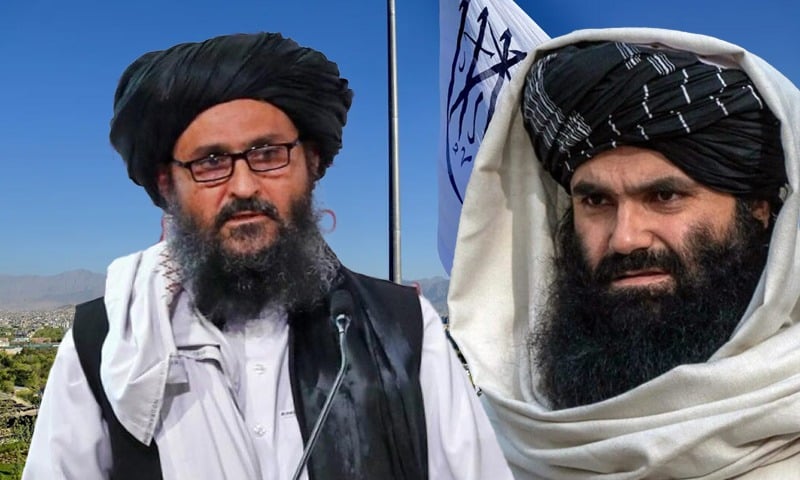
Security challenges further complicate matters. Militant groups operating in Pakistan have claimed thousands of attacks annually, while counter-operations continue. The relationship between Afghan authorities and various militant factions is deeply complex and historically rooted.
These groups fought together against a common enemy for decades. Their bonds cannot be broken through pressure alone. Attempts by global powers to divide them have failed.
Pakistan must adopt a second, more pragmatic policy—one based on dialogue, mediation, and traditional mechanisms like jirgas. Pressure will not succeed where trust has collapsed.
If Pakistan expects Afghanistan to turn against its long-standing allies, it is misreading the situation. The rank and file remain aligned, and any forced rupture could destabilize the entire region.
A negotiated, trust-based approach remains the only viable path forward.