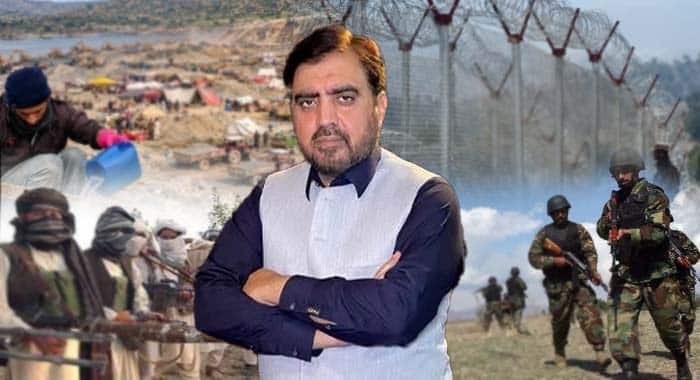
Khyber Pakhtunkhwa stands at a critical crossroads. For years, terrorism, organised crime, illegal gold mining, smuggling and political patronage have combined to undermine the province’s security, weaken its economy and deprive ordinary citizens of opportunities for a peaceful and prosperous life. What makes the situation particularly dangerous is that these challenges no longer operate independently. They have developed into an interconnected network in which criminal wealth finances violence, violence protects illegal economic interests, and political influence creates opportunities for these activities to flourish.
Confronting this crisis requires more than isolated security operations. It demands a comprehensive effort to dismantle the financial foundations of militancy, eliminate criminal networks, strengthen institutional coordination and restore the state’s authority across vulnerable areas. The ongoing intelligence-based operations in North Waziristan, action against illegal gold mining and growing coordination among the police, Pakistan Army and Frontier Constabulary represent important developments in this direction.
The real battle is not simply against armed individuals. It is against an entire ecosystem that has turned insecurity into an economic opportunity at the expense of ordinary people and the province’s future.
One of the most significant developments in Khyber Pakhtunkhwa is the improved coordination among the police, Pakistan Army and Frontier Constabulary. These institutions are increasingly working towards a common objective: eliminating terrorist networks and restoring sustainable peace in areas that have suffered from prolonged insecurity.
Institutional coordination is fundamental to successful counterterrorism efforts. When security organisations operate with different priorities, inconsistent policies and inadequate communication, militant groups exploit those weaknesses. Fragmented responses create opportunities for armed networks to reorganise, expand their influence and maintain control over vulnerable communities.
A unified approach, however, strengthens intelligence gathering, improves operational effectiveness and reduces unnecessary risks to security personnel and civilians.
The ongoing intelligence-based operations in North Waziristan have reportedly resulted in the elimination of more than 40 terrorists. These operations demonstrate the importance of identifying specific threats and acting against them through coordinated security measures.
One particularly significant incident involved the interception of a Suzuki vehicle carrying an explosive device. Security personnel successfully traced the vehicle and prevented what could have been a devastating attack in Mir Ali. Such incidents demonstrate that effective intelligence gathering can prevent mass casualties before terrorists have an opportunity to execute their plans.
Preventing an attack is often more important than responding to its aftermath. Every intercepted explosive device represents potentially saved lives, protected families and a community spared from another tragedy. Another encouraging aspect is the reported reduction in casualties among security personnel. Coordinated operations can help avoid situations in which isolated security units become vulnerable to ambushes and attacks. Protecting the lives of those defending the country must remain a central operational priority.
Nevertheless, the success of these operations must ultimately be measured by their long-term impact. The objective should be to establish an environment in which terrorist organisations can no longer intimidate communities, disrupt public services or threaten economic activity. Perhaps the most important development in the fight against terrorism is the growing support of local communities for efforts to restore security.
For years, residents of affected areas have endured intimidation, extortion and restrictions on their everyday lives. Businesspeople have faced financial demands from armed groups, contractors have been pressured to surrender portions of public development funds, and ordinary citizens have struggled to conduct commercial activities without interference.
In some cases, contractors executing government projects have reportedly been forced to surrender between 30 and 40 per cent of project value to armed groups. Businesses have also faced demands for a portion of their earnings. Such practices represent a parallel system of coercive control. Armed groups attempt to establish themselves as an alternative authority, imposing their own financial demands and determining who can conduct business, undertake construction or operate freely.
This is not merely terrorism in its conventional form. It is economic intimidation designed to weaken the state and make local communities dependent on the permission of armed actors. The reported support of residents for ongoing operations is therefore particularly significant. People who have experienced years of intimidation naturally want an environment in which they can work, earn a living and raise their children without fear.
The discovery of facilities allegedly used by militants in locations that outwardly appeared to be religious institutions has further highlighted the complexity of the security challenge. These facilities reportedly included torture cells, bomb-making equipment and places where individuals were detained illegally.
Religious institutions must never become instruments of violence or intimidation. Those who exploit religious spaces for criminal purposes undermine both public security and the sanctity of religion. The state must distinguish clearly between legitimate religious institutions and criminal networks that misuse them. Protecting religious freedom while preventing the exploitation of religious spaces requires professional intelligence, lawful enforcement and cooperation with local communities.
Public support, however, must never be taken for granted. It can only be sustained through responsible operations, protection of civilians, transparent investigations and respect for the rights of innocent residents.
Among the most alarming challenges facing Khyber Pakhtunkhwa is the expansion of illegal gold mining and its alleged connections with organised criminal networks. Gold is a valuable natural resource that could generate substantial revenue for the province, create employment and support infrastructure development. Yet uncontrolled extraction allows powerful interests to accumulate wealth while the state and local communities lose the economic benefits.
The reported scale of gold extraction is extraordinary. An ordinary individual involved in mining can reportedly extract approximately two tolas of gold in a single day. With an estimated 700 excavators operating in the area, the potential volume of extraction becomes enormous.
Even using the conservative figure of two tolas per excavator per day, the total would reach approximately 1,400 tolas daily. At an illustrative value of Rs500,000 per tola, this represents approximately Rs700 million in gross daily gold value. This is a hypothetical calculation based on the figures discussed, not an independently verified estimate of actual production or market revenue. Nevertheless, it demonstrates the extraordinary economic stakes involved.
The question that demands an answer is simple: why should such valuable natural resources be extracted without an effective system of regulation, taxation and public accountability?
The presence of hundreds of excavators indicates that illegal mining is not simply an activity undertaken by isolated individuals. It has the characteristics of an organised economic structure involving machinery owners, labourers, transporters, financiers, intermediaries and influential beneficiaries. Excavators have reportedly been parked at private properties and traditional community guesthouses, suggesting that an extensive local economy has developed around the activity.
This means that illegal mining has created financial interests extending well beyond the actual extraction sites. The government must therefore investigate the entire supply chain, establish ownership of the machinery, identify the financial beneficiaries and determine how much gold has been extracted and transported outside the legal system.
The most serious dimension of illegal gold mining is its alleged relationship with militant financing. When criminal groups generate substantial profits from illegal natural-resource extraction, they acquire the financial capacity to purchase protection, intimidate officials and resist government enforcement. The situation becomes even more dangerous when armed groups are allegedly offered a financial share in exchange for protecting illegal mining operations.
This creates a mutually beneficial relationship between criminal businesses and militant organisations. Illegal operators receive protection, while armed groups acquire money to sustain their activities. The result is a criminal economy in which terrorism becomes a business arrangement rather than exclusively an ideological undertaking.
An armed individual may participate in violence because of financial incentives, protection of illegal profits or loyalty to a criminal network. Such individuals can be just as dangerous as those motivated by extremist ideology.
An armed confrontation involving security personnel in the region reportedly resulted in the deaths of 18 individuals associated with an opposing group. The incident illustrates the risks involved when authorities attempt to disrupt powerful illegal economic interests. The connection between illegal mining and terrorism must therefore be investigated as a national security priority.
It is not enough to seize excavators or temporarily close mining sites. The authorities must identify the individuals financing armed groups, the people facilitating illegal extraction and the networks transporting and selling illegally obtained gold.
Financial investigations, transparent prosecutions and the recovery of illegally accumulated assets should become essential components of this campaign. Those who finance violence must face accountability just as those who carry out attacks.
The problem extends beyond illegal gold mining. Smuggling networks operating across vulnerable areas of Khyber Pakhtunkhwa have also created opportunities for criminal groups and militant organisations to develop financial and logistical connections. Areas connected with Dera Ismail Khan and other important routes face similar challenges involving illegal trade and organised criminal activity.
The relationship between smugglers and armed groups can become mutually beneficial. Smugglers seek protection from law enforcement, while militant organisations require financial resources and logistical support. Whenever these interests converge, the result is a powerful criminal ecosystem capable of undermining state authority.
The danger is that the proceeds of illegal trade can be redirected towards financing terrorist activities. Money generated through smuggling, illegal extraction and other criminal enterprises can provide resources for recruitment, transportation, weapons procurement and attacks against security installations.
This creates a wider challenge for law enforcement. Counterterrorism cannot remain confined to identifying and eliminating armed individuals. It must also target the financial networks that enable them to operate. The authorities must strengthen enforcement along vulnerable routes, improve coordination between police and customs authorities and investigate the financial connections linking criminal enterprises with militant groups.
Equally important, enforcement must be impartial. Small operators should not become the only targets while powerful financiers and influential beneficiaries remain protected.
One of the most sensitive aspects of the situation is the alleged involvement of politically influential individuals in illegal economic activities. Political confrontation and institutional disagreements between provincial and federal authorities can create opportunities for criminal networks to operate with greater freedom. When government institutions fail to coordinate, organised crime benefits. The allegations surrounding illegal gold mining, including claims involving relatives of political figures and influential individuals, deserve serious and independent investigation.
The broader issue, however, goes beyond any individual political personality. In Pakistan, powerful economic interests can seek political influence to protect their commercial activities. Smuggling networks, illegal businesses, hoarding groups and other organised interests may attempt to secure representation and influence policy decisions through political financing and personal connections.
This creates a dangerous relationship between economic power and political authority. When criminal interests gain influence over public institutions, enforcement becomes selective. Investigations can be delayed, regulations weakened and illegal businesses allowed to continue operating.
The result is a state whose authority is gradually undermined from within. Breaking this cycle requires transparent accountability and independent investigations. Every individual suspected of benefiting from illegal mining or financing criminal networks should be investigated on the basis of credible evidence.
Political affiliation, family relationships and personal influence must not provide immunity. The credibility of the government’s campaign will depend heavily on whether accountability reaches powerful beneficiaries as well as those directly involved in illegal operations.
Illegal gold mining represents not only a security threat but also an enormous economic opportunity lost to mismanagement. Khyber Pakhtunkhwa possesses natural resources that could contribute significantly to provincial revenue, employment and development.
Instead of allowing uncontrolled extraction, the government should establish a transparent and properly regulated mining framework.A comprehensive licensing system should determine which companies and individuals are authorised to undertake extraction, what environmental standards they must follow, how much revenue they must contribute and what benefits local communities should receive. Formal commercial arrangements could allow private investors to undertake extraction while ensuring that the provincial government receives an appropriate share of the proceeds.
Even a government revenue share of 20 per cent could generate substantial income if extraction volumes, ownership arrangements and commercial valuations were independently verified. The government should also establish transparent tendering procedures, introduce regular inspections and ensure that royalty payments reach the provincial treasury.
Environmental protection must be equally important. Unregulated excavation can damage land, contaminate water sources and destroy local livelihoods. Economic development cannot come at the expense of the communities whose natural resources are being extracted. The people living in resource-rich areas must become direct beneficiaries of their region’s economic potential.
Properly regulated mining could generate employment, improve infrastructure and provide a sustainable source of revenue for the province. Illegal extraction, by contrast, enriches a limited number of interests while transferring the economic and environmental costs to ordinary citizens.
Another major challenge confronting Pakistan is the movement of foreign militants and individuals associated with armed organisations across its borders. The reported arrest of an Afghan national allegedly linked to militant activities highlights the importance of effective border surveillance and intelligence gathering.
The individual was described as having previously served in a military formation under the former Afghan government and having received commando training. Following the collapse of that government, he allegedly became involved in terrorism.
Another suspected individual, identified as Waqas, was also reportedly arrested, while investigations into several other suspects remain ongoing.
These developments underline the importance of investigating the backgrounds, training and operational connections of individuals suspected of participating in terrorism. Pakistan has a legitimate responsibility to prevent cross-border infiltration and protect its citizens from attacks. Effective border management, professional policing, intelligence-sharing and cooperation between security institutions are essential to achieving this objective.
At the same time, the actions of individual militants must not be used to justify collective blame against ordinary Afghan citizens. The issue is not nationality but involvement in terrorism, facilitation of violence and threats to national security.
The reported allocation of Rs70 billion for policing and security-related improvements could provide an important opportunity to strengthen surveillance, investigative capabilities and the overall effectiveness of law enforcement.
However, financial allocations must translate into measurable improvements. Modern surveillance systems, professional training, improved intelligence capabilities and institutional accountability should remain central priorities.
Pakistan’s relationship with Afghanistan must also address the security concerns created by the presence and movement of militant networks. Diplomatic engagement and national security are not mutually exclusive. Constructive relations require mutual respect and effective action against threats to either country’s security.
Security operations can eliminate immediate threats, but sustainable peace requires economic opportunity and effective governance. Terrorism has a devastating impact on development. In areas controlled or threatened by armed groups, government officials struggle to perform their duties, contractors hesitate to undertake projects and private investors avoid economic activity.
Road construction, healthcare facilities, schools and other public services become difficult to deliver. The consequences are particularly severe for ordinary families. Children lose educational opportunities, businesses close and unemployment increases. This creates conditions in which criminal and militant networks can exploit economic vulnerability. The solution must therefore combine security with development.
Once an area becomes secure, government departments must move quickly to restore essential services and complete development projects. Contractors must be able to work without paying illegal protection money, government officers must be able to perform their responsibilities and local businesses must operate without intimidation. Residents need to see tangible improvements in their everyday lives.
Better schools, functioning hospitals, accessible roads, employment opportunities and regulated economic activities are essential to strengthening public confidence. Development should not be treated as a reward that comes after security has been achieved. It is an integral part of the process of defeating extremism and preventing the return of criminal networks.
Khyber Pakhtunkhwa now faces an important opportunity to break away from a cycle of insecurity, criminal exploitation and economic deprivation. The reported elimination of more than 40 militants, interception of an explosive-laden vehicle, action against illegal mining machinery and arrests of suspected foreign militants indicate the scale of the ongoing security challenge and the importance of a coordinated response.
But these developments must become the foundation of a much broader transformation. The government must ensure that no territory remains beyond the authority of the state, no criminal network can exploit natural resources without accountability and no militant organisation can finance violence through illegal economic activity.
The police, Pakistan Army and Frontier Constabulary must maintain their coordination, while local communities should remain active partners in restoring peace.
At the same time, the government must ensure that security operations remain lawful, intelligence-driven and protective of civilian life. Public confidence is one of the most valuable assets in any counterterrorism campaign and must be preserved through transparency, fairness and accountability.
The authorities should also establish clear mechanisms for monitoring the results of these operations, including the recovery of illegally extracted resources, prosecution of financial beneficiaries and progress on development projects. The ultimate objective must be to transform the province’s economic and security landscape.
Khyber Pakhtunkhwa does not need another temporary security improvement followed by the return of the same criminal networks under different names. It needs a permanent system in which the rule of law replaces intimidation, transparent economic activity replaces illegal exploitation and public welfare takes precedence over private criminal interests.