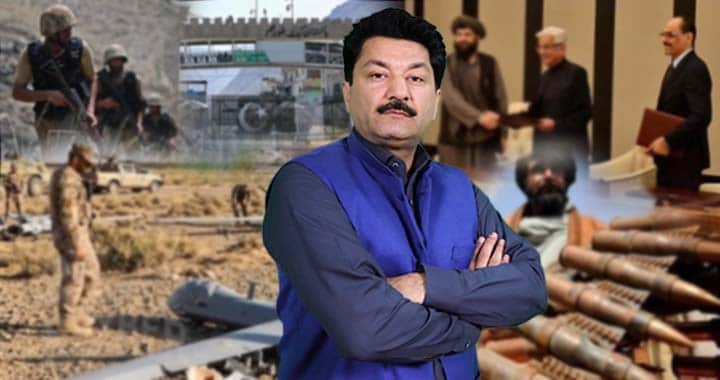
The security situation between Pakistan and Afghanistan has once again reached a sensitive point. The recent attack on the old Police Lines mosque in Kohat came after attacks on security forces in the wider Kohat region, including Kurram and Hangu. These incidents were not isolated developments. They came one after another, creating a serious security challenge for the entire region.
Then came reports of drones appearing over Kohat and near the Torkham border. Two drones equipped with cameras were initially reported to have been intercepted around seven kilometers from Kohat city, while further reports put the total number of drones intercepted in the Torkham and other border areas at eight.
The timing is important.
The people of Kohat were still grieving after the attack on the mosque. The pain of those who lost their loved ones was still fresh when drones appeared over the same city. This is why the incident cannot simply be viewed as another isolated security event.
It also demonstrated something else: Pakistan’s security and air-defense systems are prepared to respond to such threats. The drones were intercepted rather than being allowed to continue their flight toward sensitive areas.
This becomes even more significant in the context of Pakistan’s recent air operations against terrorist targets in Kunar and Paktika.
The Afghan Taliban’s reaction was that Afghanistan’s airspace had been violated and that the Afghan people would respond at an appropriate time. That reaction, coupled with the drone incidents, shows how quickly the relationship can move from political tension to a direct security confrontation.
Terrorist Groups Have Much to Lose
There is another aspect of this situation that deserves serious attention.
Whenever there are strong indications that Pakistan and Afghanistan may improve their relations, the terrorist organizations operating against Pakistan appear to become more active.
Look at the sequence.
The United Mujahideen of Pakistan claimed responsibility for the Kohat attack, while its leader Gul Bahadur is reported to be in Afghanistan. The banned Tehreek-e-Taliban Pakistan (TTP) continues its attacks, and its leader Noor Wali Mehsud is also reported to be in Afghanistan. The Balochistan Liberation Army (BLA) continues its attacks, with reports linking its leadership, including Bashir Zeb, to Afghanistan.
These organizations have a direct interest in preventing any understanding between Pakistan and the Afghan Taliban that would restrict their freedom of action.
If Pakistan and Afghanistan reach an agreement, what happens to these organizations?
What happens to their locations?
What happens to their training camps?
What happens to their recruitment centers?
What happens to their ability to operate from Afghan territory?
And what happens to the Afghan nationals who have become part of these organizations?
These are not small questions.
They go directly to the survival of terrorist organizations that have established themselves on Afghan soil.
This is why, whenever there are indications of an understanding between Pakistan and Afghanistan, these groups become more aggressive. One organization attempts an attack and another seeks to demonstrate that it can carry out an even bigger attack.
They compete with one another.
The objective is to demonstrate relevance, maintain operational space and make it harder for Pakistan and Afghanistan to reach an understanding.
What Does Kabul Really Want?
There are different positions within the Afghan Taliban regarding relations with Pakistan.
There are people who want better relations with Pakistan. They understand that Afghanistan cannot ignore its neighbor and that stability between the two countries is important.
But there is another position.
Those holding this view argue that the TTP once provided support and shelter to the Afghan Taliban and that the relationship cannot simply be abandoned. Their argument is essentially that these people were once hosts and are now guests, so why should the Afghan Taliban turn their backs on them?
But this approach does not serve Afghanistan’s long-term interests.
The historical example of Mullah Omar’s refusal to hand over Osama bin Laden is relevant here. When the United States demanded that bin Laden be handed over, the Taliban leadership argued that he was a guest and that their traditions did not permit such an action.
If the same principle is now being applied to TTP figures, then Afghanistan faces the same fundamental problem.
A state cannot allow a relationship with an armed organization to take precedence over its relations with neighboring countries and its own international interests.
Afghanistan needs to stand on its feet.
Look at its economic situation. Look at its international isolation. Russia has formally recognized the Taliban government, but broader international acceptance remains a major challenge.
Why do other countries continue to have reservations?
Why are they reluctant to move forward?
Those questions have to be addressed.
If Afghanistan wants to live as part of the international community, it cannot remain isolated.
Opening embassies and consulates is not enough. Afghanistan also has to address the concerns raised by different countries and international forums about its territory and policies.
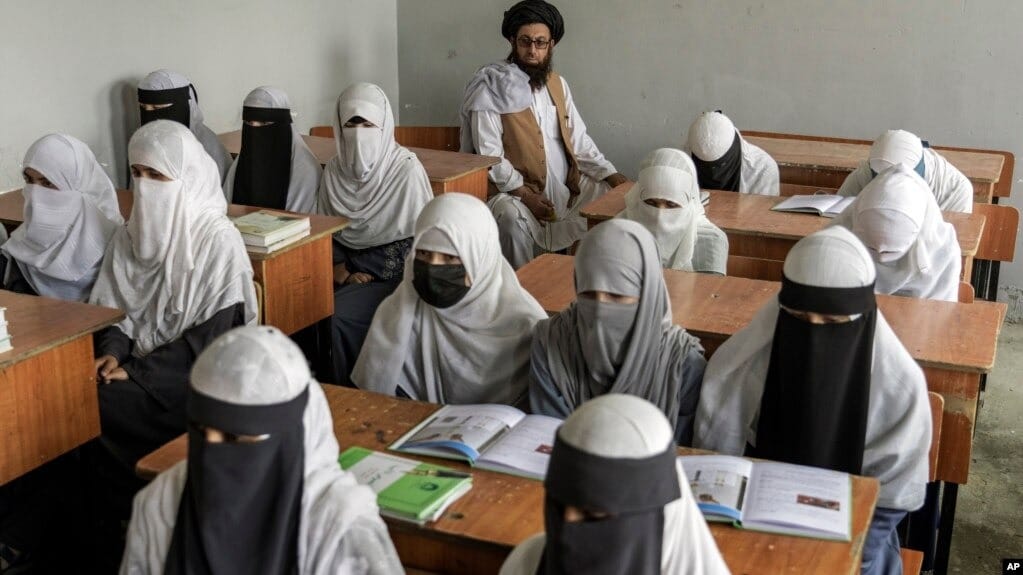
There are serious international concerns about restrictions on women and girls, education, media freedom, the judicial system and the system of punishments.
The Afghan Taliban say they have implemented Sharia and have their own system.
But the question is whether Afghanistan can build sustainable relations with the world while refusing to address the concerns of other states.
The Kohat Attack and the Afghan Taliban’s Contradiction
The response to the Kohat attack illustrates the complexity.
The Afghan Taliban condemned the attack on the mosque in Kohat. That condemnation was welcome, but the wording itself raised questions because the statement referred to Khyber Pakhtunkhwa and Kohat rather than directly referring to Pakistan.
At the same time, drones were reportedly appearing over Kohat.
For ordinary people, this creates a deeply confusing situation.
On one side, there is a condemnation of terrorism. On the other, Pakistan continues to face attacks from organizations whose leadership and infrastructure are reported to be located in Afghanistan.
This is why the situation is so sensitive.
Countries that have tried to facilitate dialogue between Pakistan and Afghanistan, including Qatar, Türkiye, Saudi Arabia and China, also face a difficult task. How can mediators bring the two sides to the negotiating table if attacks continue?
And what happens when the organizations responsible for attacks are operating from the territory of one of the parties?
The Question of Relocation
Another issue is the presence of Pakistani terrorist families and organizations in Afghanistan.
There have been efforts to relocate some of these families from eastern Afghan provinces toward areas such as Ghazni. Pakistan had also been involved in discussions concerning relocation, while funding for such arrangements was reportedly sought from the United Arab Emirates.
The question of where the money went and how it was spent also emerged.
Some houses were built and some families were relocated, but some subsequently returned to the eastern provinces.
Those eastern provinces remain highly sensitive.
There are also concerns beyond Pakistan’s border. Incidents involving Chinese nationals near Afghanistan’s border with Tajikistan have demonstrated how insecurity originating from Afghan territory can create problems for other countries.
In one such case, after Tajikistan protested over the use of its territory in an attack that killed Chinese citizens, the Afghan Taliban offered cooperation in investigating who had used Afghan territory.
That raises an obvious question.
Why has Pakistan not received the same kind of cooperation when it raises the issue of terrorist organizations operating from Afghan soil?
If Afghan territory is being used to attack Pakistan, the same principle of investigation and cooperation should apply.
The Threat Is Moving Beyond the Old Battlefield
The attacks are not stopping. They are increasing in Khyber Pakhtunkhwa and Balochistan.
There is also a clear pattern in the geography.
When security attention is concentrated on Bannu and Dera Ismail Khan, terrorists can shift their focus elsewhere. When attention moves toward upper districts, they can target Kurram, Kohat and Hangu.
The Kohat region is particularly sensitive.
Kurram and Parachinar have their own history of sectarian tensions, and terrorist organizations have repeatedly attempted to exploit such divisions.
Al-Qaeda was also active in this broader region in the past. Hakeemullah Mehsud and other TTP figures operated in areas around Hangu and Kurram.
The threat has now evolved.
Earlier, terrorists primarily relied on conventional weapons, targeted attacks and suicide bombings. Now drones have been added to the threat landscape.
That is dangerous because drones can provide surveillance capabilities and create new opportunities for attacks against security forces and public places.
The security challenge has therefore become more complicated, not less.
Resistance Inside Afghanistan
There is another developing dimension inside Afghanistan itself.
Groups such as the National Resistance Front, the Afghanistan Freedom Front and other resistance formations continue to oppose the Taliban in parts of the country, particularly in northern provinces.
The NRF has suffered setbacks, including the killing of several of its active commanders. But the resistance has not necessarily disappeared.
Many of these figures were associated with the previous Afghan governments and once exercised influence over particular regions. They lost that influence when the Taliban returned to power.
Now they want to recover what they lost.
Their methods resemble the tactics the Taliban themselves once used against foreign forces: hit-and-run attacks, small operations and attempts to maintain pressure rather than immediately challenge the entire state militarily.
At present, however, these groups do not appear capable of removing the Taliban from power. The Taliban maintain control over Afghanistan.
But that does not mean the resistance question can be ignored.
If the Taliban continue their policies without change for years, resistance groups may conclude that there is no political route available to them. In that situation, resistance could increase.
The Taliban have already dealt with armed opposition in places such as Badakhshan. But the continuation of this approach could eventually produce a larger resistance challenge.
The Central Question
The Pakistan-Afghanistan relationship is therefore facing several interconnected pressures.
There are terrorist organizations operating against Pakistan. There are reported terrorist sanctuaries and leadership figures in Afghanistan. There are drones appearing along and inside Pakistan’s border areas. There are Pakistani military responses against terrorist targets across the border. There are international mediators trying to bring the two sides together. And there are also armed resistance groups challenging the Taliban from within Afghanistan.
In this environment, Pakistan cannot ignore threats emerging from Afghan territory.
At the same time, the Afghan Taliban have to decide what kind of relationship they want with Pakistan and with the wider international community.
If they want better relations with Pakistan, then the issue of terrorist organizations operating from their territory cannot remain unresolved.
The question is not simply whether Pakistan and Afghanistan will sit at a table.
The question is what they will discuss when they get there, what commitments will be made, and whether those commitments will actually be implemented.
Until that happens, every new terrorist attack, every cross-border operation and every reported drone incident will add another layer to an already dangerous relationship.
And the organizations that benefit from this instability will continue trying to ensure that Pakistan and Afghanistan never get close enough to resolve their differences.