(Arshad Aziz Malik)
The political and security discourse surrounding Khyber Pakhtunkhwa (KP) has once again entered a turbulent phase, triggered by a recently circulated audio leak, renewed allegations of political–militant linkages, and a series of violent incidents in districts such as Bannu and the broader southern belt of the province. In an environment already shaped by polarization, counterterrorism fatigue, and institutional strain, these developments have intensified debates about governance, security strategy, and the future trajectory of peace in the province.
This article does not seek to confirm or deny the authenticity of circulating materials or the allegations being made in political and media circles. Rather, it attempts to unpack the broader implications of these narratives, the realities of militancy in KP, and the structural weaknesses that continue to undermine long-term stability.
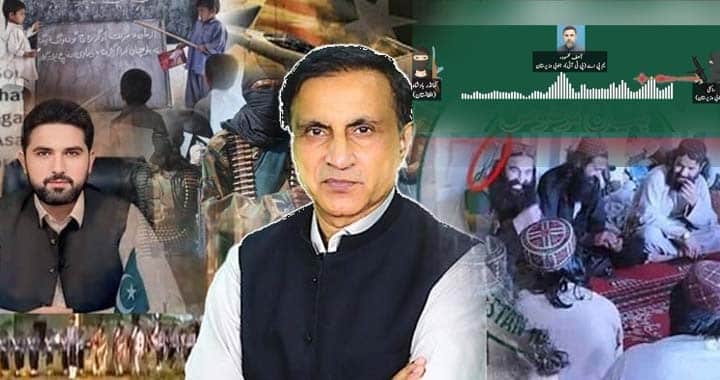
The recent controversy began with an audio clip widely circulated on social media, allegedly featuring conversations that some interpret as sympathetic toward militant actors. In Pakistan’s hyper-charged political environment, such material rarely remains confined to its content; instead, it becomes a catalyst for broader political interpretation, accusation, and counter-accusation.
In the case of KP, the situation is particularly sensitive. The province has endured decades of militancy, military operations, displacement, and partial recovery. Therefore, any suggestion—whether substantiated or not—of proximity between political figures and militant groups immediately acquires explosive significance.
However, it is essential to underline a fundamental principle often lost in public debate: audio leaks, unless verified through forensic and judicial processes, remain contested artifacts. They may be authentic, manipulated, selectively edited, or entirely misattributed. Yet in the digital age, perception often overtakes verification, shaping political narratives long before facts are established.
This is where the danger lies not only in the content of such leaks but in how rapidly they become tools in broader political battles.
To understand the current discourse, one must revisit the historical context. KP and its adjoining tribal districts have been among the most affected regions in Pakistan’s struggle against militancy. The rise of various armed groups over the past two decades, the military operations that followed, and the subsequent cycles of displacement and return have left deep social and institutional scars.
Militant violence has not been uniform. Different groups have operated with varying agendas, internal rivalries, and shifting alliances. Over time, splinter factions have emerged, often complicating the state’s ability to develop a coherent counterterrorism framework.
In this environment, allegations of “soft corners,” sympathies, or indirect facilitation whether grounded in fact or political rhetoric have frequently surfaced against multiple actors, including political parties, state institutions, and local stakeholders. These accusations tend to reflect broader mistrust rather than conclusively established linkages.
Recent incidents in Bannu have once again drawn attention to the fragility of security in southern KP. Reports of militant attacks, targeted killings, and public protests reflect a volatile environment where state authority is frequently challenged.
Local populations have expressed anger and exhaustion, particularly in response to recurring violence and perceived gaps in protection. In such settings, the absence or delayed presence of senior officials at public funerals or crisis sites becomes symbolically significant, often interpreted as political indifference even when logistical or security constraints may be at play.
At the same time, law enforcement agencies operating in these districts face immense pressure. Police forces have suffered repeated casualties, often in difficult terrain and against actors who employ asymmetric tactics. Despite increased funding and equipment allocations in recent years, questions persist about operational effectiveness, intelligence coordination, and strategic deployment.
One of the recurring themes in discussions with security analysts and field officers is the challenge of actionable intelligence. Counterterrorism operations depend not only on manpower or weaponry but on timely, accurate, and coordinated intelligence sharing among civilian and military institutions.
In KP, multiple layers of security architecture exist, including police, counterterrorism departments, intelligence agencies, and paramilitary forces. However, coordination gaps have often limited their collective effectiveness. Fragmented communication channels can lead to delayed responses or missed opportunities.
Moreover, militants operating in border-adjacent regions often exploit cross-border mobility, difficult geography, and local support networks. These dynamics complicate traditional policing models and require highly adaptive intelligence-based operations. Without addressing these systemic issues, even well-funded security initiatives risk producing limited and temporary gains.
A central debate in KP revolves around the nature of counterterrorism operations. Should the state pursue large-scale military-style operations, or should it rely on targeted, intelligence-driven actions? Large-scale operations have historically led to displacement and short-term clearing of militant presence, but critics argue that they often result in militants relocating rather than being fully neutralized. Targeted operations, on the other hand, require deeper intelligence penetration and sustained monitoring, which is difficult in areas with weak administrative structures.
This creates a cyclical problem: militants adapt, relocate, and re-emerge, while the state continuously recalibrates its response. Without a comprehensive provincial and national strategy, operations risk becoming reactive rather than decisive. Recent clashes reported from areas like Kurram highlight another critical dimension: the fragmentation within militant networks themselves. Rivalries between different groups, including splinter factions and competing commanders, have led to internal conflicts, shifting alliances, and localized violence.
While such infighting may temporarily weaken militant cohesion, it also creates unpredictable security environments for civilians and complicates state response mechanisms. In some cases, these conflicts are misinterpreted as sectarian or communal tensions, further distorting the underlying dynamics. The reality is far more complex: overlapping militant identities, territorial competition, and ideological divergence contribute to instability that cannot be explained through a single narrative lens.
Beyond security operations, a critical factor shaping KP’s stability is public trust in governance institutions. Years of conflict have eroded confidence in both civil administration and law enforcement. When communities perceive inconsistency in justice, delayed accountability, or uneven application of state authority, space is created for alternative power structures to emerge. Restoring trust requires more than security action. It demands visible governance improvements, equitable development, transparent accountability mechanisms, and consistent political messaging.
Without these, even successful tactical operations risk failing at the strategic level. One of the strongest lessons emerging from the current situation is the necessity of a unified national counterterrorism strategy. Fragmented responses whether between provinces, between civilian and military institutions, or between intelligence agencies—undermine long-term effectiveness.
An integrated approach must include:
- Intelligence sharing across all relevant institutions
- Local policing capacity strengthening
- Judicial follow-through on terrorism cases
- Border management and cross-border coordination
- Socioeconomic investment in high-risk districts
- De-radicalization and rehabilitation frameworks
Without such alignment, security efforts will remain reactive and cyclical. The current wave of controversy sparked by an audio leak, reinforced by political interpretations, and amplified by ongoing violence reflects a deeper structural challenge in Khyber Pakhtunkhwa. The province is not merely facing isolated incidents or individual controversies; it is confronting a layered security crisis shaped by history, geography, institutional fragmentation, and political polarization.
It is tempting in such moments to reduce complexity into accusation. But doing so risks obscuring the deeper realities that require urgent attention. Whether in Bannu, Kurram, or the southern districts, the core challenge remains the same: establishing durable peace in a region where militancy, governance gaps, and political contestation continue to intersect. Until Pakistan develops a coherent, coordinated, and sustained strategy that goes beyond reactive operations and political point-scoring, the cycle is likely to continue—regardless of who is blamed in the headlines of the day.
The need of the hour is not amplification of perception, but correction of structure.