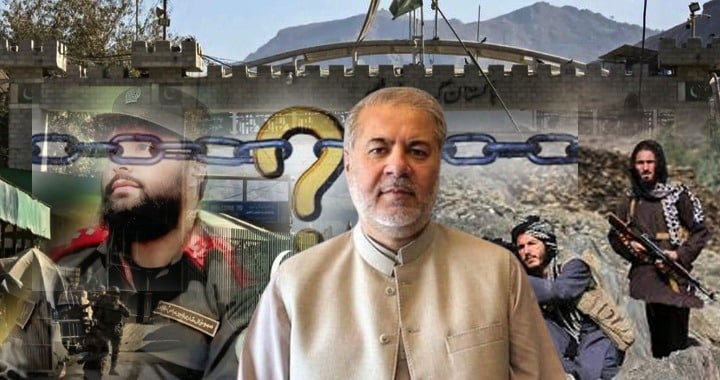
Fateh Khel tragedy didn’t happen in a single day, rather it has been three to four years since the security situation in our southern districts started deteriorating seriously. The reality today is that the writ of the provincial government in several areas has weakened significantly. If we specifically talk about attacks on police personnel, the reason is obvious: police are the most visible and the easiest targets. They are deployed almost everywhere. They guard banks, police stations, anti-polio campaigns, political rallies, public gatherings and routine checkpoints. Because of this constant public presence, terrorists find them more accessible than other security targets.
At the same time, police possess one major strength: they remain the force most connected to the public. After duty hours, policemen return to their villages, visit markets, hujras, mosques and public places. They stay in direct contact with ordinary people, which gives them strong ground-level intelligence. I often say police have their hands on the public pulse. Their experience becomes so sharp that they can often identify suspicious individuals merely through observation. Many officers themselves say they can often sense whether someone is carrying narcotics, weapons, or has terrorist links simply through years of practical field exposure and psychological understanding.
The Fateh Khel check post in Bannu was therefore extremely important. Terrorists considered it a major obstacle because it acted like a powerful screening point against smugglers, suspicious movement and terrorist infiltration. Its geographical location also carried strategic significance due to Bannu’s proximity to North Waziristan and, beyond that, Afghanistan. This is one of the key reasons why terrorists launched such a large-scale suicide attack there using a loader rickshaw packed with explosives. Normally, terrorists do not use massive vehicle-borne attacks against ordinary checkpoints unless the target is creating serious operational difficulties for them. The personnel deployed there were performing highly effective duties, and the terrorists wanted to eliminate that pressure point.
To understand the broader context, one must also remember the evolution of terrorist networks in the region. After the formation of the banned Tehreek-e-Taliban Pakistan in December 2007, several factions emerged across the former tribal districts including Bajaur, Mohmand, Khyber, Orakzai, Kurram, North Waziristan and South Waziristan. Hafiz Gul Bahadur and Mullah Nazir had initially formed a separate alliance known as Shura-e-Ittehad-ul-Mujahideen after differences emerged during the formation of the TTP under Baitullah Mehsud. In the early years, some circles viewed these factions as comparatively less hostile toward the Pakistani state, but later developments, military operations and shifting regional dynamics changed the entire equation.
Before Operation Zarb-e-Azb began in 2014, North Waziristan had effectively become one of the most dangerous terrorist hubs in the world. Al-Qaeda elements, Afghan Taliban factions, Uzbek fighters, Chechen terrorists and Pakistani Taliban groups had all gathered there. There was serious concern at the time that a full-scale military operation could trigger violent reactions across Pakistan. However, the launch of Operation Zarb-e-Azb under General Raheel Sharif fundamentally altered the battlefield. In my view, it was the most effective military operation conducted against terrorism in Pakistan’s history. It dismantled terrorist infrastructure on a massive scale and forced most terrorist networks to flee into Afghanistan.
Today, terrorist violence has resurged, but the structure of these organizations has evolved. The Hafiz Gul Bahadur network itself has weakened considerably compared to the past, with many of its fighters shifting toward the TTP. Internal tribal disputes and organizational fragmentation contributed to this decline. However, despite becoming smaller, such groups still retain the capacity to carry out highly lethal attacks whenever they become operationally active.
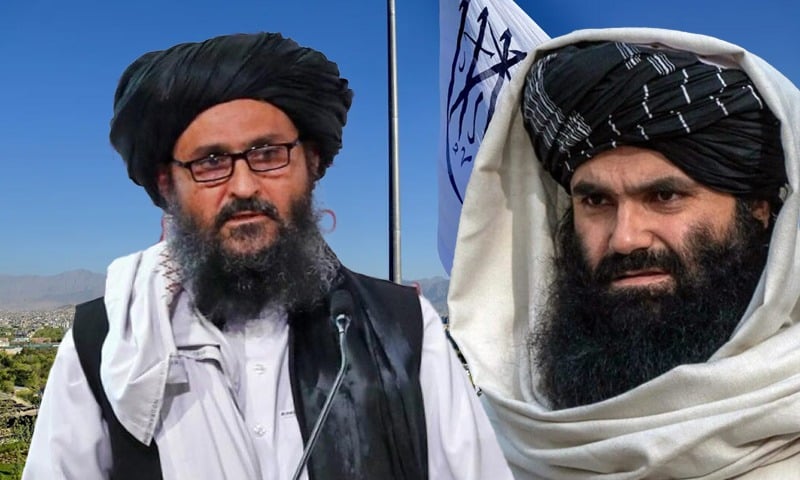
At present, the banned TTP remains the central umbrella organization for terrorism inside Pakistan. Under Mufti Noor Wali Mehsud, the group has become far more organized than it was in earlier years. Previously, the TTP operated like a loose collection of factions where every local commander functioned independently. Noor Wali transformed it into a more structured organization with committees, shuras, intelligence mechanisms and administrative systems.
Over the past year alone, more than fifty smaller terrorist factions from Khyber Pakhtunkhwa, Punjab, Sindh, Balochistan and even Gilgit-Baltistan have reportedly joined the TTP and pledged allegiance to Noor Wali Mehsud. This merger process is not random. There is a formal verification structure involving intelligence assessment, consultation with commanders and approval mechanisms operating from Afghanistan. Only after scrutiny and internal clearance are such groups formally absorbed into the TTP structure.
The TTP today operates almost like a parallel shadow system. It has administrative structures, intelligence networks, commanders and even internal disciplinary systems. They reportedly maintain detention facilities inside Afghanistan where members accused of misconduct, extortion, misuse of the organization’s name or espionage are investigated and punished according to their internal codes. This level of organizational discipline demonstrates how seriously the TTP has attempted to rebuild itself after suffering setbacks during earlier military operations.
Alongside the TTP, there are other terrorist factions including Jamaat-ul-Ahrar and remnants of the Hafiz Gul Bahadur network. Daesh also exists separately and ideologically differs from both the Afghan Taliban and the TTP. While Daesh does not physically control territory in Pakistan and remains comparatively smaller in numbers, it has repeatedly targeted sectarian communities and political-religious figures.
However, the nature of terrorism itself has changed. Earlier, terrorist groups attempted to capture and control territory openly. Today, they avoid concentrating in one place. They operate through small, scattered cells consisting of ten to fifteen individuals who constantly shift locations. Because of this decentralized structure, I do not believe that large-scale conventional operations alone can solve the current problem the way previous operations did. Massive operations often bring displacement and civilian suffering. The present challenge requires coordinated intelligence-based cooperation between police, law enforcement agencies, security institutions and the government.
Another important issue emerged in Bannu regarding local peace committees. In many cases, former terrorists who surrender are later incorporated into local structures with the expectation that they will help provide intelligence against active terrorist networks. However, serious problems can emerge from this policy. Some individuals begin operating with excessive influence, moving around with weapons and armed escorts, establishing offices and behaving as if they are beyond accountability. There have also been allegations in certain areas involving extortion, abuse of power and criminal activities linked to such elements. When tensions escalate, these structures themselves become controversial and unstable.
The wider political confusion surrounding terrorism has further complicated the situation. There remains visible lack of coordination between the provincial government and the federal government on the issue of terrorism and security policy. Public messaging also remains inconsistent. Some political leaders avoid directly naming the TTP or acknowledging the role of terrorist sanctuaries operating from Afghanistan. This ambiguity creates confusion among the public and weakens narrative clarity at a time when Pakistan requires a unified national position against terrorism.
In my opinion, this confusion is extremely dangerous. When political leadership sends mixed signals, avoids clarity, or hesitates to openly confront the reality of terrorism, it creates gaps that terrorists exploit. The absence of coordination between institutions, the provincial administration and the federal government ultimately benefit nobody except the terrorists themselves.