(Arif Yousafzai)
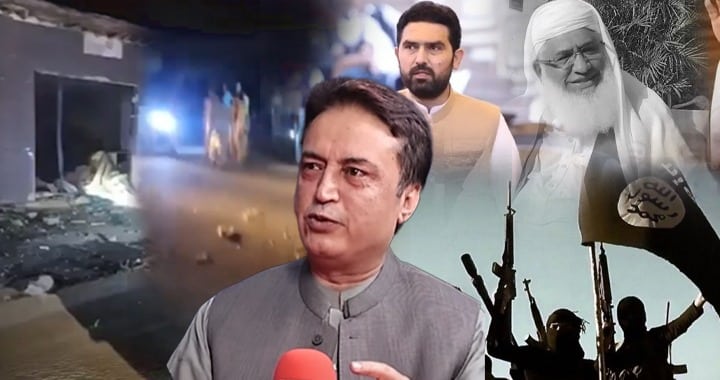
The targeted killing of Maulana Muhammad Sheikh Idrees in Charsadda, followed by the claim of responsibility by Islamic State – Khorasan Province, has once again exposed the fragile and deteriorating security landscape of Pakistan’s northwestern region. It is not an isolated incident but part of a widening pattern of violence that has, over the past decade, engulfed religious scholars, political workers, tribal elders, and ordinary civilians alike. What makes this moment particularly alarming is not only the act itself but also the ideological justification being circulated in extremist propaganda such as the so-called Al-Naba publications associated with ISKP, which attempt to legitimize violence against religious scholars on the grounds that they allegedly support democracy or participate in state systems considered un-Islamic in extremist interpretations. This framing is not new, but its persistence continues to fuel cycles of violence that the state has repeatedly failed to break.
The tragedy lies not merely in the loss of life but in the normalization of ideological killing and the gradual erosion of state authority, accompanied by the growing disillusionment of communities caught between militancy and governance failure. Over the past years, Pakistan’s Khyber Pakhtunkhwa and adjoining tribal districts have witnessed repeated targeted attacks against religious scholars belonging to various schools of thought, including Deobandi, Ahl-e-Hadith, and Shia traditions, alongside political activists, tribal elders, and civilians attending public or religious gatherings. This pattern reveals a disturbing reality in which violence is not guided by theological consistency or moral selectivity but is instead driven by strategic objectives aimed at destabilizing social cohesion and undermining the authority of the state. The targeting of religious scholars in particular serves multiple purposes for groups like Islamic State – Khorasan Province, as it weakens moderate religious voices that could challenge extremist ideology while simultaneously instilling fear in communities that might otherwise resist militant influence.
Despite propaganda narratives suggesting otherwise, victims of such violence have come from across the ideological and sectarian spectrum, which indicates that the objective is not doctrinal purity but control through intimidation. A recurring justification found in extremist literature is the claim that participation in democratic systems constitutes disbelief, thereby making those engaged in governance or civil administration legitimate targets. This argument, however, is not universally accepted in Islamic scholarship and represents a selective interpretation designed to justify political violence. By framing democracy as inherently un-Islamic, extremist groups expand the category of permissible targets to include almost anyone associated with the state, elections, or public institutions, effectively removing moral and legal boundaries on violence and delegitimizing peaceful political participation.
Yet reducing the issue solely to ideology would ignore the deeper structural conditions that allow such narratives to gain traction. Ideology becomes powerful only when it intersects with governance failure, social fragmentation, and institutional weakness. In Afghanistan, the rise and evolution of Islamic State – Khorasan Province and its subsequent spillover into Pakistan have significantly altered regional security dynamics. Political transitions, prison breaks, shifting militant allegiances, and security vacuums created conditions in which fragmented groups reorganized and expanded their operational reach. Pakistan’s border regions, particularly Khyber Pakhtunkhwa and Balochistan, have historically provided space for such movements due to difficult terrain, porous borders, limited administrative control, and long-standing socio-economic marginalization.
However, attributing the crisis solely to external developments overlooks the internal governance challenges that have persisted for decades. Militancy does not thrive in isolation; it thrives in environments where justice is delayed, institutions are weak, and citizens feel abandoned by the state. In such contexts, extremist groups often position themselves as alternative sources of order, offering a distorted sense of justice through coercion and violence. Over time, this dynamic erodes public trust in state institutions and creates a dangerous environment where violence is not only feared but, in some cases, rationalized.
At the heart of the crisis lies a profound governance deficit that has deepened public distrust. Corruption, political instability, inconsistent policy implementation, and underdevelopment in tribal regions have contributed to a sense of alienation among local populations. When governance fails to provide security and justice, extremist narratives find space to grow. However, the leap from political dissatisfaction to the endorsement of violence reflects a far more dangerous transformation in social thinking, one that cannot be addressed through force alone.
Extremist narratives often claim that eliminating certain political or religious actors will lead to a more just society, yet historical experience repeatedly demonstrates the opposite. Societies governed by fear do not achieve stability but instead enter cycles of escalating violence where each act of aggression creates justification for the next. In the tribal belt of Pakistan, this cycle has already unfolded in phases, beginning with the targeting of political activists, followed by tribal elders, then security personnel, and now religious scholars and civilians. There is no natural endpoint to such logic because it is self-expanding and self-perpetuating.
Behind every incident lies a human tragedy that extends far beyond immediate casualties. The killing of religious scholars such as Maulana Idrees represents not only the loss of individual lives but also the erosion of social guidance systems that communities depend upon for moral, educational, and religious leadership. Markets may reopen and roads may be repaired, but the psychological consequences of sustained violence linger far longer. Fear becomes normalized, public life contracts, and communities gradually withdraw from collective spaces, leading to what can be described as silent social fragmentation.
The responsibility of addressing this crisis rests heavily on the state, but military action alone cannot resolve a problem that is simultaneously ideological, political, and socio-economic in nature. Sustainable stability requires strengthening policing and intelligence coordination, reforming judicial systems to ensure timely justice, investing in education to counter extremist narratives, promoting economic development in historically neglected regions, and rebuilding trust between citizens and institutions. Without such comprehensive reform, any temporary gains achieved through security operations risk being reversed over time.
Ultimately, the killing of Maulana Muhammad Sheikh Idrees and the subsequent justification offered by Islamic State – Khorasan Province serve as yet another reminder that Pakistan’s tribal belt stands at a critical crossroads. One path leads toward further fragmentation, where ideology, violence, and governance failure reinforce one another in a destructive cycle. The other requires a difficult but necessary commitment to reform, justice, and institutional strengthening. As long as violence is justified through selective ideological interpretations and governance remains disconnected from the lived realities of affected populations, the cycle will continue. Breaking it is no longer merely a policy challenge; it is an urgent necessity for the preservation of social and political stability in the region.