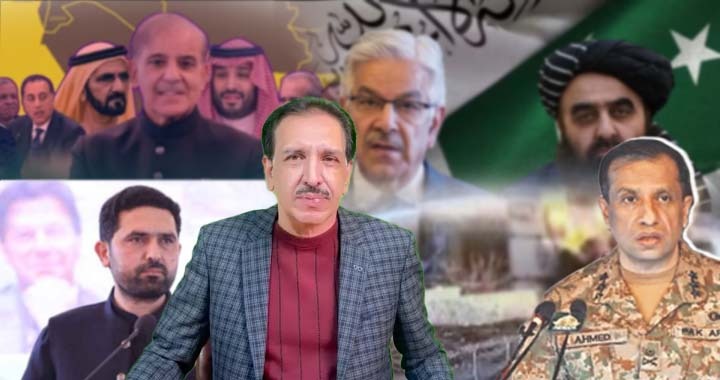
Recently, the Director General of the Inter-Services Public Relations announced in a press briefing that Operation Ghazab Lil Haqq will continue until its objectives are achieved. He also made it clear that all political parties and stakeholders stand united on the question of Pakistan’s solidarity and sovereignty.
At the same time, tensions between Pakistan and Afghanistan are escalating. Questions are being asked about whether there will be a ceasefire or dialogue, and what direction the situation may take in the coming days.
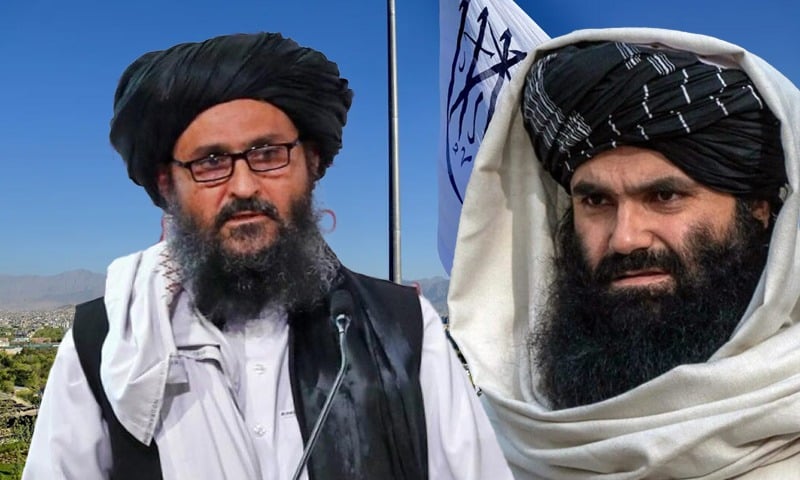
The situation, in my assessment, is extremely serious and highly complex. This conflict has multiple dimensions. Earlier, Zabihullah Mujahid was issuing threats. Then suddenly, there was a shift in tone, with statements about negotiations. Around the same time, claims surfaced that a Pakistani fighter jet had been downed. However, the available footage does not substantiate such claims, and no credible proof has emerged.
According to the DG ISPR, 273 Taliban were killed and more than 400 were arrested. Subsequently, Federal Minister Attaullah Tarar stated that the number of Taliban killed had risen to over 350. The increase likely reflects continued operations even after the press conference, despite diplomatic coordination by several brotherly nations. Pakistan reportedly targeted militant sanctuaries and Taliban military installations across five Afghan provinces, which may explain the revised figures.
As far as the outcome is concerned, based on my discussions with international media and diplomatic circles, Pakistan will not halt operations until the issue of cross border terrorism is resolved, and the interim Afghan government formally guarantees that Afghan soil will not be used against Pakistan. Until such assurances are not only given but implemented, tensions will persist. At present, the situation resembles an active war, and wars do not end through statements alone.
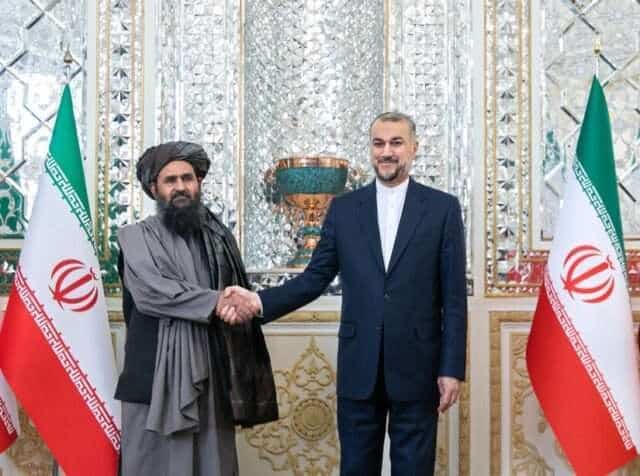
Several countries attempted to ease tensions, including China, Russia and Iran. Iran itself is currently facing internal and regional pressures with the ongoing US-Israeli airstrikes have inflicted deep and almost incurable wounds on the nation’s collective memory. Turkey, Kuwait and, for the first time, Malaysia also tried to facilitate dialogue between the two neighboring Muslim countries. Qatar, which previously facilitated two major agreements, is itself a stakeholder in this matter, and those agreements failed in implementation.
Pakistan has articulated a one-point agenda: unless the Taliban regime in Afghanistan ceases patronizing and facilitating terrorist groups, operations will continue.
A broader regional dimension cannot be ignored. There appears to be a nexus at play. Operation Sindoor, as discussed in Indian briefings, remains active in rhetoric, and preparations for what some describe as Sindoor 2 have been mentioned. Yet India, which once labeled the Taliban as terrorists, now appears to be aligning tactically against Pakistan. In Indian administered Kashmir, the term “Atankwadi” has been used for decades. Today, however, in what I view as an anti-Pakistan obsession, India seems prepared to use the Taliban as leverage.
After observing sections of Indian media, one gets the impression that exaggerated narratives are being circulated, suggesting sweeping Taliban control or dramatic incidents such as downed jets or drone strikes targeting senior Pakistani leadership. These claims lack substantiation and resemble media dramatization rather than strategic reality.
If Afghanistan’s Taliban leadership believes that aligning with India serves its long-term interests, it would be prudent to remember the fate of Mohammad Najibullah. Historical accounts indicate that when he sought refuge, assistance was not forthcoming from those he had relied upon. History offers lessons about interests and loyalties in regional politics.
India, like any other country, pursues its national interests. However, the relationship between Pakistan and Afghanistan is fundamentally different. For Afghanistan’s future stability and economic viability, constructive relations with Pakistan remain the most viable option.
Within Pakistan, the security establishment appears to have concluded that a decisive approach is necessary. Since August 2021, there have been over 8,000 attacks inside Pakistan, particularly in Khyber Pakhtunkhwa and Balochistan. There are allegations of support networks involving the Afghan Taliban, India, the Tehreek-e-Taliban Pakistan and the Balochistan Liberation Army. Some analysts even argue that certain external actors, including states with stakes linked to CPEC, may have overlapping interests in destabilization. These are serious claims and underscore the gravity of the situation.
Diplomatic efforts were made by Qatar, Turkey and Saudi Arabia, including off the record sessions. China and Russia also attempted to play roles. However, these efforts faltered over the core dispute: Pakistan maintains that Afghan soil is being used against it, while Kabul denies this. Without consensus on this fundamental issue, progress remains elusive.
Following Pakistan’s airstrikes, international agencies including Reuters reported significant damage to Taliban military infrastructure. Pakistan’s position is that it targeted locations used to plan or launch attacks against its territory. There are also reports of senior Taliban figures and commanders being killed. The Afghan authorities reportedly restricted media access to affected areas, suggesting the sensitivity of the situation.
Countries that contacted Pakistan after the strikes include Iran, Turkey, Qatar, Saudi Arabia, China and Russia, with Malaysia also expressing interest in mediation. Pakistan’s response has remained consistent: until threats to its security are eliminated, operations will continue.
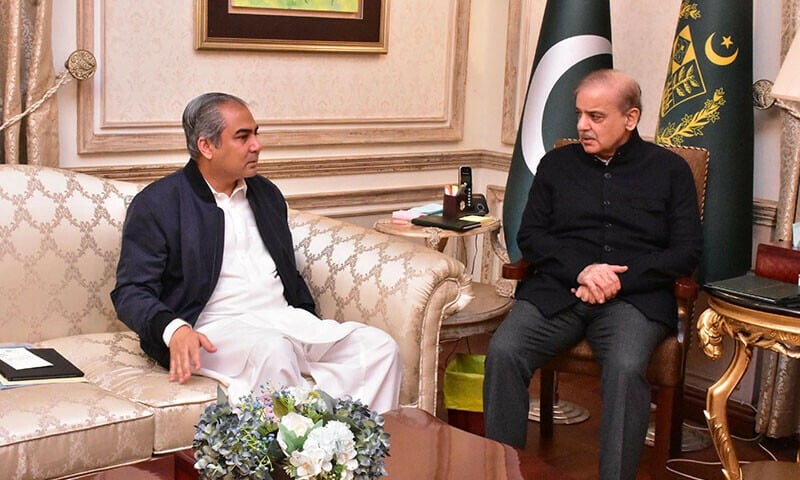
Domestically, despite political differences, there appears to be consensus on national security. The National Action Plan has been emphasized again. Political leaders, including figures such as Sohail Afridi and Barrister Gohar Ali Khan, issued statements aligning with the state’s security posture. The message conveyed by the DG ISPR was that on matters of sovereignty and survival, stakeholders are united.
In Khyber Pakhtunkhwa, particularly in tribal districts, people from various walks of life held rallies in support of the Pakistan Army. This reflects a broader realization that whatever political disagreements may exist, when it comes to national security and the war against terror, unity becomes imperative.
The people of Khyber Pakhtunkhwa, and the political stakeholders, have also come to understand that our survival lies in standing together at this stage, and in this war against terror, we stand with the state of Pakistan.