(Mushtaq Yusufzai)
In the evolving geopolitical chessboard of Asia, the shifting alignment between Afghanistan and Iran represents more than just diplomatic rapprochement; it signals a transformation in regional power structures that could redefine fault lines stretching from the Middle East to South and Central Asia. This alignment shaped by historical grievances, shared interests, and mutual anxieties carries implications far beyond the borders of Kabul and Tehran. It portends a strategic recalibration that impacts security, economics, and political influence across a vast and volatile swath of Asia.
To understand this shift, we must first acknowledge that Afghanistan has long been a crossroads for external powers and intranational forces. Historically, its strategic location made it a buffer zone between empires, and later a battleground in Cold War rivalries and the U.S.–Soviet conflict. Today, as global attention focuses on the broader Middle East and Indo‑Pacific theatres, the Kabul–Tehran axis reveals how regional actors adapt to shifting global priorities and internal imperatives.
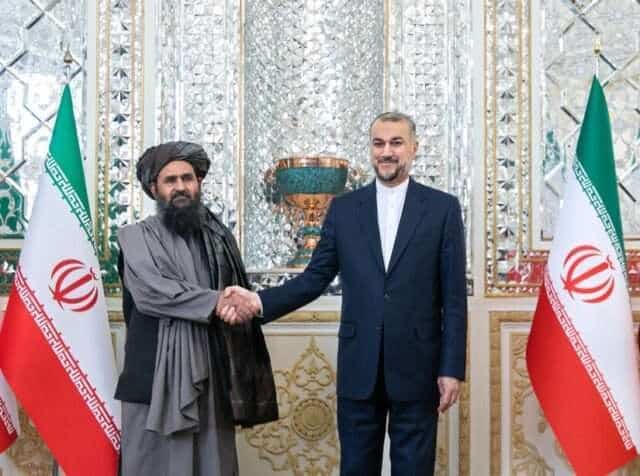
In recent years, the relationship between Afghanistan and Iran has deepened along multiple vectors political, economic, and strategic. Part of this transition arises from mutual interest in stability and influence in a region marked by chronic insecurity. Iran, facing decades of pressure from the United States and its regional allies, sees in Afghanistan both a neighbor with overlapping security concerns and an opportunity to expand its diplomatic reach. Afghanistan, under Taliban rule since 2021, increasingly looks to Tehran for trade links, political legitimacy, and regional partnerships, especially after tensions with other neighbors strained traditional alignments.
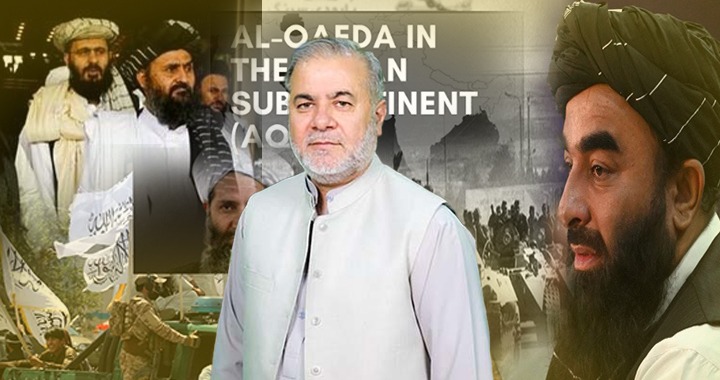
In recent years, Pakistan has witnessed a shifting security landscape that presents a complex and multifaceted challenge for policymakers, security agencies, and ordinary citizens alike. From the resurgence of militant networks with ties to Al-Qaeda in the subcontinent to the widespread political unrest driven by protests of the Pakistan Tehreek-e-Insaf (PTI), the country finds itself at a critical juncture. While the world has largely focused on Afghanistan following the Taliban’s return to power, developments within Pakistan, particularly the increasing boldness of militant groups in urban areas and the escalation of politically motivated roadblocks, deserve close scrutiny.
Al-Qaeda’s subcontinental affiliate, highlighted in its latest publication, Nawaal Ghazwa-e-Hind, has drawn attention to the presence of militant networks operating within Pakistan, notably including the Ijtihad-ul-Mujahideen Pakistan (IMP). These networks are increasingly being linked with the larger international extremist ecosystem, indicating a potential shift in operational strategy. While historically, Al-Qaeda’s presence in Pakistan was largely confined to tribal and remote areas, there is mounting evidence that it seeks to leverage existing local militant networks to expand its influence and capacity to conduct attacks.
The evolution of Al-Qaeda’s strategy in South Asia cannot be understood without revisiting the post-2001 landscape in Afghanistan and Pakistan. Following the fall of the Taliban regime in Afghanistan, foreign forces particularly from the United States—mobilized to stabilize the region. Alongside them, a variety of international organizations and individuals arrived, many of whom became integrated into local militant networks. During this period, Pakistani militants emerged as crucial allies for the Afghan Taliban and Al-Qaeda, providing both manpower and strategic expertise. Groups such as the Qutb-e-Shahb-ul-A’ur played a pivotal role, initially engaging in conflicts in Kashmir before moving to Afghanistan, supplying both fighters and logistical support. Local tribal communities often facilitated this by offering shelter, resources, and safe havens.
However, the onset of targeted drone strikes fundamentally altered the landscape. These strikes resulted in significant casualties among both Arab and Pakistani militants, ultimately weakening their operational capacity. By 2007, a major consolidation occurred among Pakistan-based militant organizations, culminating in the formation of Tehrik-i-Taliban Pakistan (TTP), which declared jihad against the Pakistani state. Subsequent military operations, especially in North Waziristan, substantially degraded the capabilities of both Al-Qaeda and the TTP. Many fighters retreated into Afghanistan, recalibrating their strategies in the process.
The Taliban’s return to power in Afghanistan in 2020 marked another significant turning point. The Afghan Taliban now exerts control over multiple militant networks, which has led to a strategic reorientation of Al-Qaeda in the region. Pakistani militants are no longer the primary source of fighters for Al-Qaeda; rather, their skills are increasingly being leveraged by Al-Qaeda, which remains an international military organization. The Pakistani Taliban, meanwhile, have consolidated significant local power, making them formidable actors in Pakistan’s domestic security environment. Reports from the Pakistan Institute of Peace Studies indicate that in 2025, Pakistan witnessed a 34% increase in terrorist attacks, with approximately 700 incidents resulting in around 1,000 casualties. This spike in violence correlates with the Taliban’s control in Afghanistan, suggesting a transnational influence on Pakistan’s security dynamics.
Recent intelligence further indicates that Al-Qaeda is explicitly positioning itself in support of the IMP, signaling a deliberate effort to infiltrate Pakistan’s urban and semi-urban centers. The TTP, adopting a new operational strategy in 2026, has divided Pakistan into multiple zones analogous to Afghan territories, encompassing the Eastern, Western, Central (including Punjab), and Gilgit-Baltistan regions. This zoning strategy underscores an ambition to extend influence beyond traditional tribal areas into densely populated urban centers, where attacks carry both symbolic and strategic weight. Evidence of foreign operatives joining TTP ranks including military officers from regions such as Zia-ul-Baltistan and Nawabshah underscores the potential for increasingly coordinated and sophisticated attacks.
An alarming trend emerging from recent incidents is the targeting of cities, which historically posed logistical challenges for militant operations. While rural areas provided relative operational ease, the urban focus promises higher visibility and impact, potentially increasing the militants’ leverage in influencing public perception and state response. The recent attack on the Imam Bargah in Islamabad, claimed by the Islamic State, exemplifies this shift in operational focus. Frontline operatives in such attacks often include “freelancers” individuals with sympathetic or religiously motivated leanings who may not fully comprehend the broader ideological or operational objectives of these groups. These freelancers can unwittingly facilitate militant operations, highlighting the insidious nature of radicalization and the challenge of disentangling local support networks from extremist agendas.
Al-Qaeda’s subcontinental network, though numerically limited, wields strategic influence by aligning with groups like the TTP. Its primary objective is not necessarily to supply fighters but to utilize the skills and local networks of the Pakistani Taliban to stage high-impact attacks. By embedding itself in urban environments, Al-Qaeda seeks to exploit local grievances, religious sympathies, and logistical vulnerabilities to orchestrate operations that could destabilize Pakistan. Cities, with their dense populations and critical infrastructure, present both high-risk targets and opportunities for psychological impact. While the proliferation of CCTV cameras and enhanced surveillance offers some mitigation, the challenge of fully securing sprawling urban spaces remains significant.
The political landscape in Pakistan further complicates the security scenario. Protests by PTI, particularly in Khyber Pakhtunkhwa, have led to extended roadblocks and highway closures, impacting ordinary citizens, healthcare delivery, and economic activities. The protests have now lasted over two weeks, with many reporting severe disruptions, including stranded travelers and delayed medical attention. Incidents of fatalities, such as that reported by Dr. Arshad Rehan regarding his sister, highlight the human cost of prolonged political unrest. The question arises: why are the people of Khyber Pakhtunkhwa bearing the brunt of protests when their provincial government is already in place?
Analysts suggest that protest organizers strategically choose locations to maximize leverage. Protesting in Punjab, Lahore, or Islamabad would encounter stronger governmental pushback and potentially diminish the impact. Local enforcement, weakened by administrative inconsistencies, is often unable or unwilling to fully counteract prolonged demonstrations. For instance, in Drismil Khan, road blockades led to direct confrontations between police officers and protestors, culminating in suspensions rather than effective enforcement. These dynamics create an environment in which protests can persist with minimal immediate consequences, further exacerbating public suffering.
There is also speculation about behind-the-scenes negotiations between political actors and authorities. Sources indicate that demands, such as the transfer of PTI leader Imran Khan from jail to hospital care, may be part of broader administrative arrangements. Such arrangements, though not publicly confirmed, reflect the complex interplay between political calculations and public order. Observers note that many participants express frustration at the disruption caused by protests but feel compelled to engage due to peer pressure within their political groups or anticipated repercussions from opposing factions. This convergence of political unrest and security threats poses a compounded challenge. Urban populations are increasingly vulnerable, not only to extremist attacks but also to the secondary effects of civil disruption. Hospitals, transportation networks, and essential services experience heightened strain, while extremist groups may exploit these disruptions to further their objectives. The overlap between politically motivated street actions and potential militant operations creates a scenario in which civil resilience is severely tested.
International dimensions further complicate the scenario. Statements from Afghan Taliban officials, such as Spokesperson Zabihullah Mujahid, suggesting support for Iran in the event of U.S. aggression, are largely political in nature. While Afghanistan may seek to cultivate sympathies among Islamic nations, the operational capacity to challenge the U.S. directly is limited. Pakistan, with its proximity and historical entanglements with both Afghan militants and broader geopolitical dynamics, remains acutely aware of the potential for transnational influence. Al-Qaeda and affiliated networks can exploit these regional developments, seeking to destabilize Pakistan indirectly while leveraging broader geopolitical narratives to legitimize their actions.
In conclusion, Pakistan’s current security environment is defined by an intricate mix of militant resurgence, urban vulnerabilities, and politically charged unrest. Al-Qaeda’s efforts to embed itself within local militant networks, particularly the TTP and IMP, signal a deliberate strategy to expand operational capacity within Pakistan’s urban centers. The TTP’s division of the country into operational zones, coupled with the involvement of foreign-trained operatives, heightens the risk of coordinated and high-profile attacks. Simultaneously, political protests in Khyber Pakhtunkhwa demonstrate the vulnerabilities inherent in governance and law enforcement structures. While provincial authorities exist, limitations in police capability, administrative follow-through, and strategic enforcement have allowed prolonged disruptions, imposing severe hardships on ordinary citizens. These disruptions inadvertently create exploitable conditions for extremist actors, further compounding the security threat.
Addressing these challenges requires a multipronged approach. Strengthening urban security infrastructure, improving intelligence coordination, and enhancing law enforcement effectiveness are immediate priorities. Simultaneously, political mechanisms must ensure that civil grievances are addressed without compromising public safety or allowing exploitative power dynamics to emerge. Long-term solutions must also involve counter-radicalization strategies that mitigate the recruitment and influence of “freelancers” in both urban and rural settings.
The situation in Pakistan underscores the necessity for vigilance, proactive governance, and strategic foresight. The convergence of militant resurgence and political unrest is not merely a domestic issue; it has broader implications for regional stability, international security, and the resilience of Pakistani civil society. As Al-Qaeda and associated networks recalibrate their strategy, leveraging both militant skills and local grievances, Pakistan must anticipate and preempt the next wave of threats, ensuring that urban centers remain secure and that ordinary citizens are protected from the compounding effects of violence and political disruption.
In navigating these challenges, Pakistan must strike a delicate balance addressing political demands, reinforcing law enforcement, and neutralizing emerging extremist threats lest the dual pressures of insurgency and civil unrest overwhelm the country’s capacity to maintain order and security. Al-Qaeda’s footprint, though limited in numbers, represents a sophisticated and evolving threat, one that capitalizes on both geopolitical shifts and domestic vulnerabilities. The time for decisive, coordinated, and strategic action is now, for the stakes extend far beyond any single province or protest; they touch the very fabric of Pakistan’s national security and civil resilience.