(Arif Yousafzai)
Pakistan today stands at a defining crossroads where governance failures, corruption, and counterterrorism challenges intersect in dangerous ways. The recent foiling of a major terrorist plot in Kohat is a reminder that while our security forces continue to shoulder extraordinary burdens, the broader governance structure remains fragile and inconsistent. At the same time, the alarming state of civic management in Peshawar symbolised by thousands of uncovered manholes and questionable “beautification” expenditures reflects a deeper administrative decay. Beyond our borders, the unfolding political transition in Bangladesh presents both a diplomatic opportunity and a test of Pakistan’s regional vision.
These are not isolated developments. They are interconnected symptoms of a system that has yet to embrace genuine zero tolerance for corruption, for incompetence, and for terrorism. Security forces recently thwarted what officials described as a major terrorist attack in Kohat. Had it succeeded, the destruction and loss of life could have been immense. The professionalism and vigilance of law enforcement deserve acknowledgment. In an era when terrorism continues to morph and adapt, such successes are vital for public morale. But while tactical victories are welcome, they do not answer the strategic question: why does militancy continue to regenerate space in parts of Khyber Pakhtunkhwa?
The southern belt stretching from D.I. Khan through Tank and Lakki Marwat towards Kohat has witnessed renewed militant activity. Various armed factions, including groups linked to the banned Tehreek-e-Taliban Pakistan and the Hafiz Gul Bahadur network, have sought to re-establish operational footprints. Arrests and intelligence-based operations have disrupted plots, yet the underlying environment remains unstable. The problem is not merely operational; it is structural. Counterterrorism cannot function effectively if it is treated as the exclusive domain of security forces. Civil administration, political leadership, and bureaucratic machinery must “own” the policy of counter-militancy. Without ownership, counterterrorism becomes reactive rather than preventive.
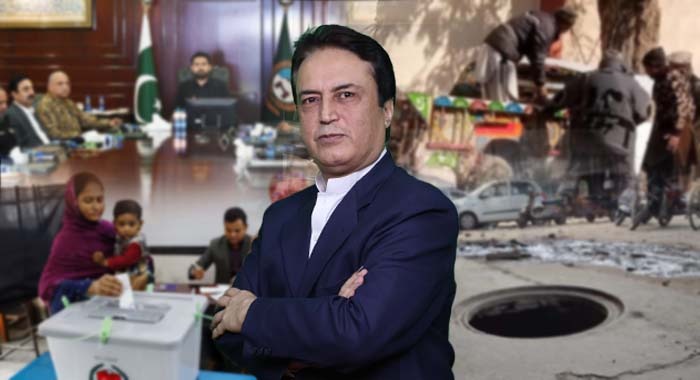
Zero tolerance against terrorism must be matched by zero ambiguity in policy. When political actors send mixed signals, delay decisions, or fail to recognise evolving threats, the vacuum is quickly exploited by militant networks. A state policy is not a slogan it is a disciplined alignment of political will, administrative execution, and security enforcement. While Kohat underscores security fragility, Peshawar exposes civic neglect. Across the city, open and damaged manholes have become silent hazards. Vehicles plunge into them. Pedestrians are injured. In some cases, lives are lost. The Water and Sanitation Services Peshawar (WSSP) has reportedly identified nearly 10,000 manholes requiring covers or repairs. Only after public outrage and media scrutiny did the provincial government announce the allocation of approximately Rs 120 million (12 crore) to address the issue.
The question is simple: why must tragedy precede action?
This is not a new problem. Similar incidents have occurred in Lahore and Karachi over the years. In Peshawar, the situation has persisted despite repeated warnings. If governance were proactive, funds would be allocated before casualties occur not after. Yet the manhole crisis is merely one layer. The broader concern is the culture of reactive governance. Projects are initiated not through planning, but through pressure. Perhaps the most glaring example of questionable priorities lies in repeated “beautification” drives.
After observing infrastructure aesthetics in Lahore including lighting under flyovers and landscaping near mass transit corridors provincial officials announced similar initiatives for Peshawar. Billions of rupees have been allocated periodically for beautification projects. Under-bridge lighting, decorative brickwork, and ornamental installations have been presented as urban renewal. Reports suggest that simple lighting installations costing a few hundred thousand rupees have been billed in crores. In one instance, lighting expenditures alone reportedly consumed Rs 30–40 million. Such figures demand scrutiny. The issue is not urban beautification per se. Cities deserve visual and infrastructural upgrades. The problem is sequencing and integrity. When roads are broken, drainage systems dysfunctional, and manholes uncovered, spending billions on cosmetic lighting signals distorted priorities.
The Chief Secretary and relevant oversight institutions must provide transparent, itemised accounts of past and present beautification expenditures. How much was allocated? How much was spent? What independent audits were conducted? What were the tendering processes?
For decades, corruption discourse in Pakistan focused primarily on politicians. International financial investigations frequently highlighted political figures accused of moving illicit funds abroad. Today, however, allegations increasingly implicate segments of the bureaucracy across provinces from Punjab to Sindh to Khyber Pakhtunkhwa and Balochistan. The administrative counter-corruption framework theoretically includes agencies such as the Federal Investigation Agency (FIA), provincial anti-corruption establishments, and the National Accountability Bureau. Additionally, each department possesses internal oversight mechanisms.
Yet if these layers exist, why does systemic leakage persist? The uncomfortable truth is that institutional checks often operate selectively. Anti-corruption must not be a political instrument; it must be an administrative culture. If officials assume that allocations of Rs 100 million will effectively translate into Rs 70 million of work due to “leakages,” the system has already normalised decay.
Zero tolerance for corruption cannot be rhetorical. It requires procurement transparency, real-time public disclosure of contracts, independent audits, and swift punitive action. Without accountability, governance becomes performance theatre. There is another dimension: political maturity. When individuals occupy opposition benches, rhetoric flows freely. But governance demands restraint, discipline, and responsibility. The higher the office, the heavier its obligations. If ministers or chief executives delay crucial decisions whether on security operations or civic maintenance the cost is borne by ordinary citizens. Leadership is not merely about announcements; it is about anticipating risk and acting before crisis. Pakistan has now completed nearly eight decades of independence. Blaming inherited problems is no longer sufficient. Each successive administration must accept ownership of its tenure.
Amid domestic turbulence, developments in Bangladesh warrant careful attention. The political contest between the Bangladesh Nationalist Party (BNP) and Bangladesh Jamaat-e-Islami has been closely watched in Pakistan. The legacy of Sheikh Hasina and the controversies surrounding trials and executions of Jamaat leaders over 1971 war crimes have left deep political scars. Recent public mobilisations and youth movements in Bangladesh signaled generational shifts. Observers noted symbolic gestures reflecting renewed curiosity about Pakistan. However, geopolitics is rarely sentimental. If the BNP consolidates power with perceived Indian support, India’s influence in Dhaka may expand. If Jamaat or allied factions gain ground, ideological alignments may shift differently. But Pakistan must avoid simplistic binaries.
The strategic imperative is clear: irrespective of which party governs Bangladesh, Islamabad must pursue constructive engagement. South Asia’s future stability depends not on historical grievances but on pragmatic cooperation.
Pakistan and Bangladesh share linguistic, cultural, and economic complementarities despite their painful separation in 1971. Trade, climate cooperation, education exchanges, and counter-extremism collaboration offer avenues for rebuilding trust. Diplomacy cannot be passive. If segments of Bangladeshi society signal openness to warmer ties, Pakistan must reciprocate through policy, not slogans.
Domestic governance and foreign policy credibility are intertwined. A country struggling with corruption scandals and administrative dysfunction finds it harder to project influence abroad. Conversely, a state that demonstrates internal accountability commands respect. Kohat’s foiled attack underscores the bravery of our security forces. But sustainable security requires parallel governance reform. Peshawar’s open manholes symbolise neglect; beautification overspending symbolises misplaced priorities. Bangladesh’s political flux symbolises regional fluidity.
All three arenas demand clarity. Zero tolerance must not be selective. It must apply equally to terrorism and to corruption, to militancy and to misgovernance. Pakistan’s citizens deserve roads without death traps. They deserve transparent budgets. They deserve leaders who act before tragedy compels them. And Pakistan’s neighbours deserve a confident, stable, forward-looking partner.
A nation does not decline overnight; it erodes gradually through tolerated compromises. If corruption remains tolerated, public trust erodes. If misgovernance remains tolerated, civic decay spreads. If terrorism remains ambiguously confronted, instability festers. Pakistan’s future hinges on whether its leadership political and bureaucratic alike chooses institutional discipline over expediency. The success in Kohat proves that capacity exists. The crisis in Peshawar proves that priorities require correction. The moment in Bangladesh proves that opportunity still knocks. The path forward is not complicated. It demands ownership, accountability, and courage. Zero tolerance cannot remain a talking point. It must become the operating principle of the state. Only then can Pakistan move from reactive survival to proactive stability at home and in the region.