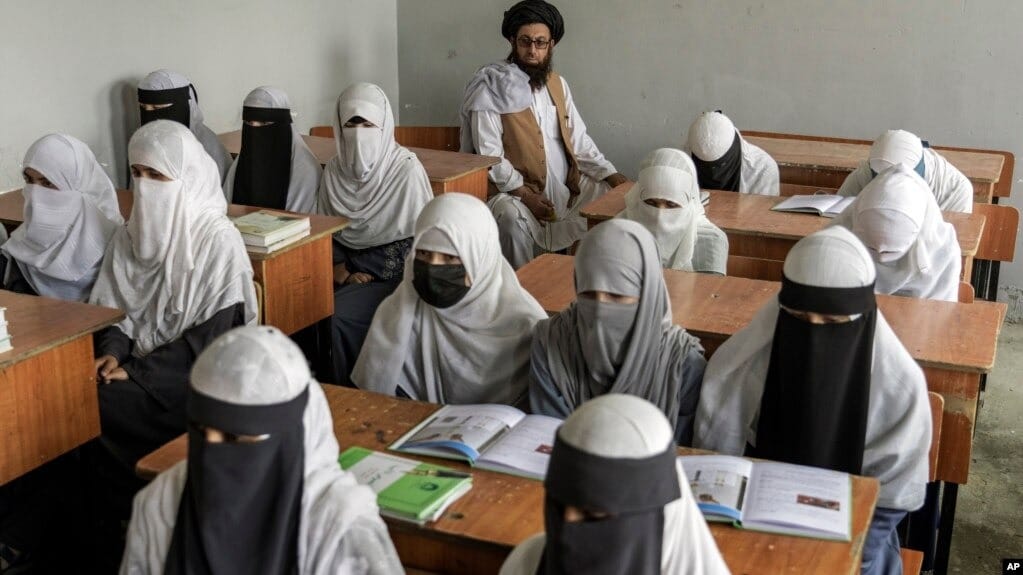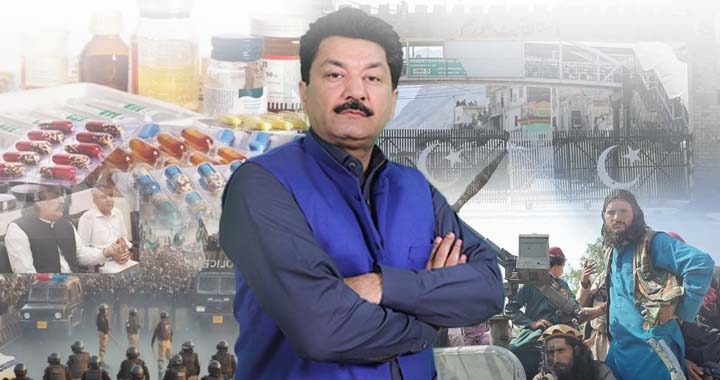
When we talk about Afghanistan, it is obvious that people live there. It is not that there are only jungles, mountains, deserts, and rivers. People live there. And what happens to these people, the reports of various human rights organizations, reports of different countries, and reports presented at international forums, these things keep emerging from time to time.
In response, the Afghan Taliban say that they have their own country, their own system, and their own laws, and that they can treat people the way they want. They have introduced a new criminal code that international observers and legal experts describe as a mechanism for entrenching authoritarian rule under the appearance of legality, further deepening concerns over human rights, social justice, and public safety in Afghanistan.
Again and again, from them and from Supreme Leader Sheikh Hibatullah Khunzada, there are instructions to treat people gently. This in itself indicates that complaints exist somewhere that require such directions from the Supreme Leader. It is surprising that when they say Pakistan has closed the border, suspended trade, and halted Afghan transit trade, then they should protest or negotiate, which is their right. According to international law, Afghanistan is a landlocked country. Its borders do not touch the sea, and the nearest ports available to it are Port Qasim and Karachi Port. International law grants Afghanistan the right to benefit from these routes.
Instead of raising their voice for Afghan traders and citizens, they say they do not need trade with Pakistan and do not need Pakistani medicines. They claim Pakistani medicines have no effect, alleging that a different quality of medicine is manufactured for Afghans. This suggests that Pakistani pharmaceutical companies produce one type for Pakistanis and another for Afghans. Allegations about fake medicines do exist in markets, but to claim after decades that Pakistani medicines are ineffective raises questions. Afghans who have been coming to Pakistan for treatment, particularly to Peshawar, to the private hospitals in Hayatabad, what medicines have they been receiving? Those medicines were neither imported from India nor America, they were Pakistani medicines.
The spokesman of the interim Afghan Finance Ministry, Abdul Qayyum Naseer, issued a statement conveying the government’s decision that from 9th February onward, all medicines imported from Pakistan would face a complete ban. Customs clearance would not be granted, and any Pakistani medicines found would be treated as illegal. Traders had already placed orders through different channels. These medicines include life‑saving drugs essential for multiple diseases.
Reports now indicate that medicine prices there have risen threefold to fourfold. If advance arrangements were not made, Afghanistan would have to fill its markets with Indian medicines, increasing both cost and time. Afghan merchants are protesting, and Pakistani traders are also demanding that borders be opened and trade restored. Whether in Khyber Pakhtunkhwa or Balochistan, livelihoods on both sides depend on this trade, including daily wage laborers. Security and political issues should be handled separately while trade continues. Saying “we do not need anything from Pakistan” reflects poor judgment, as the primary harm falls on Afghan citizens themselves, despite Pakistan hosting millions of Afghan refugees for four to five decades.
Afghan officials accuse Pakistan of blackmail and pressure, portraying their own response as resistance. This is retaliatory blackmail. Instead of addressing shared issues like terrorism, they deflect. Pakistan faces terrorism from multiple groups. On 31st January alone, Balochistan witnessed 52 attacks across 12 cities, yet there was no strong reaction from the Afghan Taliban. However, after the suicide attack in Islamabad, statements emerged, likely out of fear that Pakistan might conduct air strikes inside Afghanistan. This selective response raises questions about their stance on terrorism in Khyber Pakhtunkhwa and Balochistan.
Terrorism, regardless of scale or location, is terrorism. Pakistan has condemned incidents globally, including expressing concern over attacks like Pahalgam, stating that Pakistan itself is a victim of terrorism. Responsibility for the Islamabad attack was claimed by Daesh, which also operates inside Afghanistan and remains one of the biggest challenges to the Afghan Taliban. Pakistan faces threats from Daesh, BLA, TTP, and the Gul Bahadur Group. Even if they remain silent on other groups, cooperation against Daesh is essential. Intelligence sharing between Pakistan and Afghanistan, with support from partners such as Turkish intelligence, has already produced joint arrests. Such cooperation requires seriousness, not silence.
Trade restrictions harm both countries. Millions of people and thousands of traders are linked to this system. Transporters, drivers, cleaners, laborers, and even unskilled youth depend on it. Key crossings including Torkham, Chaman, Angoor Adda, Ghulam Khan, Kharlachi all feel the impact. Traders in Afghanistan connected to Pakistani markets, Pakistani traders using Afghan routes, and even Central Asian transit networks suffer equally.
Regarding 8th February, significant hype was created about road closures and mass protests. Tehreek‑e‑Insaf workers and supporters of Mehmood Khan Achakzai were visible. Chief Minister Khyber Pakhtunkhwa Sohail Afridi had been touring cities, creating the impression of a march toward Islamabad. Activity was visible on GT Road and the motorway, yet the protest itself proved homeopathic in scale. Small gatherings, brief rallies, passionate speeches, slogans, and within one and a half to two hours, it ended.
A viral container image bearing the words “freedom or death” circulated, with claims of a future long march after Ramadan. Questions arose regarding leadership presence, including Mehmood Khan Achakzai and Barrister Gohar. If the Chief Minister had actively led street protests, criticism would have followed due to his official responsibilities. Recently, however, political posture shifted. Meetings were held, including the Apex Committee session attended by Chief Minister Khyber Pakhtunkhwa Sohail Afridi, the Interior Minister, and senior security officials. The press release emphasized unity between the provincial government, federal leadership, and security institutions against terrorism, a necessary step toward coordinated strategy.
Failure to act jointly against groups like Daesh, BLA, TTP, and the banned Hafiz Gul Bahadur Group risks continued misuse of Afghan soil and prolonged suffering for citizens.
The recent protest, despite massive hype, remained limited in scale. Markets stayed open, roads functioned, and public response was cautious. Within PTI, internal differences persist regarding investigations, final calls, and organizational direction. Audio leaks such as that of Junaid Akbar indicate internal strain, like lava simmering beneath the surface. When it erupts, who will be burned the most remains uncertain.