(Shamim Shahid)
Politics in Pakistan often moves in sharp swings between agitation and accommodation, confrontation and compromise. In recent days, Khyber Pakhtunkhwa has once again found itself at the centre of this familiar but consequential pendulum. A proposed protest by Pakistan Tehreek-e-Insaf (PTI) on February 8, renewed engagement between the Prime Minister and the Chief Minister of Khyber Pakhtunkhwa, the revival of a long-dormant high-level security committee, and a reconciliatory letter by Mehmood Khan Achakzai together point to a moment of political significance. The question, however, is whether this moment will be used to move forward or squandered in symbolic politics.
The call for a countrywide shutdown on February 8, with claims that markets, roads and business activities will be closed, needs to be examined realistically rather than emotionally. Street protests have long been a feature of Pakistani politics, but their effectiveness depends on timing, context and public buy-in. The proposed protest falls on a Sunday a day when commercial activity is already limited. In Punjab, the coincidence of Basant celebrations further reduces the likelihood of large-scale participation. In such circumstances, claims of a complete shutdown appear more rhetorical than practical.
In Khyber Pakhtunkhwa, the situation is somewhat different. PTI remains the ruling party, and its organisational structure is intact at the provincial level. It is possible that some segments of the population, particularly party workers and sympathisers, may respond to the call. Yet even here, the idea that all markets will close and economic life will come to a halt seems far-fetched. Traders, transporters and daily wage earners have little appetite for prolonged disruption, especially at a time when economic pressures are already severe.
More importantly, there is an unresolved strategic question surrounding the protest: what exactly is its objective? If the aim is the release of Imran Khan, history suggests that street agitation alone rarely produces such outcomes in Pakistan. If the objective is to exert political pressure on the federal government, then logic dictates that the epicentre of protest should be Islamabad rather than Peshawar or other parts of Khyber Pakhtunkhwa. Even within PTI’s own ranks, there are visible differences of opinion on this point, reflecting a broader uncertainty about the party’s direction.
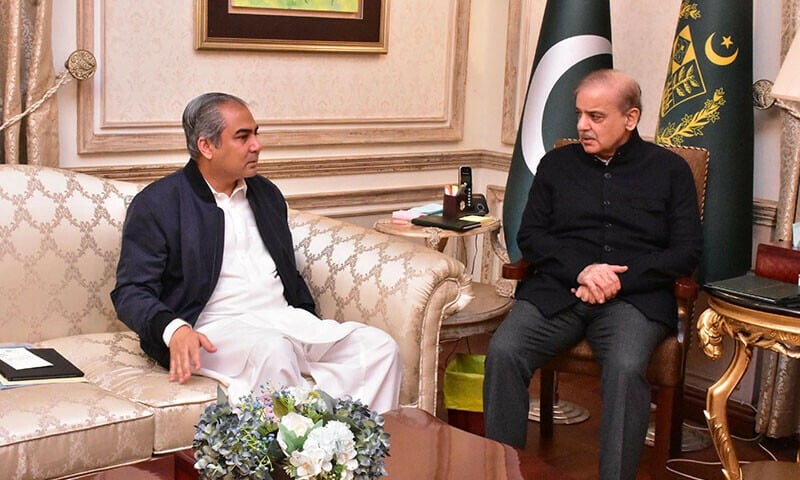
Against this backdrop of protest politics, a more constructive development has quietly taken place: the meeting between the Prime Minister and the Chief Minister of Khyber Pakhtunkhwa. In a political climate often dominated by acrimony, this engagement stands out as a welcome departure. The two leaders reportedly held detailed discussions on critical issues such as the National Finance Commission (NFC) Award, counter-terrorism policy and the economic challenges facing the province.
For Khyber Pakhtunkhwa, these are not abstract policy debates. The province has borne the brunt of terrorism for more than two decades, with devastating human and economic costs. Its proximity to Afghanistan, porous borders and history of militancy make security a daily concern rather than a theoretical one. At the same time, the province’s fiscal constraints limit its capacity to respond effectively without federal support. In this context, dialogue between the centre and the province is not a political favour it is a constitutional and moral necessity.
The announcement of the release of Rs26 billion for the merged tribal districts is particularly significant. These areas, formerly known as FATA, have long suffered from neglect, underdevelopment and instability. Funds allocated on paper have often failed to translate into tangible improvements on the ground. If this release is followed by transparent utilisation and effective oversight, it could mark a small but meaningful step towards addressing historical injustices.
Equally important is the revival of the high-level security committee often referred to as the apex or coordination committee which met after a long gap. When such a forum brings together the Prime Minister, Governor, Chief Minister, military leadership, police chiefs and intelligence officials, it signals recognition of the gravity of the security situation. Terrorism is once again a pressing reality in Khyber Pakhtunkhwa, and piecemeal responses are no longer sufficient.
The mere holding of such a meeting does not, of course, guarantee results. Decisions must be followed by implementation, coordination and accountability. Yet the symbolism matters. It suggests a shift from denial or distraction to acknowledgement and engagement. For a province grappling with targeted attacks, extortion, and fear, this is a necessary first step. This evolving posture also reflects a noticeable change in the political approach of the Chief Minister of Khyber Pakhtunkhwa. Initially known more as a party activist than an administrator, he appears to be gradually recognising the broader responsibilities of his office. Mobilising a political base and running a province are two very different tasks. The former thrives on slogans and confrontation; the latter demands compromise, prioritisation and results.
From October to the present, the Chief Minister has shown considerable political energy, particularly in keeping PTI’s organisational machinery active. However, governance requires more than mobilisation. It requires engagement with the federal government, coordination with security institutions and a focus on service delivery. The recent meeting with the Prime Minister and participation in the high-level security committee suggest an awareness perhaps belated, but nonetheless important that provincial leadership cannot be reduced to perpetual protest. This brings us to the controversial statement made by the Chief Minister in response to a university student who questioned the government’s performance. His reply that the government had “created awareness” may resonate with party loyalists, but it falls short as an answer to a legitimate civic query. Political awareness is valuable, but it is not a substitute for governance outcomes. Students, like other citizens, want to know what has been achieved in education, health, security, infrastructure and employment.
Such questions are not new. They have been posed to leaders across Pakistan’s political spectrum from Zulfikar Ali Bhutto to Nawaz Sharif, and from provincial ministers to prime ministers. Effective leaders respond by pointing to tangible achievements, acknowledging shortcomings and outlining future plans. Dismissing the question or reframing it purely in ideological terms risks deepening public frustration. The reality is that the list of major achievements in Khyber Pakhtunkhwa remains limited. The Bus Rapid Transit (BRT) system in Peshawar is often cited as a flagship project, and it has indeed improved urban mobility for many residents. Yet it also carries significant financial and logistical challenges. Traffic congestion along its route, high operational costs and annual losses estimated between Rs10 and Rs13 billion raise legitimate concerns about sustainability. Other projects, such as the Swat Motorway, are frequently mentioned but lack the transformative impact often claimed for them. Initiated years earlier, they cannot be solely attributed to the current political leadership. Meanwhile, persistent issues—unemployment, weak service delivery, insecurity and fiscal stress continue to shape everyday life for ordinary citizens.
It would be more credible for the provincial leadership to openly acknowledge these constraints. If funding shortages, terrorism and political instability have hindered progress, these realities should be communicated honestly. Accountability does not weaken a government; evasion does. The broader national political environment further complicates matters. Statements by Punjab’s Chief Minister, particularly those touching on Khyber Pakhtunkhwa, have added to tensions. While political rhetoric is inevitable, it should not translate into administrative measures that disproportionately affect ordinary people such as restrictions that reportedly inconvenience Pashtun communities in Punjab. Federalism demands mutual respect, not point-scoring.
In this context, Mehmood Khan Achakzai’s reported letter to the Prime Minister assumes particular importance. Although the full contents have not been made public, Achakzai’s political history suggests a mix of sharp critique and pragmatic engagement. His apparent emphasis on dialogue, parliamentary reconciliation and national unity reflects an understanding that Pakistan’s challenges especially in Balochistan and Khyber Pakhtunkhwa cannot be resolved through exclusion or coercion alone. It is almost certain that Imran Khan’s situation has been mentioned in the letter. Calls for leniency or political accommodation are part of a broader argument: that a deeply polarised country, facing economic distress and security threats, cannot afford permanent political deadlock. Whether the government responds to this appeal remains to be seen, but the fact that such voices are being raised is itself noteworthy.
Pakistan today stands at a delicate juncture. Protest politics may energise supporters, but it rarely builds institutions. Meetings, committees and letters may seem less dramatic, but they are the tools through which states function. For Khyber Pakhtunkhwa, the choice is particularly stark. The province cannot afford endless confrontation with the centre, nor can it ignore the urgent needs of its people. If recent developments signal a gradual shift from agitation to engagement, they should be encouraged critically, but constructively. The real test will not be in slogans shouted on February 8, but in policies implemented in the months that follow. Governance, not perpetual protest, is what ultimately defines political leadership.