
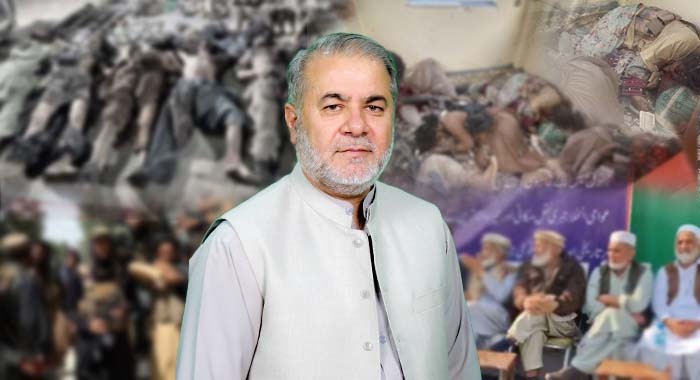
(Mushtaq Yusufzai)
Over the past few days, the security situation in Khyber Pakhtunkhwa and Balochistan has reached alarming levels, highlighting the persistent challenges Pakistan faces in combating militancy and maintaining internal stability. The sudden surge in terrorist attacks in multiple regions of these provinces has raised critical questions about the effectiveness of both provincial and federal governments, the operational gaps in law enforcement agencies, and the lack of comprehensive implementation of the National Action Plan (NAP).
It is essential to understand that the roots of militancy in these regions are deeply entrenched in historical grievances, socio-economic deprivation, and political neglect. Balochistan, for instance, has long been subjected to systemic marginalization. The local populace, particularly the ordinary Baloch, have endured neglect in education, health, and infrastructure due to the centuries-old feudal and tribal systems. Political structures, dominated by the sardari (tribal leadership) system, have systematically failed to address the basic needs of the people. This chronic neglect has created a fertile ground for militant groups to exploit local frustrations and recruit vulnerable youth, presenting themselves as defenders of Baloch rights and freedom.
This strategy has been particularly effective in manipulating young people. Recent attacks in Balochistan, carried out in over a dozen locations across the province, demonstrated how well-coordinated these operations have become. Militants have skillfully exploited local grievances to gain sympathy and even public support. Videos and reports from these attacks show local communities welcoming armed militants, taking photographs with them, and sometimes even providing logistical support. Such incidents underscore the dangerous narrative that these groups propagate: that they are fighting on behalf of the common people against state oppression, when in reality, their true goal is to destabilize the state of Pakistan.
Khyber Pakhtunkhwa, particularly its southern and tribal districts, has faced similar patterns of violence. While these areas have also been victims of sustained militancy, the situation has worsened due to the complex interplay of local grievances, cross-border insurgency, and the strategic use of proxy actors by external forces. It is well-established that India, through various channels, has attempted to exploit instability in Pakistan by providing financial and operational support to insurgent groups. This external influence compounds the internal challenges, making it imperative for Pakistan to adopt a holistic strategy that combines security operations with political and socio-economic interventions.
One of the more concerning developments in recent times is the convergence of previously distinct militant entities. Historically, Baloch insurgent groups, such as the Baloch Liberation Army (BLA) and Baloch Republican Army (BRA), operated independently with their own objectives and networks. Similarly, groups such as the Tehrik-e-Taliban Pakistan (TTP) have pursued ideologically driven campaigns based on religious extremism. However, recent intelligence indicates a significant shift: these groups are increasingly coordinating, sharing resources, and even engaging in joint training and operational planning. Afghanistan has emerged as a key logistical and command hub for these alliances, where leadership and strategic directives are reportedly being coordinated.
The operational capabilities of these groups have grown markedly. While earlier attacks by Baloch insurgents were often limited in scale and largely symbolic, recent operations have shown a high degree of planning, targeting, and execution. For instance, the use of multiple locations, precision attacks, and even involvement of women in militant operations reflects a disturbing sophistication. This level of coordination and planning requires significant training, logistical support, and financial backing resources that the TTP has reportedly provided to Baloch groups, enhancing their lethality. Such developments underscore the urgent need for Pakistan’s security and intelligence apparatus to adopt a proactive, multi-dimensional strategy.
Despite these clear threats, one of the major weaknesses in Pakistan’s counter-terrorism strategy remains the incomplete implementation of the National Action Plan. Initially devised after the horrific 2014 Peshawar school attack, the NAP aimed to address militancy through a comprehensive framework of 20 actionable points, later condensed to 14, covering areas ranging from kinetic operations to judicial reforms, madrassa registration, and countering hate speech. While law enforcement agencies have conducted military and police operations what the NAP defines as kinetic actions many other critical components remain unimplemented or inadequately addressed.
Judicial reforms, for instance, are essential to restoring public trust in the state’s ability to prosecute terrorists and bring them to justice. A major grievance among ordinary citizens is the perceived impunity of militants who have carried out high-profile attacks. Attacks on security officials, civil servants, students, and doctors have gone largely unpunished, eroding confidence in the judicial and enforcement systems. Unless Pakistan demonstrates tangible accountability convictions, sentences, and reparations—it will remain vulnerable to the cycle of violence and militancy.
Similarly, the registration and regulation of religious seminaries remain weak, creating a gap that extremist networks continue to exploit. NACTA, the national counter-terrorism authority, requires institutional strengthening and empowerment to effectively coordinate intelligence, operations, and counter-narrative campaigns. Political negligence and bureaucratic inertia have further delayed these essential reforms. The result is a security environment where militant groups feel emboldened, and ordinary citizens feel insecure and unsupported.
The role of provincial governments, particularly in Khyber Pakhtunkhwa, is also critical. The recent high-level discussions between the provincial Chief Minister and the Prime Minister highlight the ongoing tension over resource allocation and operational responsibilities, especially in the former tribal districts (merged areas). Khyber Pakhtunkhwa’s provincial administration requires substantial funding, logistical support, and cooperation from federal agencies to effectively manage these regions. Without adequate financial resources and operational autonomy, local administrations struggle to maintain law and order, provide relief to displaced populations, and implement development projects that can reduce the appeal of militant narratives.
The situation in Tirah and other tribal areas illustrates these challenges vividly. Reports indicate that hundreds of families have been displaced due to militant activity, and the provincial government faces immense pressure to provide relief and compensation. While the federal government has pledged funds, the distribution mechanisms and sufficiency of resources remain questionable. The provincial authorities must work in close coordination with the federal government and security forces to ensure timely delivery of aid, restoration of basic services, and the stabilization of these volatile regions.
One of the critical lessons from these developments is the indispensability of collaboration between civil administration and security forces. The police and other law enforcement agencies in Khyber Pakhtunkhwa lack the capacity to tackle high-intensity militancy without close coordination with the military and intelligence agencies. Security operations must be complemented by administrative actions, public awareness campaigns, and the provision of basic rights to affected communities. Only then can the cycle of militancy be broken.
Furthermore, political messaging plays a vital role in countering extremist narratives. It is encouraging to note that the Chief Minister of Khyber Pakhtunkhwa has publicly acknowledged that terrorists do not belong to any particular province, community, or ideology. Such statements are essential to prevent polarization, communal stereotyping, and political exploitation of security crises. Political leaders must consistently reinforce the message that militancy is a national threat and that security responses must transcend partisan divides. Another dimension of the crisis is the strategic exploitation of youth by militant networks. Ordinary Baloch youth, deprived of education and employment opportunities, are being targeted for recruitment. Militants provide training, funding, and a sense of purpose, creating a dangerous cycle where socio-economic grievances are converted into violent extremism. Addressing this requires not just security measures but long-term development strategies that prioritize education, healthcare, employment, and civic engagement in marginalized regions. Without these interventions, the appeal of militancy will persist.
The convergence of TTP and Baloch insurgents also raises concerns about the evolution of terrorism in Pakistan. While ideological differences exist TTP’s religious extremism versus Baloch groups’ nationalist agenda—the operational alliance shows that shared hostility toward the state can override ideological divides. This complicates counter-terrorism efforts and underscores the importance of coordinated intelligence, surveillance, and cross-border security measures. Pakistan must remain vigilant against external actors exploiting these alliances to destabilize the country further.
In conclusion, the security situation in Khyber Pakhtunkhwa and Balochistan is a complex interplay of historical grievances, socio-economic neglect, political failures, and strategic manipulation by external actors. While kinetic operations remain necessary, they are insufficient on their own. Effective counter-terrorism requires a holistic approach: full implementation of the National Action Plan, judicial and institutional reforms, development initiatives, youth engagement, and political cohesion. The federal and provincial governments must work in tandem, ensuring adequate funding, operational coordination, and timely relief for affected communities.
Above all, restoring public trust in state institutions is paramount. Citizens must see tangible outcomes terrorists apprehended, trials conducted, sentences delivered, and compensation provided to victims. Without this, militancy will continue to exploit public disillusionment, perpetuating instability. Pakistan’s response to the current surge in violence will determine not only the immediate security landscape but also the long-term resilience of its governance structures and social cohesion. The time for half measures and bureaucratic delays has passed. Coordinated action, political will, and strategic foresight are now imperative to reclaim peace and stability in these critical regions of the country.



