(Zahir Shah Sherazi)
Pakistan today stands at a dangerous crossroads where confused political narratives, inconsistent security policies, and chronic governance failures have converged to deepen instability—particularly in Khyber Pakhtunkhwa and the former tribal districts. At the heart of this crisis lies the legacy and current posture of Pakistan Tehreek-e-Insaf (PTI), whose past decisions and present rhetoric are increasingly coming under scrutiny from political actors, security analysts, and the wider public. What is unfolding is not merely a debate between government and opposition, but a profound question about the state’s seriousness in confronting terrorism, managing borders, and governing its most vulnerable regions.
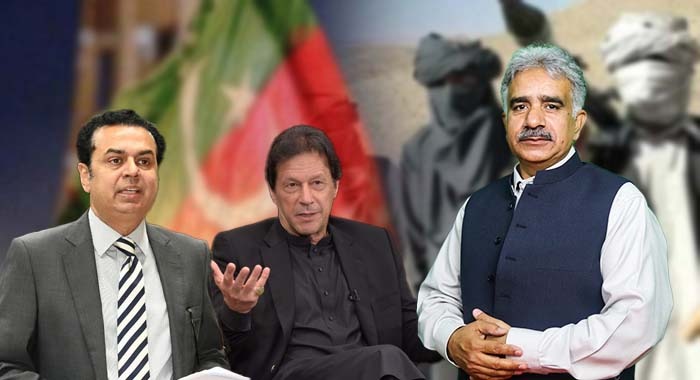
Recent remarks by senior Pakistan Muslim League-N leader Talal Chaudhry reflect a growing frustration within mainstream politics: that PTI’s contradictory policies—both in power and in opposition—have created confusion rather than clarity on the most critical national security issue Pakistan faces today. Terrorism, once again, has reasserted itself as an existential threat, and yet the political class appears divided not just on tactics, but on basic principles.
It is impossible to assess the current security environment without revisiting the PTI era at the federal level under Imran Khan. During that period, Pakistan adopted a policy framework that leaned heavily toward negotiations, reconciliation, and the repatriation of militants particularly elements linked to Tehrik-i-Taliban Pakistan. This approach was defended at the time as a pragmatic attempt to end decades of bloodshed, but its long-term consequences are now being felt with alarming intensity.
The return and attempted “rehabilitation” of militants, carried out with the tacit understanding that the civilian government, security establishment, and military leadership were broadly aligned, proved to be a catastrophic miscalculation. The assumption that hardened militants could be reintegrated into society without dismantling their ideological and operational networks ignored painful lessons from Pakistan’s own past. The result has been a renewed wave of targeted killings, attacks on peace committee members, assaults on scholars, and the steady erosion of writ in both merged and settled districts of Khyber Pakhtunkhwa.
Prime Minister Shehbaz Sharif has since publicly acknowledged that aspects of the previous policy were flawed. This admission, while important, also underscores the cost of strategic inconsistency. When the state oscillates between negotiation and force without a coherent long-term framework, it signals weakness not just to militant groups, but to ordinary citizens who bear the brunt of insecurity.
Nowhere is this contradiction more visible than in Khyber Pakhtunkhwa, a province governed by PTI for years and still struggling to deliver basic security and administration. Law and order, constitutionally the responsibility of the provincial government, has deteriorated to the point where senior police officers reportedly seek transfers out of the province. This is not merely a morale issue; it is an indictment of governance. The argument frequently advanced by PTI leadership that terrorism is solely a federal or establishment-driven conspiracy rings hollow in the face of daily attacks. If the provincial government claims a mandate and moral authority, it must also accept responsibility for protecting lives. One cannot simultaneously oppose security operations, reject alternative enforcement mechanisms, and then absolve oneself of blame when violence escalates.
The debate over kinetic operations versus dialogue has further exposed the absence of policy coherence. Local jirgas, district administrations, and security agencies have been left navigating impossible choices: evacuating populations in winter months, disrupting livelihoods dependent on seasonal crops, and managing the fallout of delayed or poorly timed operations. These are not abstract policy debates; they are decisions that uproot families and destabilize entire regions.
An often-ignored dimension of this crisis is the political economy of militancy. In many remote and underdeveloped areas, illicit crops such as poppy have become survival mechanisms rather than ideological choices. Chronic poverty, lack of alternative livelihoods, and state neglect have created conditions where militancy and criminality thrive. To moralize this reality from Islamabad or Karachi, without offering viable economic alternatives, is both hypocritical and ineffective.
Here, the failure is again systemic. Development, post-conflict rehabilitation, and sustained administrative presence should follow any successful security operation. Clearing an area of militants is only the first step; holding and building are equally essential. When district administrations lack capacity or political backing, vacuums re-emerge and militants return.
PTI’s current critique of the National Finance Commission (NFC) award and resource distribution also suffers from selective amnesia. Leaders such as Asad Qaiser now question why Khyber Pakhtunkhwa has not received its due share in hydro profits and the divisible pool. These are legitimate questions, but they lose credibility when asked by those who previously held power in both the National Assembly and the federal government.
If these issues were not resolved during PTI’s tenure, the public has a right to ask why. Governance is not agitation politics; it requires negotiation, institutional engagement, and, at times, compromise. Continually invoking unnamed “forces” as obstacles may mobilize supporters, but it does little to secure tangible gains for the province.
Pakistan’s internal security challenges cannot be divorced from developments across the border. Afghanistan, under the Taliban, is experiencing its own deepening instability. Attacks in high-security zones, including those targeting Chinese nationals, have raised serious questions about the regime’s capacity and intent to control militant groups operating from its soil.
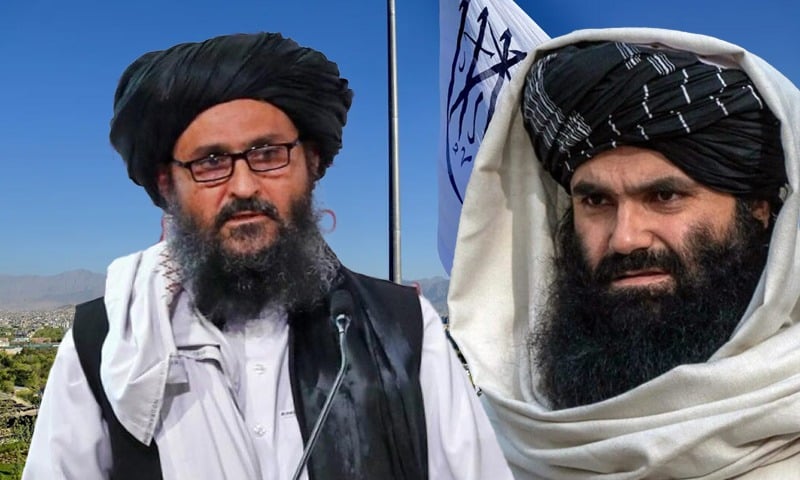
Figures such as Sirajuddin Haqqani have themselves acknowledged internal contradictions within the Taliban structure. Reports of factionalism, shifting alliances, and the movement of sophisticated weapons suggest an emerging crisis that could spill over Pakistan’s western border with devastating consequences.
The presence of transnational intelligence networks, regional rivalries, and competing strategic interests has further complicated the picture. While Pakistan has consistently argued that Afghan soil is being used to destabilize its security, credibility abroad depends on internal coherence at home. A state divided in its narrative cannot effectively plead its case on international forums.
Perhaps the most damaging aspect of the current situation is the battle of narratives. When political leaders question the legitimacy of state actions, label counterterrorism measures as conspiracies, or portray security forces as aggressors, they inadvertently strengthen militant propaganda. This is not dissent; it is strategic self-harm.
No counterterrorism campaign can succeed without political consensus. Criticism is essential in a democracy, but it must be grounded in alternatives, not denial. If PTI believes military operations are flawed, it must present a detailed, workable policy framework one that addresses border security, intelligence coordination, economic rehabilitation, and regional diplomacy. So far, such a framework has been conspicuously absent.
The Imperative of Responsibility
Pakistan’s struggle against terrorism has never been purely military; it has always been political, economic, and ideological. What the current crisis reveals is not just the failure of a single party, but the dangers of opportunistic politics in matters of national survival. PTI’s legacy—marked by strategic ambiguity and rhetorical populism has left behind questions that cannot be answered by slogans or accusations.
The choice before Pakistan is stark. It can continue down a path of fragmented narratives and reactive policies, or it can rebuild a unified national consensus that prioritizes security, governance, and development over political point-scoring. History will judge harshly those who, having held power, chose confusion over clarity and expediency over responsibility. For the people of Khyber Pakhtunkhwa, the former tribal districts, and indeed the entire country, the cost of further delay is simply too high.