( Shamim Shahid)
For the Afghan Taliban, the past few months have underscored a hard reality they have long tried to deny: ideology cannot substitute for geography, and isolation cannot sustain an economy. Developments surrounding Iran’s Chabahar Port, India’s recalibrated policy, deepening ethnic discontent inside Afghanistan and growing unrest in Khyber Pakhtunkhwa together paint a sobering picture of a region once again at a crossroads. These issues are not isolated; they are deeply interconnected, and together they reveal the strategic constraints facing the Taliban regime and the wider implications for Pakistan and the region.
Chabahar Port, located on Iran’s southeastern coast, was once projected as a game-changer for Afghanistan. It was promoted as an alternative trade route that would free Kabul from its dependence on Pakistan’s ports, particularly Karachi. For years, Afghan policymakers first under the republic and later quietly under the Taliban viewed Chabahar as a strategic escape from the vulner
abilities associated with transit trade through Pakistan. India’s involvement in developing Chabahar further elevated its importance, giving Kabul hope of diversified trade, political leverage and a reduced reliance on Islamabad.
That promise now appears increasingly fragile. India’s recent policy adjustments, driven by regional security concerns, sanctions-related risks and evolving relations with Iran, have slowed momentum around Chabahar. At the same time, escalating tensions between Iran and the United States have cast a long shadow over any large-scale economic activity linked to the port. Sanctions, uncertainty and geopolitical rivalry have combined to delay projects and discourage investment. For Afghanistan, which lacks international recognition and remains under sanctions itself, this uncertainty is particularly damaging.
The Taliban’s economic strategy has suffered as a result. With trade through Pakistan severely restricted due to strained bilateral relations and the suspension of key transit routes via Karachi, Afghanistan finds itself cornered. Chabahar was meant to offset precisely this kind of disruption. Its slowdown leaves Kabul with limited options, forcing the Taliban to confront an uncomfortable truth: geography ultimately favours engagement with Pakistan, not estrangement.
This impasse has immediate human and economic consequences. Afghanistan’s agricultural economy already weakened by drought, sanctions and administrative paralysis is paying a heavy price. Afghan farmers traditionally exported large quantities of fresh produce, including potatoes, citrus, vegetables and other crops, to Pakistan. This year, much of that produce has failed to reach markets. Traders who had entered into advance contracts are facing losses, importers are stuck with unpaid commitments, and farmers are left with unsold harvests. The resulting frustration is palpable across rural Afghanistan, where livelihoods depend almost entirely on cross-border trade.
These economic pressures are quietly reshaping Taliban calculations. Despite their public rhetoric, backchannel diplomacy between Kabul and Islamabad has intensified. Traders, importers and exporters on both sides of the border are pressing their respective governments to restore trade flows. The reason is simple: both economies are bleeding. Afghanistan cannot afford prolonged isolation, and Pakistan too suffers when legal trade collapses and informal channels expand. In this context, Chabahar’s stagnation may paradoxically push the Taliban back toward pragmatic engagement with Pakistan a path they have resisted but cannot avoid indefinitely.
Yet economic stress is only one layer of Afghanistan’s crisis. Beneath it lies a deeper and potentially more explosive issue: ethnic and linguistic discrimination. Recent statements attributed to a senior Taliban commander, Abdul Hamid, alleging violations of nationality, language and rights, reflect a growing unease within the movement itself. While ethnic tensions in Afghanistan are not new, the Taliban’s current policies have sharpened old fault lines.
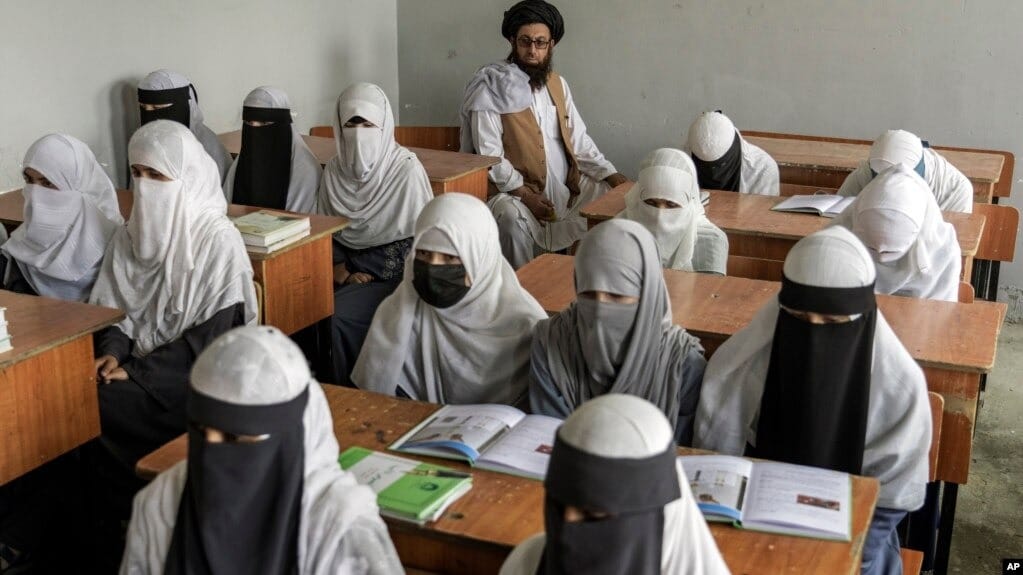
Since returning to power, the Taliban have increasingly privileged Pashto at the expense of Dari and other languages. The removal of bilingual signboards, the sidelining of Dari in official communications and the symbolic assertion of Pashtun dominance have angered Tajiks, Hazaras and Uzbeks. Under previous governments, including during Hamid Karzai’s presidency, a fragile linguistic balance was maintained through the use of both Pashto and Dari in state affairs. That balance has now been disrupted.
For non-Pashtun communities, this is not merely a cultural issue; it is a question of political exclusion. Afghanistan’s social fabric is deeply interwoven, shaped by centuries of migration, intermarriage and shared economic life. Attempts to impose linguistic or ethnic uniformity run counter to this reality. History offers little comfort to those who believe such policies can succeed. From the era of Zahir Shah to the communist governments of Babrak Karmal and Dr Najibullah, every attempt to centralise power by marginalising certain groups eventually generated resistance.
What makes the current moment particularly dangerous is the Taliban’s international isolation. In the past, internal ethnic tensions were often cushioned by external alliances and economic support. Today, the Taliban lack both. As global hostility intensifies and economic lifelines shrink, internal dissent carries greater weight. If non-Pashtun communities begin to see the Taliban not merely as an authoritarian regime but as an ethnically exclusive one, the risk of organised resistance will grow.
This does not necessarily mean an immediate armed uprising. Afghan society has shown remarkable resilience and adaptability, often choosing survival over confrontation. But prolonged discrimination, coupled with economic deprivation, can alter that calculus. If minority groups conclude that peaceful adjustment offers no relief, the temptation to resist politically or militarily will increase. For a regime already struggling with legitimacy, such a development would be deeply destabilising.
These internal Afghan dynamics also have direct implications for Pakistan, particularly Khyber Pakhtunkhwa. The province is once again witnessing unrest, protests and a deteriorating security environment. Reports of demonstrations, rising crime, kidnappings and prolonged power and gas outages point to a governance crisis that extends beyond politics. While protests are often framed as political mobilisation, their social cost is borne by ordinary citizens.
Peshawar, the provincial capital, has seen electricity outages lasting over 24 hours, severe gas shortages and increasing insecurity. Barricades, checkpoints and fear have become part of daily life. Economic pressures are mounting as well: flour prices have surged, bread weights have declined and inflation continues to erode purchasing power. In such conditions, political agitation regardless of its justification risks deepening public suffering.
The linkage between Afghanistan and Khyber Pakhtunkhwa cannot be ignored. Instability across the border inevitably spills over, whether through disrupted trade, refugee movements or militant activity. When Afghanistan’s economy contracts and ethnic tensions rise, the consequences are felt in Pakistan’s border regions first. Conversely, instability in Khyber Pakhtunkhwa complicates Islamabad’s ability to pursue coherent Afghanistan policy, creating a cycle of mutual vulnerability.
At the political level, Pakistan’s internal divisions further complicate matters. The ongoing agitation around Imran Khan, the role of opposition figures like Mehmood Khan Achakzai and the broader struggle between political parties and state institutions consume attention and energy. While political contestation is a legitimate feature of democracy, the current environment leaves little room for addressing pressing governance and security challenges.
For the Taliban, these regional dynamics should serve as a warning. Economic isolation, reliance on uncertain alternatives like Chabahar, and the alienation of significant segments of Afghan society are not sustainable strategies. Geography dictates that Afghanistan’s most viable trade routes run through Pakistan and Iran, not against them. Demography dictates that no single ethnic group can govern Afghanistan indefinitely without accommodation and inclusion.
A recalibration is inevitable. The question is whether it will come through pragmatic reform or through crisis. Restoring trade with Pakistan, easing linguistic and ethnic exclusion, and engaging constructively with neighbours would not weaken the Taliban; it would stabilise their rule. Persisting on the current path, by contrast, risks compounding economic hardship with internal fragmentation and regional fallout.
History has shown that Afghanistan’s greatest tragedies have occurred when its rulers ignored the realities of diversity and geography. Today, those lessons are once again being tested. Chabahar’s uncertainty, India’s shifting priorities, ethnic grievances and unrest across the frontier are not separate challenges. They are symptoms of a deeper strategic miscalculation. Whether the Taliban recognise this in time will shape not only Afghanistan’s future, but the stability of the entire region.