(Zahir Shah Sherazi)
More than a decade has passed since Pakistan adopted the National Action Plan (NAP) in the aftermath of the Army Public School tragedy in December 2014. Announced with the promise of ending terrorism “across the board,” the 21-point framework was meant to be a comprehensive national consensus against militancy, extremism, terror financing, and the ideological ecosystem that sustains violence. Eleven years later, the country finds itself once again grappling with persistent terrorist attacks, particularly in Khyber Pakhtunkhwa, the merged tribal districts, Balochistan, and parts of the southern belt. Security forces are under constant pressure, civilians continue to be targeted, and the very questions that NAP was supposed to settle have resurfaced with renewed urgency.
If the National Action Plan had been implemented in both letter and spirit, Pakistan would not still be fighting the same war with the same tools and the same unresolved governance gaps. The uncomfortable truth is that while kinetic operations have continued intermittently, the non-kinetic, governance-related pillars of NAP have largely remained unfulfilled. Counterterrorism cannot succeed through force alone; it requires political will, institutional reform, sustained financing, and a unified national narrative. On these fronts, Pakistan’s performance has been inconsistent at best and negligent at worst.
The NAP was never merely a military document. It was a whole-of-state strategy. Alongside kinetic operations, it envisaged choking terror financing, regulating madaris, dismantling sectarian and militant networks, reforming the criminal justice system, strengthening civilian law enforcement agencies, countering violent extremism, and neutralizing terrorist propaganda, particularly on social media. It also emphasized reconciliation in conflict-hit regions, development of the newly merged districts, and a clear policy on Afghan refugees. The failure to advance meaningfully on most of these points explains why terrorism has proven so resilient.
Kinetic operations were the most visible and, arguably, the most aggressively pursued component of NAP. Military operations in the tribal areas did succeed in dismantling many terrorist sanctuaries. However, these operations often stopped halfway, without being followed by effective post-operation stabilization, rehabilitation, and governance. Operations in Bajaur, North Waziristan, Khyber, and Tirah Valley may temporarily disrupt militant networks, but without a sustainable plan for revival, economic opportunities, education, healthcare, and administrative control, the vacuum inevitably returns. Terrorism does not flourish in isolation; it feeds on underdevelopment, injustice, and institutional absence.
One of the most glaring failures under NAP has been the lack of reform in the criminal justice system. Anti-Terrorism Courts were supposed to be strengthened to ensure swift and decisive punishment for terrorists. Instead, pendency has become the norm. In Khyber Pakhtunkhwa alone, more than 3,000 terrorism-related cases are reportedly pending in ATCs. When terrorists are not punished due to weak investigations, lack of evidence, or procedural delays, the entire counterterrorism effort loses credibility. Justice delayed, in such cases, is not merely justice denied; it is an incentive for further violence.
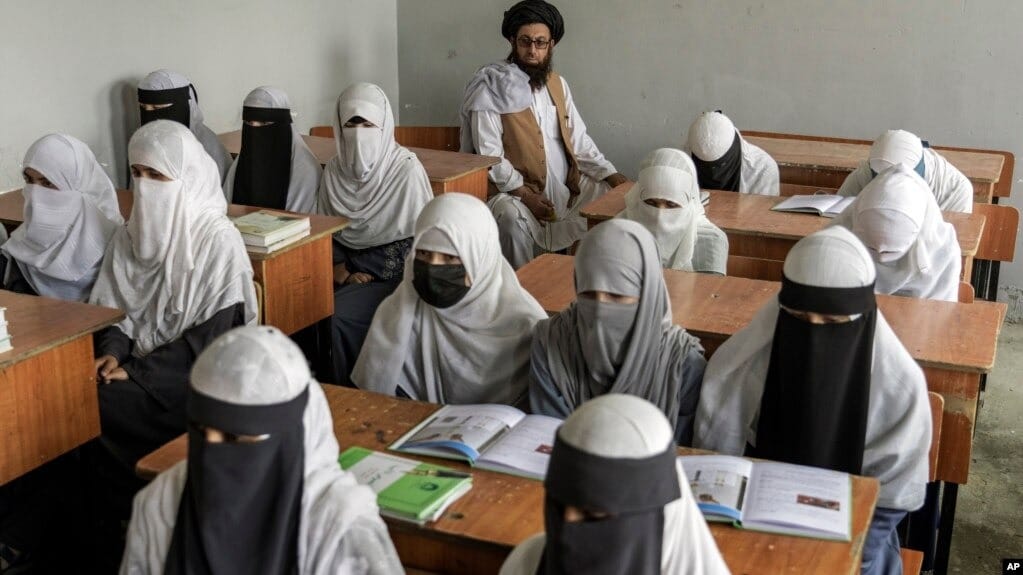
The regulation of madaris remains another unfinished agenda. Under the revised National Action Plan, claims were made that around 54 percent of madaris have been registered. That still leaves nearly half operating outside any regulatory framework. Questions about their funding sources, curricula, and administrative oversight remain unanswered. The resistance encountered in this area reflects a deeper problem: the absence of political consensus and the fear of confronting religious lobbies. Countering violent extremism requires courage and clarity, not appeasement.
Equally troubling is the state’s failure to effectively dismantle terror financing networks. Terror financing does not originate in remote mountains alone; it flows through urban centers, major cities, and commercial hubs. Karachi and parts of Punjab have long been identified as critical nodes for funding, recruitment, facilitation, and ideological support. Yet targeted operations against these networks have been selective and inconsistent. Without addressing the urban infrastructure of terrorism, rural and border operations alone cannot deliver lasting security.
In Khyber Pakhtunkhwa and Balochistan, the burden of terrorism has been disproportionately high, yet both provinces remain institutionally weak. The capacity of police forces and Counter-Terrorism Departments has not been enhanced to the level required. Despite being on the frontline, these provinces continue to rely heavily on the military for internal security, a dependency that undermines civilian ownership of counterterrorism. Investment in training, equipment, intelligence capabilities, and forensic infrastructure has been minimal, especially when measured against the scale of the threat.
The situation in the newly merged districts is particularly alarming. NAP explicitly linked counterterrorism with development, recognizing that peace cannot be sustained without economic and social uplift. Yet the extension of administrative systems, policing, governance, education, healthcare, and infrastructure to these areas has been painfully slow. Development plans remain hostage to funding disputes between the federal and provincial governments. Promised allocations under the NFC Award, hydel profits, and war-on-terror funds have either been delayed or contested. Development without financing is an illusion, and this illusion has exacted a heavy price.
Responsibility does not lie with the provinces alone. The federal government bears equal, if not greater, responsibility. National Action Plan was a federal commitment, endorsed at the highest level. When funds are not released, when national projects are wound up, and when political considerations dictate development priorities, the very foundation of NAP is undermined. It is neither logical nor justifiable to concentrate development in Punjab and Sindh while leaving KP and Balochistan to manage terrorism with inadequate resources.
Another critical yet neglected dimension of NAP is countering terrorist propaganda and cyber warfare. Militants have evolved rapidly in the digital domain, exploiting social media platforms to recruit, radicalize, and spread fear. The state’s response has largely been reactive and blunt, relying on internet shutdowns or platform bans. Such measures neither counter ideology nor dismantle hostile networks. What was required was a sophisticated media and cyber strategy: monitoring hostile accounts, counter-narratives, digital engagement, and legal action against propagandists. On this front, the state has lagged dangerously behind.
The issue of Afghan refugees further illustrates the policy incoherence surrounding NAP. Repatriation was always a component of the plan, yet for decades no comprehensive policy was developed. Recent moves to declare POR and ACC card holders illegal may be strategically significant, but without a humane, documented, and phased framework, they risk creating new tensions. Hosting undocumented populations indefinitely is neither internationally acceptable nor domestically sustainable. At the same time, politicizing the issue through ethnic or linguistic narratives only complicates an already sensitive matter.
Perhaps the most damaging factor in the failure of NAP has been the absence of sustained political will and unity. Counterterrorism has too often been treated as a partisan issue. Political parties support operations when in power and oppose them when in opposition. Nationalist and religious groups have resisted key elements of the plan, from operations to madaris regulation. Without all stakeholders being “on one page,” NAP has remained a document of intent rather than action.
The reality is stark: Pakistan has paid a heavy price for half-implemented policies and selective enforcement. National Action Plan was never meant to be symbolic; it was a roadmap for survival. Its failure is not due to lack of clarity, but lack of commitment. Unless governance reforms, judicial efficiency, development financing, ideological countermeasures, and political consensus are pursued with the same seriousness as military operations, terrorism will continue to adapt and endure.
Eleven years on, the lesson is clear. Counterterrorism cannot succeed in fragments. It demands continuity, coherence, and courage. Without these, the National Action Plan will remain what it has largely been so far: an unfulfilled promise in a country that can no longer afford unfinished wars.