In Khyber Pakhtunkhwa, the ruling party is busy in streets politics, and while doing so they know no boundaries. On one side, security forces are conducting operations across Khyber Pakhtunkhwa. On the other, political statements are being issued against these operations. This contradiction has now become a defining feature of the Pakistan Tehreek-e-Insaf’s internal posture, particularly in the context of Chief Minister Sohail Afridi’s recent statements and political activities.
Sohail Afridi is the chief minister of the province. At times, he travels to Lahore with the stated aim of mobilizing workers for a street movement. At other times, he is seen in Islamabad, and now in Karachi. My basic question is simple, does PTI not have leadership in Sindh? Is there no central party leadership that can mobilize workers there? If so, what exactly is the role of the chief minister in this exercise?
The responsibility entrusted to the chief minister is to run the province, improve the security situation, strengthen governance, and address the problems faced by the people of Khyber Pakhtunkhwa. Instead, he is in Karachi. He has just landed there. Claims were made that millions would receive him, but what was visible were only a few hundred people at the airport.
The reality is that there are deep differences within PTI. There is a perception being promoted that Sohail Afridi is extremely popular. I have always disagreed with this claim. His visibility and recognition increased only after he became chief minister. Before that, he was largely unknown. Holding public office brings prominence, it does not automatically translate into political stature comparable to Imran Khan. Sohail Afridi has not replaced Imran Khan, nor has he assumed that political position.
He is a minister, and when he goes to Karachi, he is accompanied by official protocol. Ministers, security officials, and administrative staff travel with him. This raises a fundamental question. If tomorrow a protest or movement is announced, will it be led from Karachi or from Peshawar? Naturally, it would have to be led from Peshawar. Then why is the focus elsewhere when mobilization within the province itself remains weak?
If the intention was outreach, the chief minister could have gone alone, met people directly, and assessed the political ground. Instead, announcements are made about rallies, permissions are sought, and expectations are built. Now we wait to see how many people actually turn up at Mazar-e-Quaid. That outcome will speak for itself.
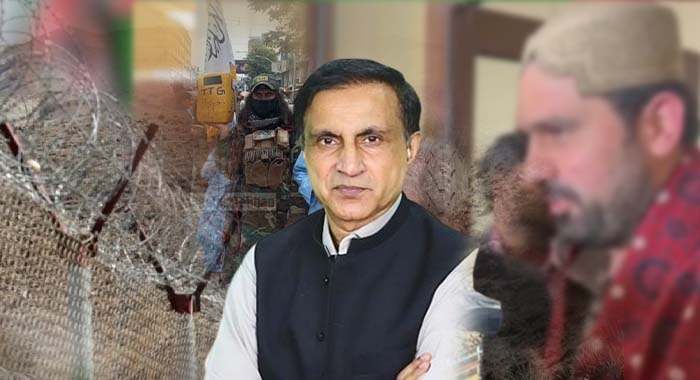
Another serious issue is the narrative surrounding PTI’s stance on terrorism. Social media is filled with imagery suggesting a troubling proximity between the party and the TTP. This perception did not emerge overnight. When Imran Khan was prime minister, he repeatedly spoke about negotiations. At one point, he even suggested allowing them an office in Peshawar. Within the party, it has long been argued that condemning or confronting these groups directly would invite retaliation, similar to what happened to the ANP, which suffered devastating losses due to militant violence.
That fear still exists within PTI. It is the fear of death, of targeted attacks, of martyrdom. This fear explains the party’s silence and its reluctance to speak openly. Since Sohail Afridi became chief minister, multiple drone incidents have occurred in the province. Previously, FIRs were registered and condemnations were issued. This time, neither has happened. The chief minister says the party should condemn such incidents, while the party insists the government should do so. This circular avoidance reflects fear, not principle.
PTI speaks freely against the establishment and against political opponents, but when the matter involves the TTP, there is silence. The language becomes cautious. They speak of splinter groups, of unnamed terrorists, of abstract violence, but they avoid naming the organization as a whole. Terrorism is condemned in theory, but never in clear terms.
This ambiguity stems from internal divisions. The political committee itself is fragmented. There is no coherent leadership structure. As a result, confusion prevails across policy, messaging, and action.
Pakistan’s war against terrorism is a fundamental national issue. When the National Action Plan was formulated, all political parties agreed to its provisions. Yet, in Khyber Pakhtunkhwa, those commitments were never fully implemented. Other provinces established district-level coordination committees involving police and intelligence agencies. KP did not.
There was also the concept of an apex committee, where military commanders and civilian leadership would jointly assess ground realities. Since Sohail Afridi assumed office, such a briefing has not taken place. Without understanding the situation on the ground, how can informed decisions be made? A national policy exists, but unless its provisions are implemented, progress is impossible.
This war is not fought by the army alone. Public support is essential. When political leaders question operations without offering alternatives, they weaken that support. Protests have been organized repeatedly, yet none has produced a viable alternative security strategy.
PTI’s position remains contradictory. On one hand, it opposes operations. On the other, it allocates funds for them, compensates displaced populations, and establishes camps. This duality reflects confusion. After an operation, the army clears an area and hands it over to civilian authorities. Ownership then lies with the provincial government. If the government distances itself from the operation, it cannot later claim abandonment.
Recent statements by the DG ISPR have further clarified the situation. Evidence was presented showing that most terrorist incidents are occurring in Khyber Pakhtunkhwa, with planning and facilitation originating from Afghanistan. Border closures have led to a measurable reduction in attacks and smuggling. Financial networks involving India and Afghan territory were also highlighted.
Despite this, the provincial government remains disengaged. Southern districts continue to suffer daily casualties. Monitoring mechanisms outlined in the National Action Plan remain absent. Meanwhile, political energy is consumed by protests and internal disagreements.
There is no clarity of policy. On terrorism, on governance, on security cooperation, or on political direction. When the chief minister returns from these political engagements, he will not need briefings or explanations. He will see the situation in the province himself, directly, clearly, and unmistakably.