
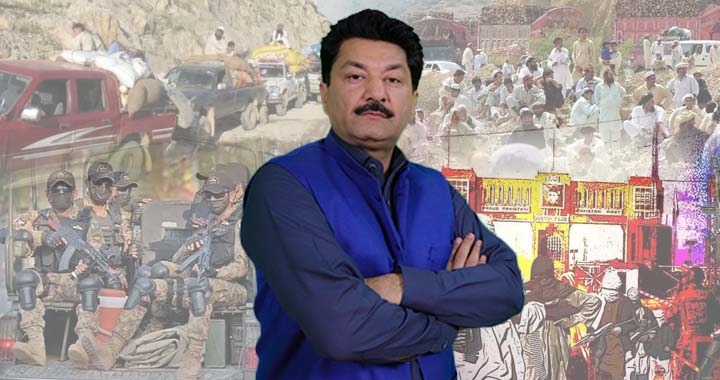
There is a long history of the tribal areas. For generations, it has been ingrained in people’s minds that weapons were a form of jewellery. At one point, carrying a gun was considered a matter of pride, even fashion. Today, however, it is equally evident that weapons are also seen as destructive. This shift in thinking has taken place, and it must be acknowledged.
It is the same youth who have begun to reject guns. Yet, paradoxically, it is also the same youth from these areas who have taken up arms and are now challenging the writ of the state and the authority of the government. They are challenging not only institutions, but ordinary citizens as well. The question is, why has this happened?
Historically, we have always relied on short-term solutions. We have never planned for the long term. Consider, for example, a military operation conducted 15 years ago in these regions. At that time, a child who was five years old is now 20. A child who was 10 then is now 25. Over these 10, 15, or 20 years, what did we actually do for these children? How did we shape their minds? Did we address their sense of deprivation? Did we undertake development at the scale and depth that was required?
FATA was merged, and much was said about bringing the tribal areas into the national mainstream. But are these areas truly part of the mainstream today? Do the people there enjoy the same facilities as citizens in Peshawar, Lahore, Islamabad, or Karachi? The reality is that their sense of deprivation has not been eliminated.
Were the promises made to the tribes fulfilled? Did the federal or provincial governments deliver on their commitments or shoulder their responsibilities? These tribal communities are fighting Pakistan’s war. Look at this tribal belt along the Afghan border. It was once administered by the centre, and now, after the 18th Amendment, is responsibility shifted entirely to the Khyber Pakhtunkhwa government, absolving others of accountability?
In this war, which Pakistan claims it is fighting not only for itself but for the world, the tribal people stand on the front line. The tribal youth are on the front line.
The bitter truth is that we failed to educate this youth. They were not provided employment opportunities. They were not given skills that could help them earn a living. When young people lack education, skills, and jobs, extremist organisations step in and recruit them for 15,000 or 20,000 rupees a month. They offer a motorcycle and a weapon.
If there is no hospital, no school, no college, no university, it does not mean that one must take up arms against the state. There are peaceful avenues of struggle. Political movements can be launched. Awareness comes through education, and when people raise their voices through peaceful movements, they should be heard.
If someone takes up arms, however, the position of the Pakistani state is clear. Anyone involved in extremism or terrorism will not be engaged in dialogue. This stance is unequivocal.
When we speak about Afghanistan, we insist that governments negotiate with governments. So what have our own political parties done? What have the elected representatives sitting in assemblies done? They do raise their voices, but there exists both a provincial and a federal government. This is a war that spans generations. We cannot limit our approach to operations, forced displacement, or temporary agreements, nor should we be satisfied merely because people return after an operation and life appears normal again.
The child who was displaced at the age of five 15 years ago is now a 20-year-old man. What have we placed in his mind? He carries memories of tents, displacement, queues for rations, and dependence on charity. This is his lived experience.
We failed to teach him the meaning of the state, citizenship, responsibility, and civic duty. We sent him back to areas without education or health facilities. It is rightly said that an idle mind becomes vulnerable. These children were left with empty minds.
What kind of education did we provide them? What positive activities were they engaged in? Compare this with how children are raised in major cities. In many tribal families, parents have eight or ten children. Attention is given to only a few, while the rest remain unattended, their whereabouts and influences unknown.
Awareness brings control and stability. But when extremist organisations identify such youth, they carefully target them. They shape their thinking, telling them this is their war, a holy war, jihad. They provide funding and present religious narratives, promising rewards in the hereafter.
What does this young man see in this world? Poverty, deprivation, barren roads, and a complete absence of opportunity. When there is no attraction in this life, he is led astray. Islam is a religion of balance. It teaches responsibility in this world and accountability in the hereafter. Yet these organisations train youth to attack their own security forces, creating anti-state and anti-establishment narratives.
In Afghanistan, the Taliban fought foreign forces for two decades. There, the presence of foreign troops allowed a narrative of occupation and resistance. But what does a so-called war between Kufr and Islam have to do here?
This responsibility does not rest solely with the government or political parties. It is shared by governments, political forces, institutions, scholars, poets, writers, journalists, teachers, and students. Dialogue alone is not enough. Collective action is required.
Consider the Tirah Valley, where negotiations took place between tribal elders and state institutions. A written agreement was reached, demands were revised, timelines were set, compensation was agreed upon, and construction began. This model can be replicated elsewhere.
People fear military operations because displacement brings destruction, loss of homes, disrupted education, and damaged livelihoods. When clear agreements exist, compensation is assured, and communities are taken into confidence, resistance diminishes. Elected representatives must speak honestly to their people. Trust is essential.
There has been a slight shift in policy regarding Afghan refugees and military operations, but this challenge cannot be handled by the provincial government alone. These border areas face infiltration and cross-border militancy. Ex-FATA falls under KP, yet the federal government has failed to provide its promised share.
It was pledged that these regions would receive 1,000 billion rupees annually over ten years. Not even 100 billion was provided in a single year. Without resources, no infrastructure or long-term policy can succeed.
If we truly want lasting peace, we must think in terms of 50- or 100-year policies. Political interests must be set aside in favour of national interest. Peace is the foundation of politics, governance, elections, and democratic activity.
Extremism and terrorism are born from poverty and ignorance. Ignorance thrives where education is absent. Until this is addressed, operations will only provide temporary relief, and militants will return.
We must change this mindset. Dialogue is necessary. Political disagreements can be resolved through negotiation. Listening does not weaken the state. Embracing voices for peace strengthens it. We must move forward with an open mind and an open heart.



