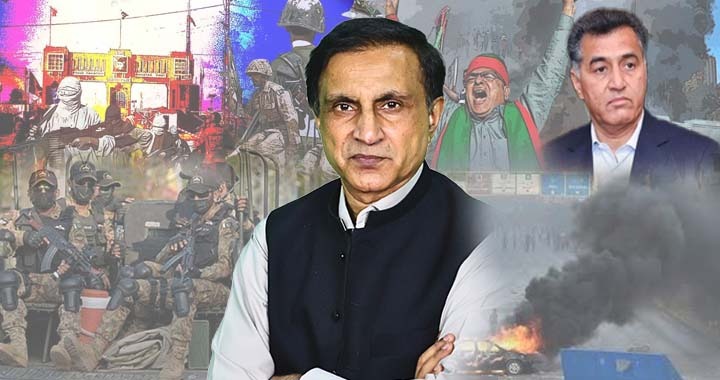
The fourteen year sentence awarded to former ISI chief Lieutenant General retired Faiz Hameed is a landmark. Pakistan’s past offers no example of an ISI chief being punished in this way. Senior figures of similar rank have faced trials before, but none who once ran the country’s principal intelligence service. His conviction carries four proven charges, including political interference, which alone marks a turning point in civil military accountability.
His footprint on Pakistan’s political theatre stretches across a decade. The 2014 PTI sit in, the 2017 to 2018 Tehreek e Labaik protests, and the engineered change in Balochistan during the Nawaz Sharif government all bore his imprint. Even Imran Khan’s own admission that he relied on the intelligence apparatus to secure budget approval places Faiz directly at the centre of government manipulation. The 2018 general elections, widely accused of rigging, are tied to him. The sentencing of Nawaz Sharif on the basis of Iqama paperwork and a non withdrawn salary also falls within the same pattern of orchestration.
During Imran Khan’s tenure, the imprisonment of opposition leaders one after another was another expression of his role. The list is long, reaching into the suppression of political parties and interference with the judiciary. Former Islamabad High Court judge Shaukat Siddiqui remains a central example of pressure applied through intimidation. All of it served a single project, a succession plan aimed at elevating Faiz to army chief and then securing an extension, a ten year blueprint of power. The plan collapsed when the PML N government refused to endorse him.
General Bajwa’s decision to move him from ISI chief to Corps Commander Peshawar ignited Imran Khan’s resistance, since Imran feared his government would collapse without Faiz in the ISI. And when the transfer happened, the PTI government fell. In Khyber Pakhtunkhwa, Taliban militants of the banned TTP, including senior figures, had been arrested. Faiz released one hundred detainees and facilitated the return of TTP elements into Pakistan. Once again, the list of actions grows long and difficult to count.
The internal standoff reached a point where General Bajwa conveyed that if Faiz was denied the position of army chief, martial law would be imposed. Shehbaz Sharif passed this warning to Nawaz Sharif, who refused to yield, accepting the risk of martial law rather than see Faiz in command. The political, judicial and intelligence manipulation associated with him converged on one central role, the planner behind Imran Khan.
His proximity to Bushra Bibi created another layer of influence. By feeding her advance knowledge of upcoming events, he built a sense of spiritual foresight around her, which then shaped Imran Khan’s decisions. In this way, the duo tightened their grip on the government.
The charges for which he now stands convicted include political intervention, violations of the Official Secrets Act, removal of classified documents, and misuse of authority involving intimidation, land grabbing and seizure of assets. ISPR notes that his role in political agitation and the violence linked to 9 May remains under investigation.
His legal path now moves through the appellate army court, a mercy petition before the army chief, then the High Court and finally the Supreme Court. The 9 May case will be tried in a military court. According to informed sources, Faiz may turn approver to save himself. The conspiracy of 9 May stretched beyond attacks on military installations and aimed at inciting rebellion within the army. Rebellion is the highest category of offence, which is why both Imran Khan and Faiz face military trial.
The army has sought to challenge the perception that accountability only reaches junior ranks. Punishing the former number two officer demonstrates equality before the law. His arrest in August and conclusion of trial in less than fifteen months also reinforces the army courts’ emphasis on speed. Civilian courts continue to hear similar matters for years. The provision of legal counsel of his choice and permission to present witnesses further marks a departure from past criticism.
A pivot to governance failures in KP
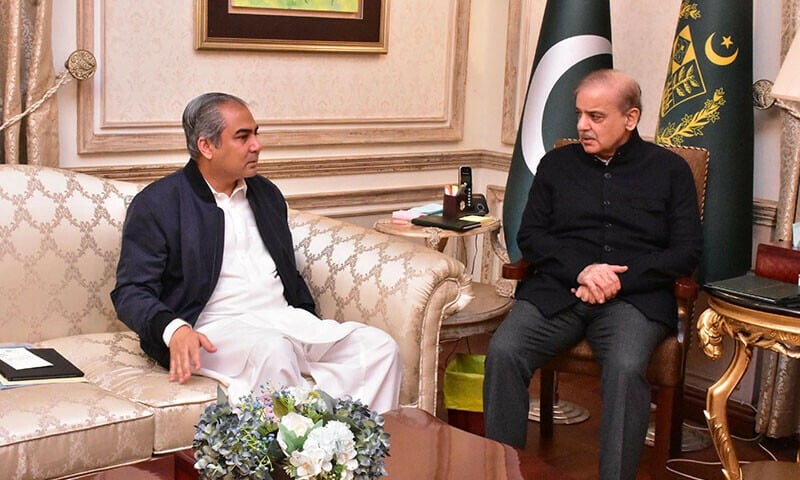
From this national level accountability debate emerges another issue, the KP government’s conduct on security equipment. The federal government provided three bulletproof vehicles to the province. On 18 October, Interior Minister Mohsin Naqvi received the keys from IG Zulfiqar Hamid. The next day, KP minister Suhail Afridi declared the vehicles substandard, old and insulting to martyrs, the police force and the people of KP. The matter was turned into political theatre. In response, Minister of State Talal Chaudhry displayed the vehicles to journalists, noting that each one met international standards and cost ten crore rupees. Balochistan requested the vehicles and was approved as a recipient.
Despite Afridi’s rhetoric, the cars never returned to Islamabad. They were quietly assigned to district police officers of Dera Ismail Khan, Bannu and Swat. The public posture did not match private actions.
KP’s criticism ignored the deeper failure. The province has been under PTI rule for twelve years, heading into a thirteenth. During these years, police officers lacking bulletproof protection were repeatedly targeted and martyred in Bajaur, North Waziristan and elsewhere. Billions of rupees in federal transfers should have translated into protection equipment. Yet police stations lack bulletproof vehicles, officers lack standard weapons, drones, sniper rifles or modern surveillance tools. The province remained at war without investing in the minimum requirements of that war.
PTI governments offered compensation of one crore rupees to families of martyred officers while failing to provide protective gear that could have prevented the deaths. The decision to politicise the vehicles offered by the centre illustrated a flawed priority. Even after rejecting the cars publicly, the government kept them for its own officers while continuing the narrative of insult and grievance.
In the end, KP’s long standing governance choices sit at the centre of its security vulnerability. Criticising the federal government while failing to equip its own frontline forces has had fatal consequences. The narrative of insult cannot obscure the years of neglect that placed the province’s police in peril.