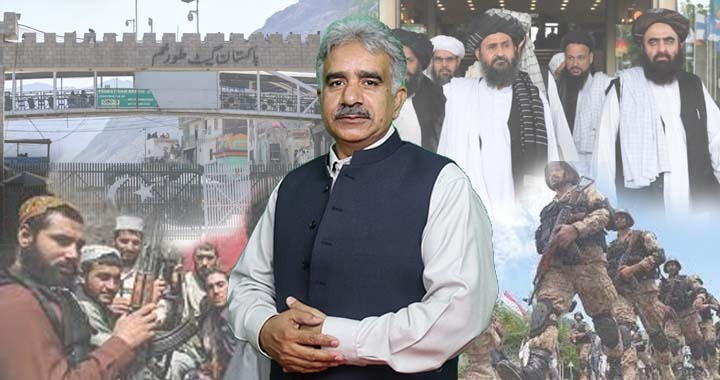
For the first time in two decades, regional powers appear aligned on one core security priority, containing and dismantling the militant networks that have re-emerged across Afghanistan and spilled across borders. Pakistan, China, Iran, the Central Asian Republics, Russia, and even the Gulf states now share a visible convergence, the threat emanating from Afghan soil is no longer an isolated problem but a destabilising force capable of radiating across the entire region. Yet, despite this rare consensus, the one actor with the most direct responsibility for preventing that threat, Kabul, remains the weakest link.
The reality of a regional shift
Across the region, governments have quietly adjusted their counterterror postures. Pakistan has been forced into an aggressive recalibration after a surge in cross-border attacks orchestrated by TTP and its splinter factions. China has intensified its concerns about ETIM networks regrouping inside Afghanistan and maintains constant pressure on Kabul, urging concrete action, not verbal commitments. Iran, grappling with IS-KP’s expansion and its attempts to sow sectarian friction, has openly warned that Afghan soil is being misused by transnational militants. Central Asian states, particularly Tajikistan and Uzbekistan, have raised alarms about militants reorganising near their borders and exploiting ungoverned Afghan spaces.
The Afghan threat is no longer theoretical. It has become a shared, measurable security risk, defined by identifiable networks, documented cross-border movements, and a deepening pattern of attacks. The region’s response reflects this clarity. Pakistan has reinforced border security, reshaped its counterterror doctrine, and undertaken intelligence-driven operations. China has consolidated regional counterterror cooperation through both bilateral security channels and multilateral frameworks like the Shanghai Cooperation Organisation. Iran and Central Asian states have increased surveillance, cross-border coordination, and diplomatic pressure on Kabul.
This regional alignment would have been decisive, but it hinges on one actor choosing to act. Kabul has not demonstrated the intent required to match the scale, severity, or urgency of the threat. Its public statements continue to deny the presence of organised terror outfits inside Afghanistan, even as evidence to the contrary mounts.
Kabul’s denialism and its consequences
The Taliban administration maintains that militant groups operating from Afghan territory are either non-existent or beyond their control. This posture has left militants with operational freedom. TTP leadership continues to regroup, reorganise, and conduct attacks inside Pakistan after crossing from Afghan soil. IS-KP has strengthened its propaganda, recruitment, and operational networks. ETIM elements retain pockets of influence, particularly in the north and northeast. Central Asian extremist groups have also used Afghanistan’s permissive environment to re-establish logistical routes.
By refusing to acknowledge the problem, Kabul has become the weakest link in the regional security chain. The Taliban leadership insists it is committed to preventing Afghan soil from being used against other countries, but regional intelligence assessments tell a different story. Cross-border attacks have risen in frequency and sophistication. Militants exploit the lack of monitoring in remote Afghan provinces. In many cases, they use these areas as safe havens for planning, training, and regrouping before launching operations outside.
Diplomatic pressure versus ground realities
Regional governments have issued diplomatic warnings, formal complaints, and back-channel messages to Kabul. Pakistan has repeatedly provided evidence tracing attacks back to Afghan soil. China has conveyed its growing unease about groups posing threats to Xinjiang. Iran has highlighted IS-KP’s involvement in coordinated sectarian incidents. Central Asian states have demanded monitoring of militant movements near their borders.
Despite these engagements, Kabul has responded with denial, minimisation, or vague assurances. This has further eroded confidence in the Taliban administration’s willingness to confront these networks. The gap between Kabul’s statements and on-ground realities has widened, leaving regional governments with little choice but to strengthen their independent counterterror frameworks.
A widening security vacuum
As militant groups exploit Afghan territory, the regional environment becomes increasingly volatile. TTP’s cross-border operations affect Pakistan’s border districts. IS-KP’s transnational ambitions create concerns in Iran, Central Asia, and beyond. ETIM’s presence alarms China, given its history of linking Afghan sanctuaries with activities in Xinjiang. Smaller extremist organisations also benefit from the vacuum, using Afghan territory for logistics, recruitment, and ideological coordination.
Each of these threats would be serious on its own. Combined, they represent a coordinated network of destabilisation that directly undermines regional stability. What makes the situation more complex is that Afghanistan lacks both a credible counterterror infrastructure and the political will to confront these groups. Without an internal shift, the vacuum will widen.
The Internal Fallout for Pakistan and KP
Pakistan kept its borders open for decades, accepted refugees without data collection, and absorbed their economic and social pressures. Now, with the interior ministry declaring that undocumented foreigners are no longer guests, Peshawar and parts of Khyber Pakhtunkhwa are witnessing snap checking, card verification and arrests. Over a million illegal Afghans have been sent back. On the Iranian border, fifteen illegal Afghan entrants were recently shot dead by security forces. These incidents reflect the rising desperation and the deepening security vacuum.
Within Khyber Pakhtunkhwa, the law and order situation remains fragile. While the federal government emphasises coordinated operations and border security, the KP administration often frames the crisis as a political grievance. The disconnect over policing powers, counterterrorism capacity and intelligence coordination has widened. KP leaders blame Islamabad for withholding resources, while federal authorities point to mismanagement, politicisation of policing and the refusal of the previous KP government to support fencing measures and settlement regulations.
This divergence weakens the collective response at a time when Afghanistan is exporting militants, weapons, narcotics and radicalisation into Pakistan’s tribal belt and settled districts. With terror incidents rising, KP requires a unified security doctrine instead of political point scoring.
The regional message to Kabul
Through diplomatic channels, border deployments, intelligence coordination, and multilateral forums, the region is conveying a consistent message. Militancy emanating from Afghanistan will not be tolerated. Safe havens must be dismantled. Cross-border attacks must end. Regional stability cannot be held hostage to Kabul’s internal political calculations or ideological constraints.
Pakistan’s stance has become especially clear. The expectation is no longer dialogue or persuasion but verifiable, measurable action. China’s position is equally firm. Iran and the Central Asian Republics echo the same demand for accountability. The region’s patience is not unlimited.
The closing assessment
Regional powers are converging on counterterror cooperation because the threat has become shared and unavoidable. But the effectiveness of this emerging alignment depends on Kabul’s willingness to play its part. Until the Taliban administration confronts militant networks operating from Afghan soil, it will remain the weakest link. Regional unity can limit the threat, but it cannot eliminate it unless Afghanistan ceases to function as the central hub for multiple militant ecosystems.
The choice ultimately rests with Kabul. The region is moving. The threat is evolving. Only one actor is standing still.